Reclaiming Your Time and Peace: A Comprehensive Guide to the Right to Disconnect from Work
What Exactly is the Right to Disconnect, and Why Does It Matter?
At its core, the right to disconnect is the ability for employees to refrain from engaging in work-related communications, such as emails, calls, or messages, outside of their designated working hours without fear of reprisal or negative consequences. It’s about creating a clear boundary between professional responsibilities and personal time, recognizing that time off is truly off time.
While some countries have enshrined this right into law – France being a notable pioneer, followed by others like Spain, Belgium, and Ireland – for many, it remains a cultural and individual battle. Regardless of legal standing, the principle is universally essential for human well-being.
Why is this right so critical for your digital wellness and overall life?
- Preventing Burnout: The “always on” culture is a direct pipeline to burnout. Constantly feeling the need to check messages or respond to requests keeps your brain in a state of perpetual readiness, preventing true mental and physical rest. Research consistently links excessive work hours and the inability to switch off to increased stress, exhaustion, and a higher risk of burnout. When you disconnect, you give your mind and body the essential downtime needed to recharge, reducing the risk of chronic stress and mental fatigue.
- Improving Mental Health: The constant stream of work notifications can fuel anxiety, stress, and even depression. The pressure to be available, coupled with the cognitive load of thinking about work outside of hours, can make it difficult to relax or be fully present in non-work activities. Exercising the right to disconnect significantly reduces this mental burden, fostering a greater sense of calm and control over your life.
- Enhancing Physical Health: Beyond the mind, our bodies suffer too. Excessive screen time, particularly before bed, disrupts sleep patterns due to blue light exposure and mental stimulation. Poor sleep is linked to a host of physical ailments, from weakened immune systems to cardiovascular issues. Disconnecting allows for healthier evening routines, better sleep hygiene, and more time for physical activity, contributing to overall better physical health.
- Boosting Productivity and Creativity: Counterintuitively, true disconnection makes you more effective when you are working. When your brain has ample time to rest and engage in diverse activities, it returns to work refreshed, focused, and often more creative. The phenomenon of “attention residue,” where lingering thoughts from a previous task impair performance on a new one, is minimized when you create clear breaks. Rest allows for diffuse thinking, which is crucial for problem-solving and innovation.
- Strengthening Personal Relationships: This is where the mission of Stop Phubbing truly intersects with the right to disconnect. When you’re constantly glancing at your phone for work updates, you’re not fully present with your loved ones. This “phubbing” (phone snubbing) erodes connection, trust, and intimacy. By intentionally disconnecting from work, you free yourself to be truly present, listen actively, and engage deeply with family and friends, nurturing the relationships that bring richness and meaning to your life.
The Invisible Chains: Understanding the Barriers to Disconnecting
Knowing the benefits is one thing; actually achieving consistent disconnection is another. Many invisible forces, both internal and external, conspire to keep us tethered to our work devices. Recognizing these barriers is the first step toward dismantling them.
Internal Pressures: The Voice in Your Head
- Guilt and Fear of Missing Out (FOMO): We often feel a deep-seated guilt about not being available, fearing we might miss an urgent email, a critical decision, or an opportunity. This FOMO is amplified by a culture that often rewards constant availability.
- Desire to Prove Commitment: Especially in competitive environments, there can be a subtle pressure, often self-imposed, to demonstrate unwavering dedication by being responsive at all hours. We fear that disconnecting might be perceived as a lack of commitment or laziness.
- Self-Imposed Urgency: Sometimes, the “urgency” of a task outside of work hours is more perceived than real. Our brains, trained by constant notifications, can create a sense of immediate need even when there isn’t one.
- Difficulty Switching Off: Even without notifications, our minds can ruminate on work problems. This “attention residue” makes it hard to mentally transition away from work, leading to constant vigilance.
External Pressures: The Workplace Environment
- “Always-On” Workplace Culture: If leaders and colleagues consistently send emails late at night or on weekends, it sets an unspoken expectation for others to do the same. This cultural norm is one of the strongest barriers.
- Management Style and Expectations: A manager who frequently contacts employees outside of hours, or praises those who are always available, implicitly discourages disconnection. Conversely, a lack of clear policies around off-hours communication can leave employees feeling obligated.
- Client Demands: For client-facing roles, the pressure to meet client expectations, which can sometimes extend beyond standard hours, is a significant challenge.
- Fear of Repercussions: The unspoken fear of being overlooked for promotions, receiving a poor performance review, or even losing one’s job can be a powerful deterrent to setting boundaries.
The Role of Technology Itself
- Push Notifications: Designed to grab our attention, these pings and vibrations constantly pull us back to our devices, regardless of whether the content is urgent or relevant.
- Ease of Access: Smartphones make it incredibly easy to check work emails or messages from anywhere, at any time, blurring the lines between personal and professional devices and spaces.
- Blurred Lines: Using the same device for both personal and professional communications makes it harder to create a mental and physical separation.
Understanding these intertwined pressures is crucial. It’s not just about turning off your phone; it’s about addressing the underlying psychological and cultural factors that make disconnection so challenging.
Empowering Yourself: Practical Strategies for Cultivating Disconnection
At the Individual Level: What YOU Can Do
-
Set and Communicate Clear Boundaries:
- Define Your “Off-Hours”: Explicitly decide when your workday begins and ends. Write it down. For example, “My workday ends at 5:30 PM, and I will not check work communications until 8:30 AM the next day.”
- Communicate Your Boundaries Proactively: Let your team, manager, and clients know your typical working hours. You don’t need to apologize; frame it professionally. “My working hours are X to Y. I will respond to all communications during these times.”
- Utilize Out-of-Office Replies: Set up an auto-responder for after-hours communications. A simple message like, “Thank you for your email. My working hours are [Start Time] to [End Time], Monday to Friday. I will respond to your message during these times. For urgent matters, please contact [Colleague’s Name/Emergency Protocol].” This manages expectations and provides a clear alternative for genuine emergencies.
-
Master Technology Management:
- Dedicated Devices (if possible): If your workplace provides a work phone or laptop, consider using it only during work hours. Keep personal devices separate.
- Turn Off Notifications: This is non-negotiable. Disable email, chat, and other work-related notifications on your personal phone outside of working hours. Use “Do Not Disturb” mode. You are in control of your device, not the other way around.
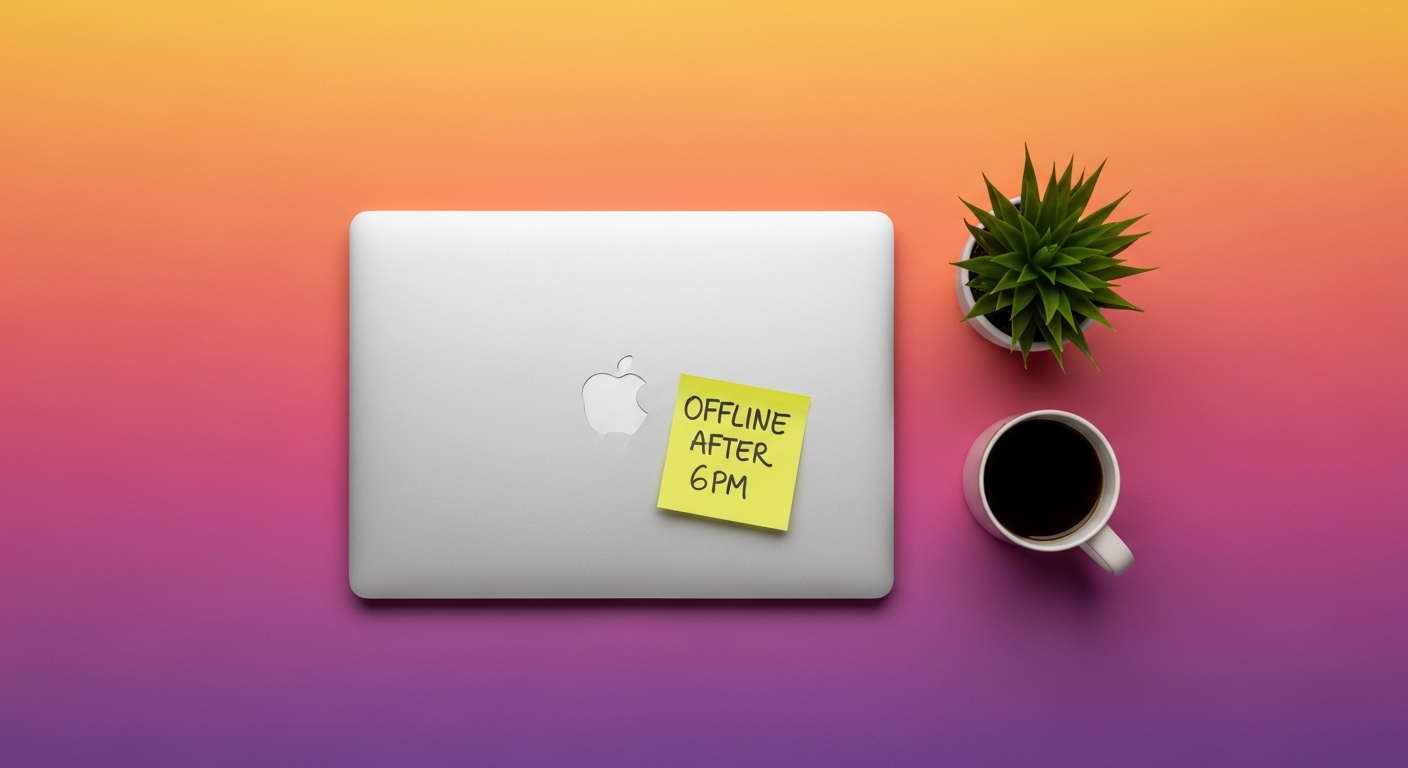
- Implement a “Digital Sunset”: Establish a cutoff time in the evening when all work-related apps are closed, devices are put away, and you transition to personal activities. For example, “No work tech after 7 PM.”
- Create Separate Profiles/Apps: If using a single device, explore features that allow you to create separate profiles (e.g., Android work profile) or use different browsers/apps for work-related tasks, making it easier to “close” work at the end of the day.
-
Cultivate a Disconnect Mindset:
- Reframe Disconnection as a Strength: Understand that taking restorative breaks makes you a better, more focused, and more creative employee. It’s not a luxury; it’s a professional necessity.
- Prioritize Self-Care: View disconnecting as an essential act of self-care. Your well-being is paramount for sustained performance and happiness.
- Practice Mindfulness and Presence: When you’re not working, actively engage in what you’re doing. If you’re with family, be with them. If you’re on a walk, notice your surroundings. Mindfulness helps to anchor you in the present and reduce mental rumination about work.
-
Create Transition Rituals:
- Buffer Time: Instead of jumping straight from work to personal life, create a short “buffer” – a walk, a meditation, listening to music, changing clothes. This helps your brain shift gears.
- “Shut Down” Routine: At the end of your workday, take 10-15 minutes to organize your desk, make a to-do list for tomorrow, and explicitly “close” your work for the day. This signals completion to your brain.
At the Team/Organizational Level: Advocating for Change
- Lead by Example (if in a leadership role): The most impactful change comes from the top. If you’re a manager, actively disconnect, communicate your boundaries, and explicitly encourage your team to do the same. Don’t send emails after hours unless absolutely necessary, and if you do, add a disclaimer like “Please do not feel obligated to respond until your next working day.”
- Encourage Team Discussions: Facilitate conversations within your team about communication norms and expectations outside of working hours. Create shared agreements.
- Advocate for Company Policies: If your company doesn’t have a formal “right to disconnect” policy, advocate for one. Present the research-backed benefits to productivity, employee retention, and well-being.
- Utilize Scheduling Tools: Suggest using email scheduling tools to send non-urgent communications during working hours, even if you wrote them earlier.
Navigating Difficult Conversations: Communicating Your Need to Disconnect
Setting boundaries is an act of self-respect, but it can feel daunting, especially when faced with an entrenched “always-on” culture. Here’s how to approach these conversations effectively.
Preparation is Key
- Know Your “Why”: Be clear on why you’re doing this. It’s not just “I don’t want to work,” but “I need this time to recharge so I can bring my best self and best ideas to work.”
- Anticipate Objections: Think about what concerns your manager or colleagues might have (e.g., “What if there’s an emergency?”). Have solutions ready.
- Focus on Benefits, Not Demands: Frame your request in terms of how it will benefit your productivity, focus, and long-term commitment, which in turn benefits the company.
Specific Scenarios
-
With Your Manager:
- Schedule a Meeting: Don’t ambush them. Request a dedicated time to discuss your working hours and communication expectations.
- Present a Plan: “I’ve been thinking about how I can optimize my productivity and ensure I’m bringing my most focused self to work. To do this, I plan to fully disconnect from work communications after [End Time] each day. I believe this will allow me to recharge and return refreshed, ultimately benefiting my performance and contribution to the team.”
- Address Concerns: “I understand there might be urgent situations. For genuine emergencies, what is the best protocol? Perhaps a specific phone number for truly critical issues, or is [Colleague’s Name] the designated contact after hours?”
- Reassure Commitment: Emphasize that this is about sustainable performance, not reduced commitment.
-
With Colleagues:
- Set Expectations for Collaboration: “Just a heads-up, I’m making an effort to fully disconnect after hours to ensure I’m well-rested. I’ll be sure to catch up on any messages first thing in the morning. If anything is truly urgent, please follow [Team’s Emergency Protocol].”
- Lead by Example: Don’t send messages to colleagues after hours unless absolutely critical, and if you do, add a note acknowledging their off-hours.
-
With Clients:
- Manage Expectations Upfront: During onboarding or project kick-offs, clearly state your working hours and response times.
- Utilize Auto-Responders: As mentioned, this is a professional way to manage expectations when you’re unavailable.
- Provide Alternatives for Urgent Matters: If your role truly requires it, provide an emergency contact or a dedicated emergency channel, but ensure it’s used only for genuine crises.
-
With Family and Friends:
- Explain Your “Why”: Share with them that you are intentionally disconnecting from work to be more present with them. This helps them understand and support your efforts.
- Involve Them: Plan activities that don’t involve screens, reinforcing your commitment to presence.
Remember, these conversations are often a process, not a one-time event. Be patient, consistent, and firm in your boundaries. Your well-being is worth advocating for.
Beyond the Clock: Embracing True Digital Wellness
The right to disconnect from work is a powerful starting point, but true digital wellness extends beyond your professional life. It’s about being intentional with all your technology use, cultivating a life rich in authentic connections and restorative experiences, both online and off.
Consider these additional steps to deepen your digital wellness journey:
- Regular “Digital Detox” Periods: Beyond daily work disconnection, challenge yourself to unplug completely for a few hours, a full day, or even a weekend. Engage in activities that require your full presence – hiking, painting, cooking, reading a physical book, or simply having uninterrupted conversations.
- Cultivate Hobbies and Interests: What activities bring you joy and allow you to enter a state of “flow,” where time seems to disappear? Prioritize these. Hobbies provide essential mental breaks and a sense of accomplishment outside of work.
- Prioritize Face-to-Face Interactions: Actively seek out opportunities for in-person connection with friends, family, and community members. These interactions are vital for mental health and counteract the isolating effects of excessive screen time.
- Mindful Social Media Use: If you use social media, do so with intention. Set time limits, unfollow accounts that don’t serve you, and remember that curated feeds don’t reflect reality. Engage with purpose, not just passively scroll.
- Create Tech-Free Zones and Times: Designate certain areas of your home (e.g., the dining table, bedroom) or specific times (e.g., during meals, an hour before bed) as completely tech-free. This reinforces boundaries and encourages presence.
Embracing true digital wellness means intentionally designing a life where technology serves you, rather than the other way around. It means choosing authentic human connection over the endless scroll, and prioritizing your peace over the persistent ping. When you master the art of disconnecting from work, you unlock the capacity to connect more deeply with everything else that truly matters.
Your Peace, Your Power: Embracing the Right to Disconnect
In a world that constantly demands our attention, asserting your right to disconnect from work is not a luxury; it’s a necessity for a balanced, fulfilling, and truly present life. It’s a powerful act of self-care, a strategic move for sustained productivity, and a profound commitment to the authentic human connections that truly enrich our existence. Remember, this journey isn’t about perfectly severing all ties, but about creating intentional space, setting mindful boundaries, and reclaiming your precious time and mental peace.
Start small, be consistent, and advocate for yourself and for a healthier workplace culture. Your well-being is worth it, and the vibrant, connected life you gain in return is immeasurable. At Stop Phubbing, we champion your right to be fully present – whether that’s with your loved ones, a good book, or simply with yourself. Begin today, and experience the transformative power of truly unplugging.