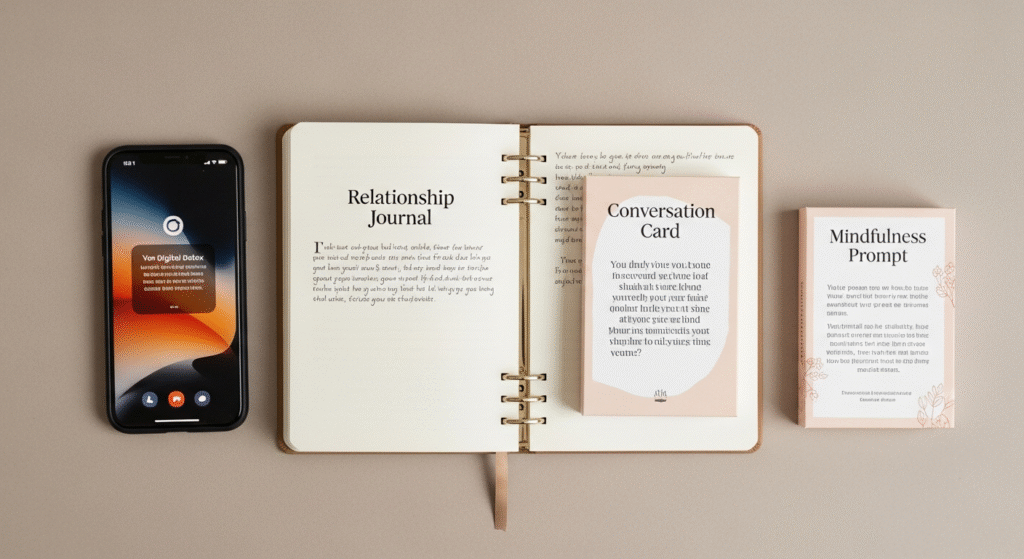

Mindfulness Exercises for Couples to Strengthen Your Bond 2026
TL;DR: Modern life, especially digital distractions, often strains couple connections. Mindfulness offers practical exercises to enhance presence, communication, and empathy, helping couples strengthen their bond and navigate challenges more effectively by fostering deeper emotional understanding and reclaiming shared moments.
What is Mindfulness in a Relationship Context?
Mindfulness, at its core, is the practice of paying attention to the present moment, without judgment. As defined by Jon Kabat-Zinn, a pioneer in the field, it’s “the awareness that arises through paying attention, on purpose, in the present moment, non-judgmentally.” While often associated with individual meditation, its application within a relationship context is profoundly transformative. For couples, mindfulness isn’t about emptying your mind; it’s about filling it with deliberate awareness of your partner, your shared experiences, and your own internal states as they relate to your connection.
In a relationship, mindfulness means consciously choosing to bring your full attention to your partner during conversations, noticing their non-verbal cues, and truly hearing their words without formulating your rebuttal. It means becoming aware of your own emotional triggers and reactions, taking a pause before responding impulsively. It’s about recognizing the small, positive moments you share – a shared laugh, a comforting touch, a quiet moment of companionship – and allowing yourself to fully experience them, rather than letting them pass unnoticed amidst the mental chatter or digital pings.
Research consistently highlights the benefits of mindfulness for individual well-being, but its impact on relationships is equally compelling. Studies show that individuals who practice mindfulness report higher relationship satisfaction, greater empathy, and reduced conflict. This is largely because mindfulness cultivates emotional regulation and perspective-taking. When you’re mindful, you’re better equipped to manage your own stress and emotions, preventing them from spilling over negatively into your interactions with your partner. You also become more attuned to your partner’s emotional landscape, fostering a deeper sense of understanding and compassion.
Consider the common scenario of a couple arguing. A mindful approach would involve recognizing the rising tension within oneself, pausing before lashing out, and attempting to understand the partner’s perspective rather than immediately defending one’s own. This shift from reactive to responsive interaction is a cornerstone of healthy communication. Mindfulness helps couples break free from habitual negative patterns, creating space for new, more constructive ways of relating. It encourages couples to view challenges not as threats, but as opportunities for growth and deeper connection. By regularly engaging in mindfulness exercises for couples to strengthen bond, partners can build a reservoir of emotional resilience, making them better equipped to navigate life’s inevitable ups and downs together, fostering a sense of shared presence and unwavering support.
Mindful Listening: The Foundation of Connection
To practice mindful listening, begin by creating a conducive environment. This means putting away all distractions – especially your phone. The presence of a phone, even face down, can subtly communicate that your partner is not your sole priority. Make eye contact, or if that feels too intense, focus on their face or a point near them. Your body language should convey openness and receptiveness: turn towards them, uncross your arms, and nod occasionally to show you’re engaged. The goal is to be fully present, allowing your partner to feel truly seen and heard.
A key aspect of mindful listening is refraining from judgment or immediate problem-solving. Often, when our partner shares a concern, our natural instinct is to jump in with advice or solutions. However, sometimes what they truly need is simply to be heard and validated. Practice active listening techniques: paraphrase what you hear to ensure understanding (“So, what I’m hearing is that you feel frustrated because…”), and reflect their emotions (“It sounds like you’re feeling really overwhelmed right now.”). This not only confirms that you’ve understood but also helps your partner feel validated and understood, which is a powerful builder of intimacy and trust.
Dr. John Gottman’s research on healthy relationships emphasizes the importance of responding to “bids for connection.” A bid can be anything from a direct question to a sigh, a comment about the day, or a gesture. Mindful listening ensures you are attuned to these bids, rather than missing them or turning away. When partners consistently turn towards each other’s bids, they build a “positive emotional bank account” that helps cushion the relationship against conflict and stress. Conversely, consistent “phubbing” (snubbing your partner for your phone) directly undermines these bids, leading to feelings of neglect and resentment.
Mindful listening isn’t always easy, especially during emotionally charged discussions. It requires patience, self-awareness, and a willingness to set aside your own agenda temporarily. But by consciously practicing this form of deep presence, you communicate profound respect and love to your partner, strengthening the emotional threads that bind you together. Make it a regular practice, perhaps by designating specific times for device-free conversations, and observe how this simple yet powerful exercise transforms the quality of your connection.
Mindful Touch and Presence: Reconnecting Physically
In the rush of daily life, physical intimacy often becomes a routine, or worse, is neglected entirely. Mindful touch, however, transcends mere physical contact; it’s about bringing conscious awareness and presence to every physical interaction, transforming it into an act of deep connection and affection. It’s one of the most powerful mindfulness exercises for couples to strengthen bond, leveraging our innate need for physical connection to foster emotional closeness. The power of touch is not just anecdotal; it’s deeply rooted in our biology and psychology.
Non-sexual touch, in particular, plays a critical role in relationship satisfaction and emotional well-being. Holding hands, a gentle hug, a tender touch on the arm, or a comforting back rub can release oxytocin, often called the “love hormone” or “cuddle hormone.” Oxytocin promotes feelings of attachment, trust, and bonding, and reduces stress and anxiety. When touch is mindful, it amplifies these effects because both partners are fully present, experiencing the connection rather than just going through the motions. This contrasts sharply with absent-minded touches or those performed while distracted by a screen or a busy mind.
To practice mindful touch, start small. When you greet your partner, instead of a quick peck, try a longer, more intentional hug. Feel the warmth, the pressure, and allow yourself to be fully present in that embrace for a few extra seconds. When you’re sitting together, reach out and gently hold their hand or place a hand on their knee. Don’t be thinking about your to-do list or scrolling through social media; simply feel the connection. Notice the texture of their skin, the warmth, the rhythm of their breath. This simple act of conscious presence elevates the physical interaction from mundane to meaningful.
Consider incorporating a short, mindful touch exercise into your daily routine. Perhaps a five-minute foot rub for each other, or simply sitting close and leaning into one another, focusing on the feeling of proximity and mutual support. During these moments, resist the urge to talk or check your phone. Let the silence and the touch speak volumes. This practice helps to re-sensitize you to your partner’s physical presence and the comfort it provides, reinforcing the intimate bond you share. It’s a deliberate act of slowing down and valuing the physical connection that often gets overlooked.
Mindful touch also extends to sexual intimacy. Bringing mindfulness into the bedroom means being fully present with your partner, noticing sensations, and communicating desires and boundaries with openness and respect. It’s about experiencing the moment together, rather than being caught up in performance anxiety or distractions. By consciously prioritizing and practicing mindful touch, couples can reignite physical closeness, deepen emotional intimacy, and create a stronger, more resilient bond that withstands the pressures of the external world, reminding both partners of their profound connection.
Mindful Communication: Responding, Not Reacting
The way couples communicate is often the strongest predictor of relationship success or failure. In moments of tension or disagreement, it’s easy to fall into reactive patterns, fueled by emotion and past hurts, rather than engaging in thoughtful, constructive dialogue. Mindful communication is a powerful antidote to this, teaching couples to pause, reflect, and choose their responses deliberately, transforming potential conflicts into opportunities for deeper understanding. It’s an essential set of mindfulness exercises for couples to strengthen bond, particularly when navigating disagreements.
One of the core tenets of mindful communication is the ability to create space between stimulus and response. When an emotionally charged statement is made, our immediate physiological response often involves a surge of adrenaline and cortisol, triggering a fight-or-flight reaction. In this state, rational thought can be overridden by impulse. Mindfulness teaches us to notice these internal shifts – the tightening in the chest, the quickening breath, the surge of anger – and to consciously pause. This pause, even if just for a few seconds, allows the prefrontal cortex to re-engage, enabling a more measured and empathetic response.
A helpful framework for mindful communication is the “SPACE” acronym:
- S – Stop: Physically and mentally halt what you’re doing.
- P – Pause: Take a few deep breaths to calm your nervous system.
- A – Assess: Internally check in with your emotions and your partner’s potential emotions. What’s truly going on?
- C – Choose: Deliberately select how you want to respond, focusing on understanding and connection rather than blame or defense.
- E – Empathize: Try to see the situation from your partner’s perspective, even if you don’t agree with it.
This framework directly counters Dr. John Gottman’s “Four Horsemen of the Apocalypse” – criticism, contempt, defensiveness, and stonewalling – which are highly destructive communication patterns. Mindful communication directly addresses these by fostering empathy, promoting active listening, and encouraging constructive expression of needs and feelings without resorting to personal attacks.
Digital communication presents its own unique challenges. Text messages and emails lack tone and body language, making misinterpretation rampant. A mindful approach to digital communication means taking extra care with your words, assuming positive intent, and, when an issue arises, choosing to have a face-to-face or voice conversation rather than trying to resolve it over text. This prevents misunderstandings from escalating and preserves the emotional safety of the relationship.
Practicing mindful communication requires vulnerability and a commitment from both partners. It means acknowledging your own role in communication breakdowns and being willing to approach discussions with an open heart rather than a closed mind. By consistently applying these mindfulness exercises, couples can transform their communication patterns, moving from reactive arguments to productive dialogues, thereby strengthening their bond through deeper understanding and mutual respect.
Mindful Appreciation and Gratitude: Cultivating Positivity
It’s easy, especially in long-term relationships, to take our partners for granted. The initial spark of appreciation can dim as familiarity sets in, and our focus often shifts to what’s missing or what’s bothering us. Mindful appreciation and gratitude are powerful mindfulness exercises for couples to strengthen bond, actively countering this negativity bias and cultivating a rich, positive emotional landscape within the relationship. This practice isn’t about ignoring problems; it’s about intentionally noticing and valuing the good, which in turn builds resilience and a deeper sense of connection.
Gratitude, in a mindful context, means consciously observing and acknowledging the positive qualities of your partner, their efforts, and the specific ways they contribute to your life and the relationship. This goes beyond a generic “thank you.” It involves specificity and genuine presence. For example, instead of just thinking “my partner is great,” you might mindfully notice, “I really appreciate how my partner always makes sure I have my coffee in the morning, even when they’re rushed. That small act of kindness makes my day start better.” This granular appreciation makes the gratitude more potent and more deeply felt by both the giver and the receiver.
Research by Dr. John Gottman indicates that stable, happy couples maintain a “magic ratio” of 5:1 positive to negative interactions during conflict. While this ratio applies to conflict, the underlying principle – cultivating a strong foundation of positive regard – is crucial for everyday life. Mindful appreciation helps build this positive emotional bank account. When couples regularly express gratitude, they reinforce positive behaviors, increase feelings of love and satisfaction, and create a buffer against the inevitable stresses and disagreements that arise.
Here are some practical ways to integrate mindful appreciation into your relationship:
- Daily Gratitude Check-in: At the end of each day, take a moment to share one specific thing you appreciated about your partner or something they did. This can be during dinner, before bed, or via a loving note.
- Notice the Small Things: Consciously look for the tiny acts of kindness, support, or thoughtfulness that your partner performs. It could be them remembering your favorite snack, picking up your dry cleaning, or simply listening patiently. Don’t let these go unnoticed.
- Verbalize Your Appreciation: Don’t just think it; say it. Use “I” statements to express how their actions impact you (“I felt really cared for when you did X”).
- Gratitude Journal (Shared or Individual): Consider keeping a shared journal where you both write down things you’re grateful for about each other, or each maintain your own and share highlights.
- Surprise Acts of Kindness: Inspired by your mindful appreciation, perform unexpected acts of kindness for your partner, mirroring the positive energy you’re cultivating.
By actively cultivating mindful appreciation, couples shift their focus from what’s lacking to what’s abundant. This practice not only strengthens the bond by increasing positive emotions and mutual respect but also makes both partners feel valued and loved, creating a more joyful and resilient relationship capable of weathering any storm.
Digital Mindfulness for Couples: Reclaiming Your Shared Space
In the digital age, our devices have become extensions of ourselves, constantly vying for our attention. While technology offers convenience, it also poses a significant threat to couple intimacy, often leading to a phenomenon known as “phubbing” – the act of snubbing your partner in favor of your phone. This pervasive issue erodes connection, fosters feelings of neglect, and can significantly undermine relationship satisfaction. Digital mindfulness is a critical set of mindfulness exercises for couples to strengthen bond, specifically by addressing and mitigating the impact of digital distractions.
The constant presence of smartphones, tablets, and other screens creates a pervasive “third-party” in the relationship, diverting attention away from direct interaction. Research consistently shows a negative correlation between smartphone use during couple interactions and relationship satisfaction, trust, and feelings of closeness. When one partner is engrossed in their device, the other often feels unheard, unimportant, and lonely, even when physically together. This unintentional neglect can build resentment over time, creating emotional distance.
Reclaiming your shared space and attention requires intentional effort and a commitment from both partners to practice digital mindfulness. This isn’t about eliminating technology entirely, but about using it consciously and setting clear boundaries that prioritize your relationship. Here are practical strategies:
- Device-Free Zones: Designate specific areas or times as completely device-free. The dinner table, the bedroom, or during walks together are excellent candidates. Make these sacred spaces for undistracted conversation and presence.
- “Tech-Free Date Nights”: Plan regular date nights where both partners agree to leave their phones at home or keep them on silent and out of sight. This forces you to engage fully with each other.
- Notification Management: Turn off non-essential notifications, especially during shared time. Constant pings pull you out of the moment. Consider a “do not disturb” mode for specific hours.
- Mindful Transitions: Before engaging with your partner after being on your device, take a moment to consciously transition your attention. Put the device down, take a breath, and then fully turn your attention to them.
- Shared Screen Time Rules: Discuss and agree upon rules for screen time. For example, “no phones during conversations about important topics” or “we’ll check our phones only during natural breaks in our shared activity.”
- Lead by Example: If you want your partner to be less distracted by their phone, model that behavior yourself. Your actions speak louder than words.
Practicing digital mindfulness is an act of love. It communicates to your partner that they are important, their presence is valued, and your shared time is precious. By consciously choosing to unplug and be present, couples can significantly reduce conflict arising from digital distractions, enhance emotional intimacy, and strengthen their bond by creating a more connected and fulfilling shared life, free from the constant pull of the digital world.
Mindful Conflict Resolution: Navigating Disagreements with Presence
Conflict is an inevitable part of any relationship, and it’s not the presence of disagreements but rather how couples navigate them that determines the strength of their bond. Mindful conflict resolution is perhaps one of the most challenging yet rewarding mindfulness exercises for couples to strengthen bond, transforming potentially destructive arguments into opportunities for growth, understanding, and deeper connection. It involves bringing presence, empathy, and emotional regulation to the heated moments when we’re most likely to react impulsively.
The first step in mindful conflict resolution is recognizing the physiological signs of emotional escalation in yourself. When an argument begins to heat up, our bodies often go into a state of “diffuse physiological arousal” (DPA), characterized by increased heart rate, shallow breathing, and a surge of stress hormones. In this state, our capacity for rational thought and empathy significantly diminishes. A mindful approach involves noticing these bodily sensations and consciously calling for a “timeout.” Taking a 20-minute break to calm down, perhaps by engaging in a simple breathing exercise or a short walk, allows your nervous system to regulate before re-engaging in the discussion.
During the discussion itself, mindful communication principles come into play. Practice mindful listening by truly hearing your partner’s perspective without interrupting or planning your rebuttal. Use “I” statements to express your feelings and needs, focusing on the behavior or situation rather than attacking your partner’s character. For example, instead of “You always leave your clothes on the floor, you’re so inconsiderate!”, try “I feel frustrated when I see clothes on the floor because it makes me feel like I’m doing all the tidying.” This approach fosters understanding rather than defensiveness.
Empathy is the cornerstone of mindful conflict resolution. This means making a conscious effort to step into your partner’s shoes and try to understand their emotional experience, even if you don’t agree with their viewpoint. Brené Brown’s work on vulnerability and empathy highlights that empathy isn’t about fixing; it’s about connecting. A simple phrase like, “I can see why you feel that way,” or “That sounds really difficult,” can de-escalate tension and create a bridge for connection, even amidst disagreement.
Another crucial element is the willingness to take responsibility for your part in the conflict, no matter how small. Mindfulness encourages self-reflection and an honest assessment of our own contributions to the dynamic. Offering a genuine apology for your actions, even if you feel your partner is more “at fault,” can open the door for mutual understanding and repair. Dr. Sue Johnson, creator of Emotionally Focused Therapy (EFT), emphasizes the importance of understanding the underlying attachment needs and fears that often fuel couple conflicts. Mindful awareness can help couples identify these deeper emotional patterns, moving beyond surface-level arguments to address core needs for security, love, and belonging.
By approaching conflicts with presence, empathy, and a commitment to understanding rather than winning, couples can transform disagreements from destructive battles into constructive dialogues. This practice not only resolves immediate issues but also strengthens the emotional fabric of the relationship, building trust and resilience for future challenges. Mindful conflict resolution is a powerful testament to the idea that true intimacy is forged not in the absence of conflict, but in the conscious, loving way it is navigated together.
Here’s a comparison of Mindful vs. Distracted Couple Interactions:
| Interaction Scenario | Mindful Interaction | Distracted Interaction |
|---|---|---|
| Dinner Conversation | Phones away, eye contact, active listening, sharing thoughts and feelings. | Phones on table, frequent checks, one-word answers, fragmented conversation. |
| Partner Sharing a Concern | Full attention, empathetic nods, asking clarifying questions, validating emotions. | Glancing at phone, interrupting with advice, dismissing feelings, looking impatient. |
| Physical Affection (e.g., Hug) | Lingering embrace, feeling the warmth, conscious presence, deep breath. | Quick, perfunctory hug, mind on other tasks, checking watch or phone. |
| Date Night Activity | Engaged in activity together, focused on shared experience, light conversation. | Both partners on phones, commenting on social media, checking work emails. |
| Responding to a Disagreement | Taking a pause, deep breaths, “I” statements, seeking understanding. | Quick, emotional retort, blaming, escalating tone, replaying past grievances. |
| Waking Up Together | Shared quiet moment, gentle touch, soft conversation, eye contact. | Immediately grabbing phone, checking news/social media, minimal interaction. |
| Celebrating a Success | Genuine excitement, active celebration, focusing on partner’s joy. | Acknowledging briefly, then returning attention to personal device or task. |
Conclusion: Cultivating a Mindful Partnership for a Stronger Future
The journey of a relationship is a dynamic dance of connection, growth, and constant adaptation. In a world brimming with distractions and demands, the conscious choice to be present with your partner is an act of profound love and commitment. The mindfulness exercises for couples to strengthen bond that we’ve explored are not quick fixes, but rather a pathway to cultivate a deeper, more resilient, and more joyful connection that can withstand the tests of time and technology.
From the foundational practice of mindful listening that truly hears the heart of your partner, to the oxytocin-rich embrace of mindful touch, and the transformative power of responding rather than reacting in communication, each practice builds upon the last. By consciously appreciating the small acts of kindness and cultivating gratitude, you flood your relationship with positivity, creating a powerful buffer against stress. And critically, by embracing digital mindfulness, you reclaim your shared space and attention, ensuring that your partner remains the most important presence in your immediate world.
As you embark on or continue this mindful journey in 2026, remember that progress, not perfection, is the goal. There will be moments when you slip back into old habits, when distractions win, or when emotions get the better of you. This is normal. The practice of mindfulness is about noticing these moments without judgment, and gently guiding your attention back to the present, back to your partner, and back to your shared intention to connect.
Actionable Next Steps:
- Choose One Practice: Don’t try to implement everything at once. Select one mindfulness exercise that resonates most with you and your partner, and commit to practicing it daily for a week.
- Schedule Mindful Moments: Intentionally set aside 10-15 minutes each day for device-free, present interaction – perhaps during a meal, a walk, or before bed.
- Communicate Your Intentions: Talk to your partner about why you want to incorporate mindfulness into your relationship. Share this article, discuss the benefits, and invite them to explore it with you.
- Practice Self-Compassion: Be kind to yourself and your partner. Learning new ways of relating takes time and patience. Celebrate small victories and learn from challenges without self-criticism.
- Seek Further Resources: Explore guided meditations for couples, read books on mindful relationships (e.g., by Thich Nhat Hanh or Stan Tatkin), or consider couples therapy if you need more structured support.
By making these conscious choices, you are not just performing exercises; you are actively investing in the health, happiness, and longevity of your most cherished relationship. May your bond be strengthened by presence, deepened by empathy, and enriched by the profound power of mindfulness.