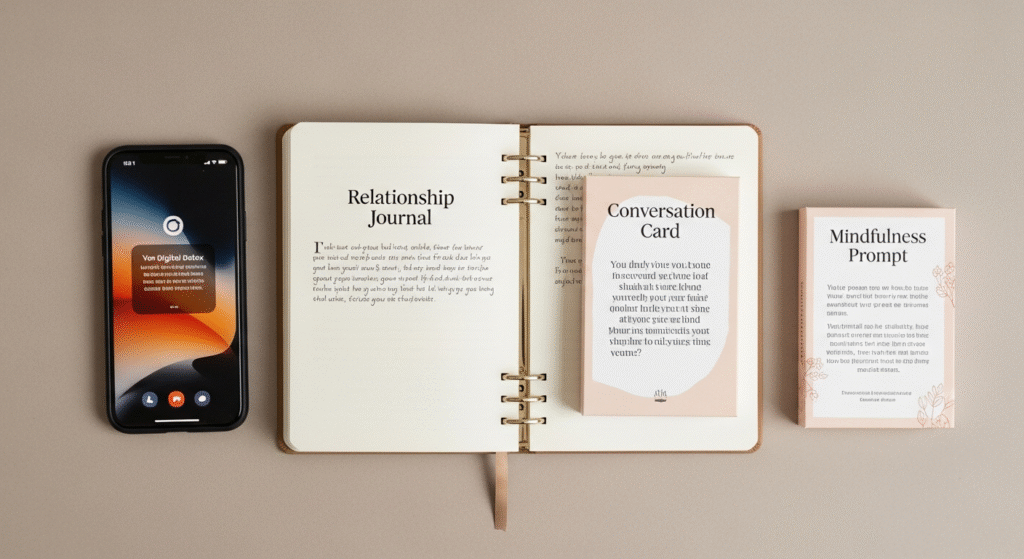

Mastering the Art of Connection: A Comprehensive Communication Skills Guide for Couples
Imagine a relationship where misunderstandings are rare, where conflicts become opportunities for growth, and where both partners feel consistently heard, valued, and understood. This isn’t a fantasy; it’s the reality that effective communication skills can create. It’s about cultivating a shared language of love and respect, fostering an environment where vulnerability is welcomed, and where each interaction strengthens your connection rather than eroding it. From the subtle cues of non-verbal communication to the challenging terrain of conflict resolution, we’ll explore the essential facets of couple communication, grounded in psychological insights and practical, actionable strategies. Let’s embark on this journey to unlock a deeper, more mindful way of relating to the person who matters most.
1. The Foundation: Mindful Presence and Active Listening
Before any words are exchanged, the most crucial communication skill is often silence – specifically, the silence of a truly present mind. In our always-on culture, distractions abound, and the insidious habit of “phubbing” (phone snubbing) can slowly erode the very fabric of connection. Mindful presence means bringing your full, undivided attention to your partner, signaling that they are your priority in that moment. It’s about creating an intentional space for connection, free from the allure of notifications and endless scrolling.
Active listening is the outward expression of this mindful presence. It’s not merely waiting for your turn to speak; it’s a profound commitment to understanding your partner’s message, both verbally and non-verbally. Research consistently shows that feeling truly heard is a fundamental human need and a cornerstone of relationship satisfaction. When one partner feels unheard, resentment can fester, and emotional distance grows.
Techniques for Mindful Presence and Active Listening:
- Digital Detox Moments: Institute “no-phone zones” during meals, before bed, or during dedicated conversation times. Physically put your phone away, out of sight and out of mind. This simple act communicates respect and priority.
- Eye Contact: Maintain comfortable, consistent eye contact. It signals engagement and sincerity, and helps you pick up on subtle emotional cues.
- Non-Verbal Cues: Lean in slightly, nod occasionally, and use an open body posture (uncrossed arms, facing your partner). Your body language speaks volumes about your receptiveness.
- Reflective Listening: Paraphrase or summarize what your partner has said to ensure you’ve understood correctly. For example, “So, if I’m hearing you right, you’re feeling frustrated because you think I’m not pulling my weight with household chores?” This validates their feelings and prevents misunderstandings.
- Asking Clarifying Questions: Instead of assuming, ask open-ended questions to delve deeper. “Can you tell me more about what that felt like?” or “What specifically triggered that emotion for you?” Avoid leading questions or questions that imply judgment.
- Resist Problem-Solving Immediately: Often, partners just want to be heard and understood, not to have their problems fixed. Ask, “Are you looking for advice, or do you just need me to listen?”
By consciously cultivating mindful presence and practicing active listening, you create a safe space for your partner to open up, fostering trust and deepening your emotional intimacy. It’s the first, most vital step in truly connecting.
2. Speaking Your Truth: The Art of Expressing Needs and Feelings
A common pitfall is using “you” statements, which often sound accusatory and put your partner on the defensive. For example, “You always leave your clothes on the floor!” immediately invites a defensive response. Instead, shifting to “I” statements allows you to own your feelings and focus on your experience, making it easier for your partner to hear and empathize.
Techniques for Expressing Needs and Feelings:
- “I” Statements: Structure your communication around your own feelings and observations. The formula often looks like: “I feel [emotion] when [specific behavior/situation] because [impact on you], and I need/would appreciate [specific request].”
- Instead of: “You never help me around the house!”
- Try: “I feel overwhelmed and unsupported when I see the dishes piled up, because I’m exhausted after work. I would really appreciate it if we could tackle them together or come up with a clearer plan.”
- Be Specific and Concrete: Vague complaints are impossible to address. Instead of “You’re distant,” try “I’ve noticed we haven’t had much quality time this week, and I’m feeling a bit disconnected.”
- Focus on Positive Needs: Instead of stating what you don’t want, articulate what you do want.
- Instead of: “Stop ignoring me for your phone!”
- Try: “I really value our time together, and I’d love it if we could have a few minutes each evening where we put our phones away and just connect.”
- Timing and Setting: Choose a time when you’re both calm and relatively free from distractions. Avoid bringing up heavy topics when one of you is stressed, hungry, tired, or in a rush. A calm environment fosters a calm conversation.
- Be Vulnerable: Sharing your true feelings, even if they feel uncomfortable, builds intimacy. It shows trust and invites your partner to meet you with empathy. Remember, vulnerability is not weakness; it’s courage.
Mastering the art of self-expression allows you to communicate your inner world in a way that fosters understanding, invites empathy, and strengthens your bond, paving the way for your needs to be met with care.
3. Navigating Conflict Constructively: Turning Arguments into Opportunities
Conflict is an inevitable part of any close relationship. It’s not the presence of conflict that harms relationships, but rather how couples navigate it. Healthy couples don’t avoid arguments; they learn to engage in them productively, using disagreements as opportunities to understand each other better and strengthen their connection. Unresolved conflict, however, can lead to resentment, emotional distance, and, ultimately, relationship breakdown.
Renowned relationship researchers like Dr. John Gottman emphasize the importance of “softened start-ups” and “repair attempts” during conflict. A softened start-up means approaching a difficult conversation gently, without blame or accusation. Repair attempts are any statement or action – verbal or non-verbal – that prevents negativity from escalating out of control. These are crucial skills for preventing destructive patterns and fostering a sense of teamwork even amidst disagreement.
Techniques for Constructive Conflict Resolution:
- Softened Start-Up: Begin the conversation with an “I” statement, express appreciation, or use humor. Avoid accusatory language (“You always…”) and harsh tones.
- Instead of: “You never listen to me!”
- Try: “I’m feeling a bit frustrated about something, and I’d really appreciate it if we could talk about it when you have a moment.”
- Take a Break (When Needed): If conversations become too heated, take a 20-30 minute break to calm down. Agree on a specific time to revisit the discussion. During the break, avoid rehearsing your arguments; instead, focus on self-soothing activities.
- Validate Feelings (Even if You Disagree with the Action): You don’t have to agree with your partner’s perspective to acknowledge their feelings. “I can see why you’re upset about that,” or “It makes sense that you feel hurt.” This shows empathy and can de-escalate tension.
- Focus on One Issue at a Time: Avoid “kitchen-sinking” – bringing up every past grievance. Stick to the current topic to avoid overwhelming the conversation and losing focus.
- Seek Understanding, Not Just Agreement: Your goal isn’t necessarily to “win” the argument or even to fully agree, but to understand your partner’s perspective and feelings. Ask, “What do you need from me right now?”
- Make and Accept Repair Attempts: These can be simple: “I’m sorry,” “Let’s take a breath,” “I love you,” a touch, or a joke. Learn to recognize your partner’s repair attempts and accept them gracefully. Accepting an apology or a bid for connection can halt a downward spiral.
- Brainstorm Solutions Together: Once both partners feel heard and understood, work collaboratively to find a solution that addresses both of your needs. This fosters a sense of partnership and mutual respect.
By adopting these strategies, couples can transform conflicts from destructive battles into constructive dialogues that deepen understanding and strengthen their bond.
4. Building Bridges: Empathy, Validation, and Understanding Your Partner’s World
Empathy is the cornerstone of deep connection. It’s the ability to not just understand your partner’s thoughts, but to feel what they feel, to step into their shoes and see the world from their perspective. Validation goes hand-in-hand with empathy; it’s the act of acknowledging and accepting your partner’s feelings as legitimate, even if you don’t personally agree with their viewpoint or reaction. When partners feel truly seen and understood, it creates a powerful sense of security and belonging.
Many communication breakdowns occur not because of a lack of love, but a lack of perceived understanding. We often jump to conclusions, project our own experiences, or dismiss our partner’s feelings because they don’t align with our own logic. Cultivating empathy requires intentional effort to suspend judgment and open your heart to your partner’s subjective reality.
Techniques for Cultivating Empathy and Validation:
- Practice Perspective-Taking: When your partner shares something, actively try to imagine what it must be like for them. Ask yourself, “What might be driving this feeling for them?” or “Given their history/personality, how would I feel in their situation?”
- Reflect Feelings: Use phrases that show you’re trying to grasp their emotional state. “It sounds like you’re feeling really frustrated right now,” or “I can hear how much that hurt you.”
- Normalize Their Experience: Sometimes, simply saying “It makes sense that you’d feel that way” can be incredibly validating. It communicates that their reaction is understandable, even if you would react differently.
- Ask Open-Ended Questions About Their Experience: Instead of offering solutions, ask questions that invite deeper sharing. “What was that like for you?” “What do you think contributed to that feeling?” “What do you need from me to feel better?”
- Avoid Minimizing or Dismissing: Never say things like “You’re overreacting,” “It’s not a big deal,” or “You shouldn’t feel that way.” These statements invalidate their experience and shut down communication.
- Show Genuine Curiosity: Be curious about their inner world. Ask about their day, their dreams, their worries, not just as a formality, but with genuine interest. This builds a rich tapestry of shared understanding.
By consistently extending empathy and validation, you communicate to your partner that their inner world matters, that their feelings are valid, and that they are safe to be themselves with you. This deepens trust and creates a resilient emotional bond.
5. Beyond Words: Non-Verbal Communication and Affection
Furthermore, physical affection and quality time are vital forms of non-verbal communication that express love, care, and connection. In the digital age, it’s easy to become physically separate even when in the same room, each lost in our own screen. Intentionally reconnecting through touch and shared presence can powerfully counteract this detachment.
Techniques for Enhancing Non-Verbal Communication and Affection:
- Mind Your Body Language:
- Open Posture: Keep your arms uncrossed, face your partner, and lean slightly towards them to convey openness and engagement.
- Facial Expressions: Be mindful of your expressions. A warm smile, empathetic gaze, or concerned furrowed brow can communicate understanding and care. Avoid eye-rolling or sneering, which are highly destructive.
- Tone of Voice: Pay attention to your tone. A soft, warm, and even tone can de-escalate tension, while a harsh or sarcastic tone can ignite conflict, regardless of the words used.
- Make Eye Contact: As mentioned earlier, consistent eye contact signals presence, sincerity, and connection.
- Intentional Touch: Don’t underestimate the power of physical affection beyond intimacy. A hand on the arm, a gentle squeeze, a hug, or holding hands sends powerful messages of love, comfort, and reassurance. These “bids for connection” are vital for keeping emotional intimacy alive.
- Shared Activities (Quality Time): Engage in activities together where you can be fully present and interact without digital distractions. This could be cooking, walking, playing a board game, or simply sitting and talking. Shared experiences create shared memories and reinforce your bond.
- Affectionate Gestures: Small acts of kindness or gestures of love can speak volumes. Leaving a note, bringing your partner coffee, or doing a chore they dislike demonstrates care and thoughtfulness.
By consciously aligning your non-verbal cues with your intentions and regularly engaging in affectionate gestures, you create a rich tapestry of communication that transcends words, deepening your emotional and physical intimacy.
6. Sustaining Connection: Regular Check-ins and Digital Boundaries
Effective communication isn’t a one-time fix; it’s an ongoing practice, a daily commitment to nurturing your relationship. Just as a garden needs continuous care, a relationship thrives on regular attention and intentional effort. In today’s fast-paced world, it’s easy for couples to drift apart, becoming “parallel players” in the same household, each immersed in their own digital worlds. Instituting regular communication check-ins and setting clear digital boundaries are crucial for sustaining connection and ensuring your relationship remains a priority.
Techniques for Sustaining Connection:
- Daily Debriefs: Dedicate 15-20 minutes each day to connect. Share about your day, your triumphs, your challenges, and how you’re feeling. Make sure this is a screen-free time. This routine helps you stay updated on each other’s lives and prevents small issues from becoming big ones.
- Weekly Relationship Check-ins: Schedule a more structured, weekly conversation to discuss the “state of the union.” This is a time to address any lingering issues, express appreciation, share future plans, and discuss your needs as a couple.
- Example prompts: “What’s one thing you appreciated this week?” “Is there anything we need to discuss or improve?” “What are you looking forward to next week?” “What can I do to support you better?”
- Set Digital Boundaries Together: Discuss and agree upon rules for technology use within your relationship.
- No-Phone Zones: Designate specific times and places (e.g., bedroom, dinner table, during conversations) as off-limits for phones.
- Focused Presence: When your partner is speaking, put your phone down and give them your full attention.
- Digital Detox Dates: Plan dates or weekends where you both intentionally disconnect from screens and focus solely on each other.
- Notifications Control: Turn off unnecessary notifications to reduce interruptions during shared time.
- Express Appreciation Regularly: Make it a habit to verbally express gratitude and appreciation for your partner, both for grand gestures and small daily acts. “Thank you for making dinner,” “I appreciate you listening to me today,” “I love how thoughtful you are.” Positive affirmations strengthen the bond.
- Schedule “Us Time”: Just like you schedule work meetings or appointments, intentionally schedule time for your relationship. This could be a weekly date night, a shared hobby, or simply an hour to relax together. Prioritizing this time sends a powerful message that your relationship is important.
By integrating these practices into your daily and weekly routines, you create a conscious framework for ongoing communication and connection, ensuring your relationship remains vibrant, responsive, and deeply fulfilling in the modern world.
Conclusion
Developing masterful communication skills is perhaps the most rewarding investment you can make in your relationship. It’s a continuous journey, not a destination, requiring patience, practice, and a shared commitment to growth. By embracing mindful presence, learning to express your truth, navigating conflict constructively, cultivating empathy, and integrating non-verbal cues and digital boundaries, you are actively building a relationship that is resilient, deeply intimate, and profoundly fulfilling.
Remember, the goal isn’t perfection, but progress. There will be missteps and misunderstandings, but with these tools, you now have the power to repair, reconnect, and strengthen your bond each time. At Stop Phubbing, we champion the return to authentic human connection – a connection that flourishes when both partners commit to truly seeing, hearing, and understanding each other. Take these steps today, and watch your relationship transform into a vibrant, thriving testament to the power of intentional, heartfelt communication.