
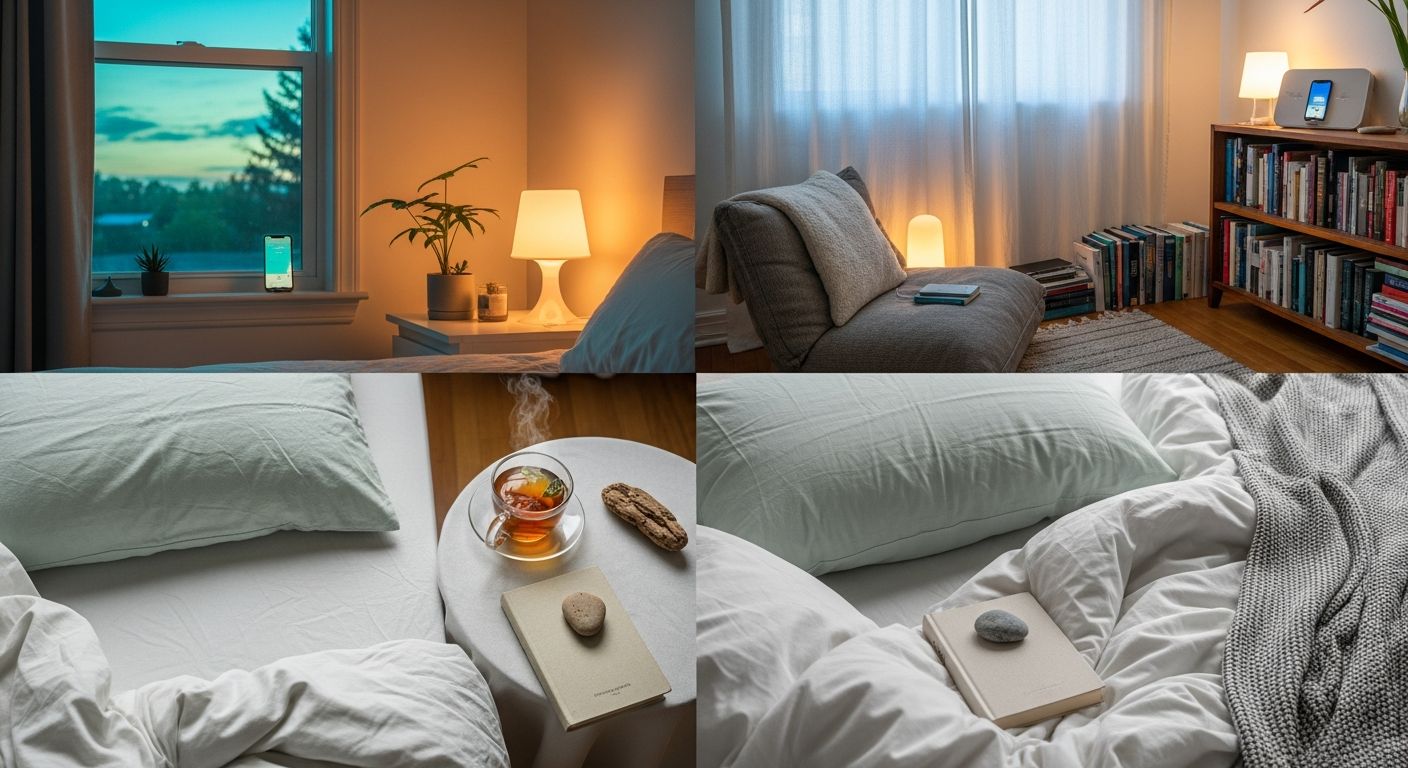
How to Stop Using Your Phone Before Bed: The Ultimate 2026 Guide to Digital Wellness
In our hyper-connected world, the glow of a smartphone screen has become the modern-day “goodnight.” For many of us, the final act of the day isn’t closing our eyes or kissing a loved one—it’s scrolling through a bottomless feed of news, social media, or emails. While it feels like a way to unwind, this habit is one of the most significant disruptors of sleep quality and mental health. As we navigate the digital landscape of 2026, the challenge of “disconnecting to reconnect” has never been more vital.
The urge to check your phone one last time is driven by powerful neurochemical loops designed to keep you engaged. However, the cost of this addiction is high: increased anxiety, disrupted circadian rhythms, and chronic fatigue. This guide is designed to help you reclaim your evening hours. By understanding the psychology of screen addiction and implementing practical, sustainable strategies, you can transform your bedroom into a sanctuary of rest rather than a hub of digital stimulation. It’s time to put down the device and pick up the quality of your life.
1. The Science of Sleep: Why Your Phone is a Biological Disruptor
To stop using your phone before bed, you must first understand what it does to your brain. Our bodies operate on a 24-hour internal clock known as the circadian rhythm. This rhythm is heavily influenced by light. For thousands of years, the setting of the sun signaled to the brain that it was time to produce melatonin—the hormone responsible for sleep.
Smartphones emit a specific wavelength of light known as short-wavelength enriched light, or “blue light.” This light mimics the sun’s peak intensity. When you stare at your screen at 11:00 PM, your photoreceptors send a message to your brain: “The sun is up! Stay alert.” This suppresses melatonin production, making it significantly harder to fall asleep and reducing the amount of deep, restorative REM sleep you get.
Beyond the light, there is the issue of “cognitive arousal.” Your phone is a portal to the entire world. A stressful work email, a polarizing political headline, or a video of a high-achieving peer triggers the release of cortisol and dopamine. Cortisol keeps you in a state of “fight or flight,” while dopamine keeps you seeking the next “hit” of information. This combination creates a state of hyper-arousal that is the polar opposite of the calm required for rest. In 2026, we recognize that digital wellness isn’t just about screen time—it’s about biological preservation.
2. Implementing a “Digital Sunset” Strategy
One of the most effective ways to break the habit is to establish a “Digital Sunset.” This is a predetermined time every evening when you consciously power down your devices or move them to a different room. Most sleep experts recommend beginning this transition 60 to 90 minutes before your intended sleep time.
The concept of a Digital Sunset works because it removes the “decision fatigue” associated with putting the phone away. Instead of deciding every night when to stop, you create a hard rule. For example, if you aim to be asleep by 10:30 PM, your Digital Sunset begins at 9:00 PM.
To make this transition easier, use your phone’s built-in features to signal the sunset. Modern operating systems in 2026 have advanced “Focus Modes” that can automatically dim the screen, silence notifications, and even turn the display to grayscale at a specific time. Grayscale is a particularly powerful psychological tool; when the vibrant reds of notification badges and the saturated colors of Instagram disappear, the “reward” your brain gets from the screen diminishes significantly. The phone becomes a boring gray brick, making it much easier to set aside.
3. Designing an “Off-Limits” Bedroom Environment
Your environment often dictates your behavior more than your willpower does. If your phone is on your nightstand, you will check it. It’s a reflex. To stop using your phone before bed, you must change the geography of your home.
The most successful digital wellness practitioners follow one golden rule: **The bedroom is a phone-free zone.** This means your phone does not charge on your bedside table. Instead, set up a charging station in the kitchen, the hallway, or the living room. By physically separating yourself from the device, you eliminate the “phantom vibration” syndrome and the temptation to check a notification in the middle of the night.
“But I use my phone as an alarm clock!” This is the most common excuse, and in 2026, the solution is simpler than ever: buy a dedicated alarm clock. Whether it’s a high-tech “sunrise alarm” that mimics the dawn or a classic analog clock, removing the phone from the equation prevents you from falling into the “scroll trap” the moment you wake up or right before you close your eyes. When your phone is in another room, the barrier to entry for mindless scrolling becomes high enough that your brain will opt for sleep instead.
4. Replacing the Habit: Analog Alternatives for the Evening
A common mistake in reducing phone addiction is trying to remove the habit without replacing it. Nature abhors a vacuum, and so does your brain. If you take away the phone but sit in bed staring at the ceiling, you will eventually reach for the device out of boredom.
You must curate a list of high-quality “analog” activities to fill the gap. These should be activities that are low-stimulation but engaging enough to prevent boredom. Consider the following:
* **Fiction Reading:** Physical books or e-ink readers (without backlighting) are perfect. Fiction, in particular, allows the brain to enter a “flow state” that mimics the dream state, easing the transition to sleep.
* **Tactile Journaling:** Writing by hand is a grounding exercise. Whether it’s a gratitude journal or a “brain dump” to clear out tomorrow’s to-do list, the act of pen on paper is therapeutic and screen-free.
* **Meditation and Breathwork:** Use this time to practice mindfulness. If you need guided sessions, use a dedicated meditation device or a smart speaker so you aren’t tempted by a screen.
* **Light Stretching or Yin Yoga:** Releasing physical tension in the body signals to the nervous system that it is safe to rest.
By focusing on what you are *adding* to your life (rest, reflection, hobbies) rather than what you are *taking away* (the phone), the transition feels like a reward rather than a punishment.
5. Overcoming the Dopamine Loop and FOMO
The struggle to put the phone down is often a battle with FOMO (Fear Of Missing Out) and the “slot machine” mechanics of social media algorithms. Every swipe is a gamble: Will I see a funny meme? A message from a friend? A shocking news story? This variable reward schedule is exactly how casinos keep people at the tables.
To combat this in 2026, we have to practice “Digital Minimalism.” Recognize that 99% of what happens online between 9:00 PM and 7:00 AM is not urgent. The world will not change significantly if you read that news alert eight hours later. In fact, you will be better equipped to handle the world’s problems after a full night of sleep.
Practice “radical acceptance” of missing out. Acknowledge the itch to check your phone, name it (“I am experiencing the urge to scroll”), and let it pass without acting on it. Over time, the neural pathways associated with this addiction will weaken. You are retraining your brain to be okay with silence and stillness—two things that the modern attention economy tries to eliminate.
6. Advanced Tools for Digital Wellness in 2026
While the goal is to use the phone less, technology can actually be an ally if used intentionally. We have moved beyond simple timers into sophisticated digital wellness ecosystems.
* **App Blockers with Friction:** Use apps that don’t just track your time but actually lock you out of specific apps after a certain hour. Some 2026 tools require you to scan a QR code in another room or perform a physical task to “unlock” the phone, providing the necessary friction to stop impulsive use.
* **Smart Home Integration:** Program your smart lights to shift to a warm, amber hue at 8:30 PM. This visual cue acts as a psychological “anchor,” reminding your body that the day is winding down.
* **Wearable Tech Insights:** If you use a fitness tracker or Oura ring, pay close attention to your “Sleep Readiness” scores. Seeing the empirical data of how a 30-minute late-night scroll session ruins your recovery can be the motivation you need to stick to your goals.
Digital wellness is about using technology to serve your life, not the other way around. By automating your environment, you rely less on willpower and more on systems.
***
FAQ: Frequently Asked Questions about Phone Use and Sleep
**Q1: Is “Night Mode” or a blue light filter enough to protect my sleep?**
**A:** While “Night Mode” (which shifts the screen to warmer tones) is better than full-intensity blue light, it is not a silver bullet. The psychological stimulation of the content you are consuming—social media, news, or work—still keeps your brain alert. Furthermore, even warm light can suppress melatonin if it’s bright enough. The best approach is to avoid the screen entirely.
**Q2: What if I use my phone for white noise or sleep stories?**
**A:** If you find audio helpful for falling asleep, try to move the interaction away from the screen. Use a smart speaker (like an Echo or HomePod) or a dedicated white noise machine. If you must use your phone, set the story or sound to play and put the phone face down across the room. Avoid “scrolling” to find a track; use a playlist that starts automatically.
**Q3: How long does it take to break the habit of scrolling before bed?**
**A:** Neuroplasticity suggests that it takes about 21 to 60 days to cement a new habit. The first three to five days are usually the hardest, as your brain will crave the dopamine hits it’s used to receiving. After two weeks, you will likely notice a significant improvement in how quickly you fall asleep, which becomes its own motivation to continue.
**Q4: Should I use an e-reader like a Kindle instead of a phone?**
**A:** Yes, but with caveats. E-ink devices (like the Kindle Paperwhite) that do not have a standard LCD/OLED backlink are much easier on the eyes and do not emit the same level of sleep-disrupting light. However, ensure you aren’t using a tablet (like an iPad) that has an “e-reader app,” as the screen technology is still fundamentally the same as a phone.
**Q5: What should I do if I wake up in the night and can’t sleep?**
**A:** Whatever you do, do not pick up your phone. The blast of light and information will signal to your brain that the day has started, making it nearly impossible to fall back into a deep sleep. Instead, try a “sleep reset”: if you are awake for more than 20 minutes, get out of bed, go to a different room with dim lighting, and do something boring (like reading a dry manual or folding socks) until you feel sleepy again.
***
Conclusion: Reclaiming Your Rest for a Better 2026
Stopping the habit of using your phone before bed is one of the single most impactful changes you can make for your digital wellness. In an era where our attention is the most valuable commodity on earth, choosing to disconnect is an act of self-reclamation. By understanding the biological impact of blue light, setting a “Digital Sunset,” and moving your phone out of the bedroom, you are choosing long-term health over short-term hits of dopamine.
Remember that progress is rarely linear. You might have nights where you slip up and find yourself scrolling at midnight. When that happens, don’t abandon the practice. Simply acknowledge the slip, reflect on how it makes you feel the next morning (likely tired and unfocused), and commit to your “Off-Limits” bedroom rule the following night.
As we move forward into 2026, the people who thrive will be those who can govern their relationship with technology rather than being governed by it. Sleep is the foundation of mental clarity, emotional stability, and physical health. Protect it fiercely. Put your phone to bed, so you can finally get the rest you deserve.