
Defining “Perfect” for Your Family: A Shared Vision
Before diving into booking flights or researching resorts, the most crucial first step in planning the perfect family vacation is to collectively define what “perfect” means for your unique family unit. This isn’t a solo mission for one parent; it’s a collaborative brainstorm, a shared dream-weaving exercise that involves every member, from the youngest to the oldest. Each family member brings their own hopes, desires, and even anxieties to the table, and acknowledging these from the outset is vital for a truly harmonious trip.
Start by gathering everyone in a comfortable, tech-free setting. Perhaps over a weekend breakfast or a cozy evening. Encourage open communication, not just about destinations, but about experiences. Ask questions like:
- What kind of memories do we want to make together?
- Do we crave adventure and excitement, or gentle relaxation and quiet moments?
- Is learning something new a priority, or simply unwinding from daily routines?
- What does each person imagine themselves doing on this vacation?
- What makes us feel most connected as a family?
For families with younger children, this might involve looking at pictures of different types of destinations (beaches, mountains, cities) and listening to their excited chatter about playgrounds or animal encounters. For teenagers, it could mean discussing their interests in history, extreme sports, or cultural immersion, and finding ways to integrate these into the itinerary. Remember, a “perfect” vacation isn’t about ticking off a list of tourist attractions; it’s about meeting the emotional and recreational needs of everyone involved.
During this initial vision-setting phase, it’s also important to have a frank, yet gentle, discussion about the practicalities, particularly the budget. While you don’t need exact figures at this stage, understanding the general financial parameters helps manage expectations and guides the direction of your planning. A mindful approach to vacation planning means recognizing that priceless memories aren’t solely dependent on lavish spending. Sometimes, the most cherished moments come from simple, shared experiences that align with your family’s core values. This collaborative beginning sets a powerful precedent for teamwork and mutual respect throughout the entire planning process and, ultimately, the trip itself.
Navigating the Digital Divide: Tech-Wise Travel Planning
In the 21st century, technology is an undeniable part of our lives, and its role in travel planning can be a double-edged sword. On one hand, it offers unparalleled access to information, booking convenience, and inspiration. On the other, it can lead to endless comparison, decision fatigue, and the insidious habit of phubbing even before the trip begins. The key to a truly mindful family vacation planning experience is to use technology wisely and intentionally.
When researching destinations, accommodations, and activities, designate specific “planning times” and stick to them. Avoid falling into the trap of constantly checking your phone or laptop throughout the day, which can fragment your attention and detract from present moments with your family. Instead, make it a focused activity. For example, dedicate an hour each evening to research, involving older children in the process by letting them explore options within agreed-upon parameters. This teaches them valuable research skills and gives them ownership in the planning.
Be wary of the “highlight reel” effect on social media. While it’s tempting to scroll through glamorous vacation photos, remember that these often represent a curated, idealized version of reality. Comparing your family’s potential trip to someone else’s perfectly filtered Instagram feed can breed dissatisfaction and unrealistic expectations. Focus on what genuinely excites and fulfills your family, not what looks best for an online audience.
Crucially, use the planning phase to establish clear expectations around technology use during the actual vacation. This is a perfect opportunity for a pre-vacation digital wellness discussion. Instead of a blanket ban, which can feel punitive, discuss why limiting screen time is important for connection and presence. Perhaps you agree on “tech-free zones” during meals, specific hours for device use, or a commitment to leave phones in the hotel room during certain outings. In 2026, with the increasing ubiquity of smart devices, these conversations are more important than ever.
Consider leveraging technology for practical organization, rather than just entertainment. Apps for shared itineraries, packing lists, expense tracking, or even language translation can be incredibly helpful. However, once the planning is done and the trip begins, shift your focus from screens to the world around you. This mindful approach to technology ensures it serves as a tool for a better vacation, rather than a barrier to genuine family connection.
Crafting the Itinerary: Balancing Structure and Spontaneity
Begin by researching your chosen destination thoroughly. Look into local attractions, cultural experiences, natural wonders, and family-friendly activities. Involve your children in this research – let them explore options and voice their preferences. Giving them agency in the planning process increases their excitement and investment in the trip. However, parents should gently guide these choices to ensure they align with the family’s overall vision and budget.
When mapping out your days, think about pacing. Instead of packing every hour with an activity, build in significant blocks of downtime. This could mean a leisurely morning at the accommodation, an afternoon by the pool, or simply wandering without a strict agenda. These unscripted moments are often where the most memorable connections happen – a spontaneous conversation, a shared laugh over an unexpected sight, or simply enjoying each other’s company without external pressure.
Consider the logistics of each day. How will you get from one place to another? What are the travel times? Are there any specific booking requirements for attractions? Think about transportation options. If you’re renting a car, understand the agreement and responsibilities. Just as you’d consider “what to do if you lend your car to a friend and they crash it” when it comes to personal property, it’s wise to be clear on rental car insurance, local driving laws, and emergency protocols when traveling in an unfamiliar place. This foresight, though seemingly minor, prevents potential stress and ensures everyone knows the plan, fostering a sense of security.
Food planning is another essential element. Research local dining options, but also consider preparing some meals at your accommodation to save money and provide familiar comfort, especially for picky eaters. Accommodate any dietary restrictions or preferences, ensuring everyone feels cared for. Trying local cuisine is a fantastic way to immerse yourselves in the culture, so aim for a mix of both.
Finally, create a master packing list, but remember to pack smart and light. Over-packing can add unnecessary stress and baggage fees. Focus on versatile items and essentials. A well-thought-out itinerary provides a comfortable framework, but the true magic of a family vacation often lies in the moments of joyful improvisation and shared discovery that occur within that framework.
Budgeting for Bliss: Financial Harmony on Vacation
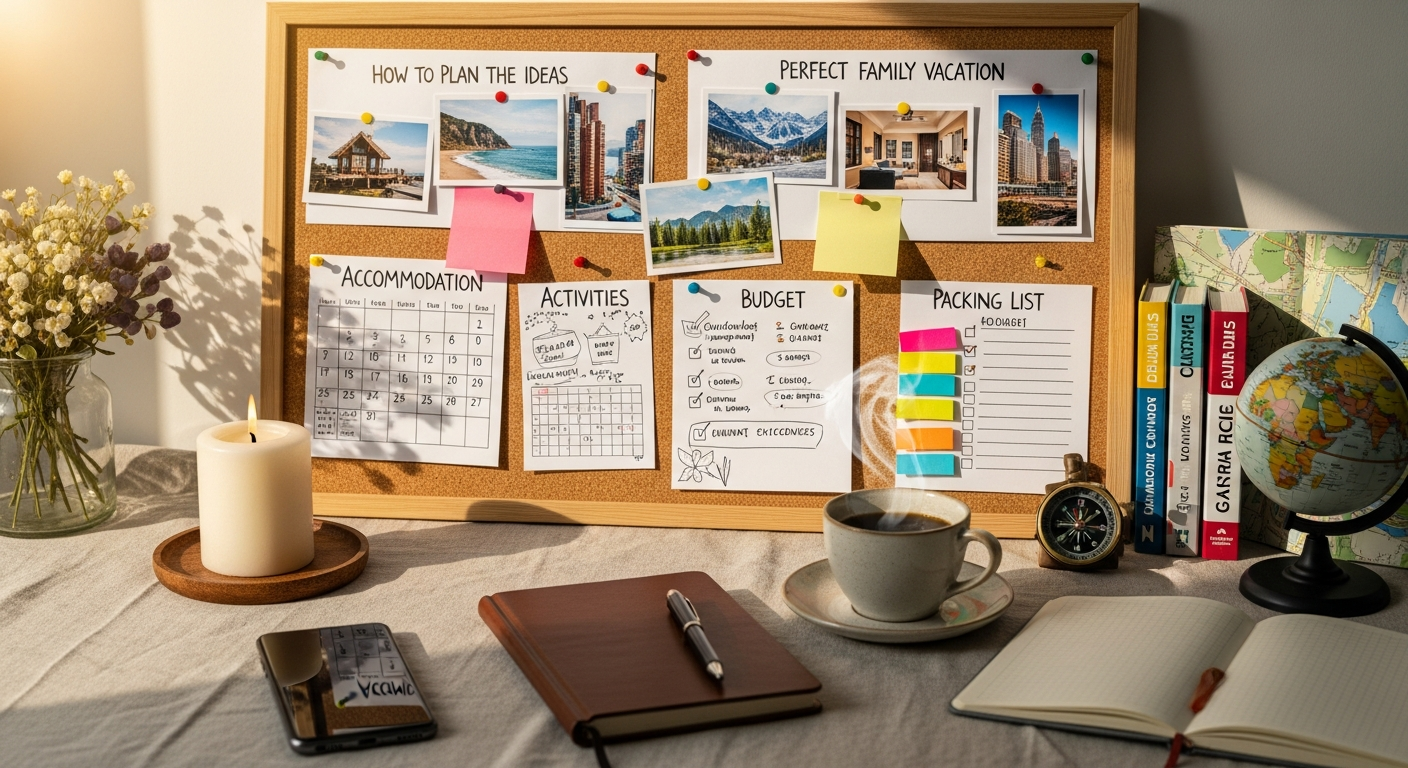
Money matters are often cited as a leading cause of stress in relationships, and vacations are no exception. To ensure your family vacation truly brings bliss and not financial strain, a clear and collaborative approach to budgeting is essential. Financial harmony during planning prevents disagreements and allows everyone to fully enjoy the trip without underlying anxieties.
The first step is to set a realistic overall budget. This isn’t about pulling a number out of thin air; it’s about assessing your family’s financial situation, understanding what you can comfortably afford, and prioritizing spending. Involve older children in this discussion to teach them valuable financial literacy skills. Explain that choices have consequences and that sticking to a budget allows for more fun and fewer worries.
Break down your budget into key categories:
- Transportation: Flights, car rental, fuel, public transport, taxis.
- Accommodation: Hotels, vacation rentals, camping.
- Food: Restaurants, groceries, snacks, treats.
- Activities & Entertainment: Entrance fees, tours, souvenirs.
- Miscellaneous: Travel insurance (highly recommended!), unexpected expenses, toiletries, tips.
Once you have your categories, research typical costs for your chosen destination. Websites, travel guides, and even online forums can provide valuable insights into average prices. Be honest about where you can save and where you’re willing to splurge. Perhaps you’re willing to spend more on a unique experience but save on accommodation by choosing a self-catering option. Or maybe you prioritize a direct flight but pack your own snacks to cut down on airport food costs.
Consider these cost-saving strategies:
- Travel during the off-season or shoulder season: Prices for flights and accommodation are often significantly lower.
- Book in advance: Especially for flights and popular accommodations, early booking can secure better rates.
- Look for package deals: Sometimes bundling flights and hotels can save money.
- Utilize loyalty points or rewards: If you have credit card points or airline miles, now might be the time to use them.
- Cook some meals: Staying in a place with a kitchen can dramatically reduce food expenses.
- Seek out free activities: Many destinations offer beautiful parks, free museums, hiking trails, or public beaches.
- Set a souvenir budget: Give each family member a small, fixed amount for souvenirs to prevent overspending.
Throughout the planning and the trip, track your expenses. There are many simple apps and spreadsheets available to help with this. Seeing where your money is going can help you stay on track and make informed decisions. A family vacation is an investment in shared memories and strengthened bonds. By approaching the financial aspect with transparency, collaboration, and mindfulness, you can ensure that your budget contributes to bliss, rather than detracting from it. Remember, the richest experiences often aren’t the most expensive ones, but those born from shared intention and connection.
Pre-Trip Prep & Mindset: Setting the Stage for Success
The days leading up to your family vacation can be a whirlwind of excitement and last-minute tasks. However, approaching this period with a mindful mindset can significantly reduce stress and set a positive tone for the journey ahead. It’s about preparation, not just logistical, but also mental and emotional, ensuring everyone is ready to embrace the adventure.
Logistical Preparations:
- Document Check: Ensure all passports, visas (if required), tickets, booking confirmations, and identification are current, valid, and easily accessible. Make digital copies and share them with another adult traveling.
- Health & Safety: Pack a basic first-aid kit. Research local medical facilities and emergency numbers. If traveling internationally, check travel advisories and any required vaccinations. Ensure everyone’s prescriptions are filled and packed in carry-on luggage.
- Home Security: Arrange for mail to be held or collected, plants watered, and pets cared for. Inform a trusted neighbor or friend of your travel dates.
- Packing Smart: Revisit your packing list. Lay out clothes and essentials. Roll clothes to save space. Involve children in packing their own bags, teaching them responsibility. Ensure carry-ons have essentials for the first 24 hours in case checked luggage is delayed. Don’t forget chargers, power banks, and adapters for 2026 tech!
- Small Comforts: Pack favorite snacks, comfort items for younger children, and age-appropriate entertainment (books, small games) for travel days. These can be lifesavers during delays or long stretches of travel.
Mindset & Emotional Preparation:
- Manage Expectations: This is perhaps the most crucial element. Acknowledge that not every moment will be perfect. There will be delays, meltdowns (from kids or adults!), unexpected changes, and minor frustrations. Emphasize that these are part of the adventure and opportunities for resilience and problem-solving as a family.
- Communicate & Reassure: Talk to your children about what to expect on travel days and at the destination. Address any anxieties they might have. Reassure them that you’re a team and will navigate everything together.
- Prioritize Sleep: In the days leading up to the trip, try to ensure everyone gets adequate rest. Being well-rested makes navigating travel much easier for both children and adults.
- Delegate & Share Responsibility: Don’t try to do everything yourself. Assign age-appropriate tasks to family members. This fosters a sense of teamwork and ownership. Just as “4 ways to maintain a healthy marriage” often highlight shared responsibilities and effective communication, applying these principles to pre-trip prep can strengthen your family unit. When partners share the load, the stress is distributed, and both feel more supported and appreciated.
- Embrace Imperfection: Let go of the need for everything to be flawless. The most cherished memories often arise from unexpected moments, even those that initially felt like challenges. Focus on presence over perfection, and the joy of being together.
By consciously preparing both practically and emotionally, you set the stage for a vacation where your family can truly thrive, connect, and create beautiful, lasting memories, ready to embrace whatever the journey brings.
Embracing the Journey: Mindful Moments on the Road
The planning is done, the bags are packed, and the adventure has begun! Now comes the most important part: fully embracing the journey and making the most of every mindful moment. This is where the effort you’ve put into planning for connection truly pays off, allowing you to move beyond the logistics and into the heart of shared experience. The goal is to be present, to connect, and to allow the vacation to deepen your family bonds.
Disconnect to Connect: Practical Tips for Screen-Free Time
- Designate Tech-Free Zones and Times: Stick to the agreements you made during planning. Meals, specific activities (like a hike or a museum visit), or the first and last hour of the day can be designated phone-free.
- Lead by Example: Parents, your behavior sets the tone. If you’re constantly checking your phone, your children will follow suit. Put your device away and model present engagement.
- Engage with Analog Entertainment: Pack travel games, card decks, sketchbooks, or journals. Encourage reading physical books. These activities foster interaction and creativity.
- Observe and Discuss: Instead of immediately reaching for your phone to capture every moment, take time to simply observe. Discuss what you see, smell, and hear with your family. What are your first impressions? What’s different from home?
Engaging with Each Other: Beyond the Screen
- Conversations That Matter: Use travel time (car rides, plane journeys, waiting in line) as opportunities for genuine conversation. Ask open-ended questions: “What’s been your favorite part so far?” “What’s something new you’ve learned?” “What are you looking forward to tomorrow?”
- Shared Experiences: Actively participate in activities together. Whether it’s building a sandcastle, trying a new dish, or navigating a foreign city, do it as a team.
- Family Rituals: Create new vacation rituals. Maybe it’s a daily “highs and lows” discussion over dinner, a specific game you play each evening, or a family photo taken in a unique way each day. These rituals become cherished memories.
- Mindful Eating: When sharing meals, slow down. Savor the food, talk about your day, and truly listen to each other. This is a prime opportunity to practice mindful eating and connection.
Handling Challenges Gracefully:
No vacation is entirely without its bumps. Flights get delayed, kids get tired, plans change. Approach these moments with patience and flexibility. Remember your earlier discussions about managing expectations. Instead of letting frustration fester, acknowledge the challenge, problem-solve together, and move on. These shared challenges, when navigated with grace, can actually strengthen family resilience and demonstrate the power of teamwork.
A family vacation, even with the kids in tow, is a crucial opportunity for parents to reconnect and practice the teamwork that is essential for a healthy relationship. Just as understanding “how to reignite the spark in a marriage after the kids move out” involves shared experiences and intentional connection, a family trip provides a micro-environment for parents to support each other, share responsibilities, and find moments to appreciate each other amidst the beautiful chaos of family life. These shared efforts lay the groundwork for future couple-focused travel and reinforce the strength of the marital bond at the core of the family.
By intentionally focusing on presence, connection, and embracing the journey – imperfections and all – your family vacation will transform from a mere trip into a rich tapestry of shared memories, strengthened relationships, and a profound sense of togetherness that will last long after you return home in 2026.
FAQ: Your Questions on Family Vacation Planning Answered
How do we choose a destination everyone will love?
Start by brainstorming with everyone, listing individual interests and preferences without immediate judgment. Group similar ideas (e.g., “beach fun,” “mountain adventures,” “city exploration”). Then, introduce a “veto” system where each person gets one or two vetoes, or a “top three” vote to narrow down options. Discuss the pros and cons of the finalists, considering age appropriateness, budget, and travel time. The goal isn’t to find one perfect destination that everyone equally adores, but rather one that offers enough appealing activities for each family member to feel excited and included. Sometimes, a compromise that offers a blend of different experiences (e.g., a coastal town with historical sites nearby) can be the most successful choice for diverse family interests.
What’s the best way to handle screen time on vacation?
The “best way” is a family-specific agreement, made collaboratively before the trip. Avoid a total ban, which can cause rebellion, and instead focus on mindful limits. Consider “tech-free zones” (e.g., at meals, during specific activities like hiking or swimming) and “tech-free times” (e.g., the first and last hour of the day). Encourage device use for educational purposes (mapping, language translation, photography) rather than purely passive entertainment. Lead by example by putting your own phone away. Have plenty of engaging analog alternatives ready, like travel games, books, journals, and art supplies, to fill any downtime and foster real-world interaction.
How can we stick to our budget without feeling deprived?
Sticking to a budget without feeling deprived requires smart planning and a shift in mindset towards valuing experiences over excessive spending. First, establish a realistic budget early on and involve everyone in understanding the financial parameters. Look for cost-saving opportunities like traveling in the shoulder season, booking accommodations with kitchen facilities to prepare some meals, and utilizing free attractions such as parks, public beaches, or free walking tours. Prioritize what’s most important to your family – is it a unique activity, a specific type of food, or a comfortable stay? Allocate more of your budget to those priorities and be willing to cut back on less important areas. Remember, the richest memories often come from shared moments, not necessarily the most expensive ones.
What if something goes wrong during the trip?
Despite the best planning, things can go wrong – missed flights, unexpected illness, bad weather. The key is to approach these situations with flexibility, resilience, and a problem-solving mindset rather than panic. First, have a contingency plan: travel insurance, emergency contacts, digital copies of important documents. Second, communicate openly as a family about the challenge at hand. Avoid blaming and instead focus on finding solutions together. Remind everyone that these unexpected detours are part of the adventure and can sometimes lead to new, memorable experiences. Model calm and adaptability, demonstrating to your children how to navigate difficulties with grace. Your reaction sets the tone for the entire family.
How far in advance should we start planning?
The ideal planning timeline varies depending on the destination, complexity, and time of year. For major international trips or travel during peak season (like summer 2026), it’s advisable to start planning 9-12 months in advance, especially for flights and popular accommodations. This allows for better prices and more availability. For domestic trips or travel during the shoulder season, 3-6 months is often sufficient. Even for shorter, simpler getaways, giving yourselves at least 1-2 months allows for mindful discussion, budgeting, and booking. The earlier you start, the more time you have to research, compare options, involve the whole family, and spread out the financial commitment, reducing last-minute stress.
How can we make sure the vacation truly strengthens our family bonds?
To truly strengthen family bonds, focus on intentional connection and presence. This means actively setting aside devices, engaging in shared activities, and fostering meaningful conversations. Create opportunities for teamwork, like navigating a new city or setting up camp. Encourage each family member to share their feelings and experiences daily. Embrace imperfections and unexpected moments as part of your family’s unique story. Prioritize quality time over quantity of activities. The most profound bonding often happens in the quiet moments of shared laughter, mutual support, and simply being present with one another, creating a rich tapestry of collective memories that reinforce your family’s love and connection.
Recommended Resources
You might also enjoy Healthy Boundaries In Relationships from Heartbeat Reggae.
Related reading: Intermittent Fasting Mental Clarity (Heartbeat Reggae).