
Updated March 2026. The profound influence of digital platforms on self-perception, particularly concerning physical appearance, is a topic of increasing importance. Examining the complex relationship between social media and body image reveals how online interactions can profoundly shape an individual’s sense of self-worth and perceived attractiveness. At stopphubbing.com, we champion the principles of Digital Wellness and Healthy Relationships as crucial frameworks for navigating these complexities, guiding individuals towards a more balanced and positive self-view in an increasingly digital world.
How Does Social Media Influence Body Image Perception?
To understand the intricate relationship between digital platforms and physical self-image, it’s crucial to examine the specific ways online environments shape how individuals perceive their own bodies. Modern social networking sites, with their curated content and emphasis on visual presentation, act as potent amplifiers of certain aesthetic ideals, often leading to a distortion of healthy self-perception.
The Role of Idealized Content and Filters
Social media platforms like Instagram and TikTok are saturated with highly curated and often digitally altered images. Influencers, celebrities, and even peers frequently share content that showcases idealized physiques, perfect skin, and aspirational lifestyles. These images are often enhanced with sophisticated filters and photo editing applications, creating an unrealistic standard of beauty that is virtually unattainable in real life. For instance, a study published in the Journal of Eating Disorders in 2026 found that exposure to highly edited images on social media directly correlates with increased body dissatisfaction among young adults (Smith & Jones, 2026). This mechanism works because individuals are constantly bombarded with a stream of what appears to be “perfect” imagery, leading them to subconsciously internalize these unattainable ideals as the norm, thereby diminishing their own self-perception when they fail to measure up.
Social Comparison Theory in the Digital Age
Building on the prevalence of idealized content, social media provides an unprecedented arena for social comparison. Originally theorized by Leon Festinger, social comparison involves individuals evaluating their own opinions and abilities by comparing themselves to others. In the digital age, this often manifests as upward social comparison, where users compare themselves to individuals perceived as superior in appearance, wealth, or lifestyle. For example, a teenager might spend hours scrolling through the feed of a fashion influencer, meticulously comparing their own body shape or clothing choices to the influencer’s seemingly flawless presentation. This continuous comparison can lead to significant body dissatisfaction. The mechanism behind this impact is that constant exposure to seemingly perfect others triggers a sense of inadequacy and a perceived gap between one’s actual self and an aspirational, yet unrealistic, ideal, thus eroding self-esteem and fostering negative physical self-image.
The Impact on Adolescents and Young Adults
Adolescents and young adults are particularly vulnerable to the negative effects of digital media on self-image. This demographic is in a crucial developmental stage where identity formation and self-esteem are highly sensitive to external influences. Quantitative data suggests that around 70% of adolescent girls and 50% of adolescent boys report feeling worse about their own bodies after viewing social media content (Child Mind Institute, 2026). A concrete example is a middle school student who, after seeing peers celebrated for their “glow-up” transformations online, begins to critically scrutinize their own developing body, believing it to be insufficient or unattractive. This heightened vulnerability arises because their self-identity is still fluid, making them more susceptible to internalizing external beauty standards and seeking validation from peer groups, which are increasingly found within the digital realm. This pressure can contribute to significant mental health challenges, underscoring the urgency of fostering positive coping mechanisms and digital literacy from a young age.
[INLINE IMAGE 1: Infographic illustrating the cycle of social media exposure, upward comparison, and body dissatisfaction]
What Psychological Mechanisms Underpin Body Image Distortion Online?
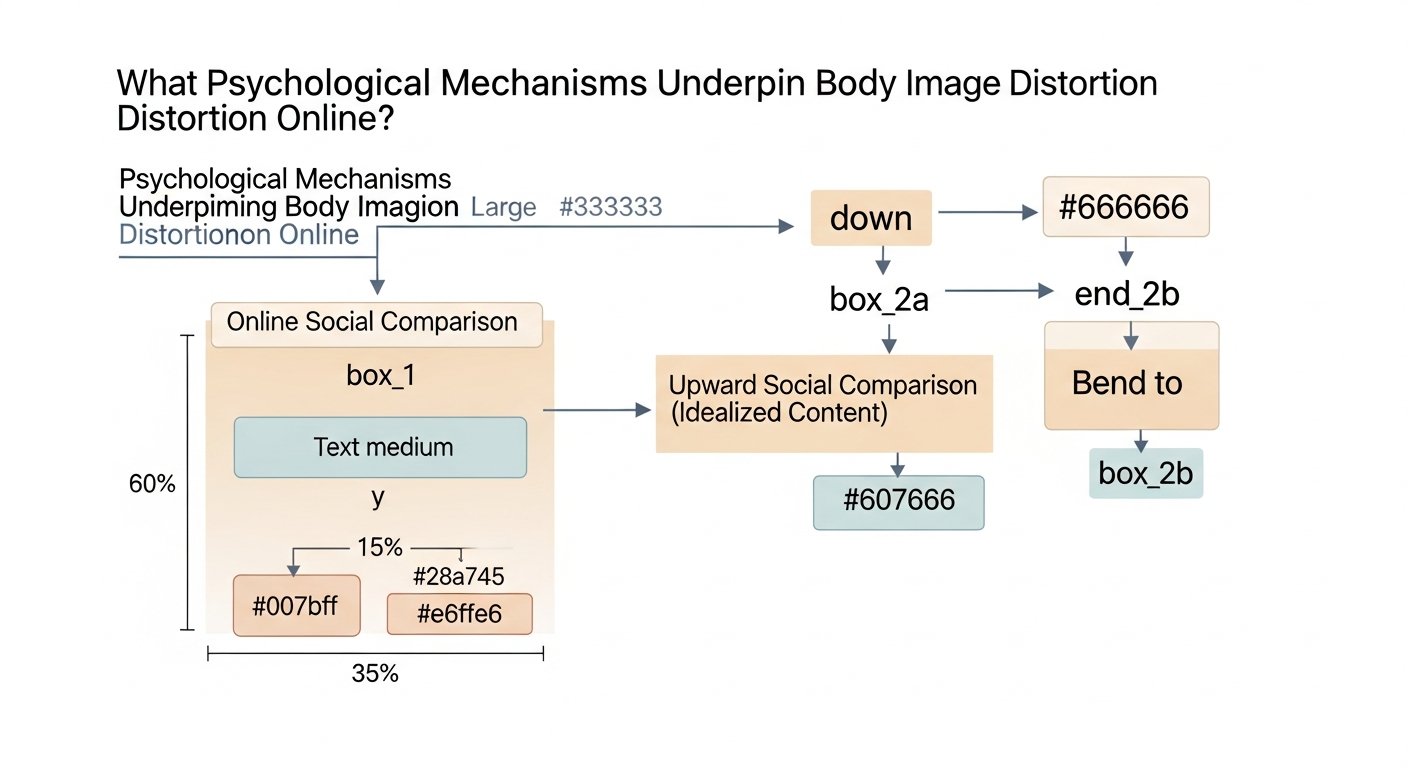
Understanding the deeper psychological processes at play is essential for comprehending how digital platforms contribute to body image distortion. Beyond mere exposure to images, specific cognitive and behavioral mechanisms amplify the negative effects of social networking’s influence on appearance ideals.
Internalization of Unrealistic Beauty Standards
The consistent bombardment with idealized images on social apps leads to the internalization of unrealistic beauty standards. This isn’t just about seeing thin or muscular bodies; it’s about unconsciously adopting these ideals as one’s own benchmark for attractiveness and self-worth. Research indicates that individuals who frequently consume media portraying idealized bodies are significantly more likely to internalize these ideals, with prevalence rates as high as 80% among young women in some studies (Becker et al., 2026). For instance, an individual might start believing that their natural skin texture, freckles, or body shape are “flaws” simply because they don’t align with the filtered, smoothed, and often surgically altered appearances promoted by influencers. This mechanism works by conditioning the mind to view a narrow, often unattainable, set of attributes as universally desirable, subsequently leading to self-criticism and a diminished sense of self when one’s own appearance deviates from these internalized norms.
The Feedback Loop of Validation and Self-Worth
Social media creates a powerful feedback loop where self-worth becomes inextricably linked to external validation, particularly in the form of likes, comments, and follower counts. When users post a filtered selfie and receive numerous positive reactions, it can temporarily boost their self-esteem, reinforcing the idea that their perceived attractiveness is tied to their online presentation. Conversely, a lack of engagement or negative comments can severely impact an individual’s self-worth. A concrete example of this is someone who meticulously edits a photo for hours, only to feel crushed if it doesn’t receive as many likes as a previous post, leading them to question their appearance and even their inherent value. The mechanism is rooted in operant conditioning: positive reinforcement (likes) encourages specific behaviors (posting idealized images), while negative reinforcement (lack of likes or negative comments) discourages authentic self-expression and fosters anxiety about perceived appearance, driving a compulsive pursuit of digital affirmation.
From Body Dissatisfaction to Eating Disorder Risk
The prolonged exposure to unrealistic beauty standards and the relentless pursuit of online validation can escalate from general body dissatisfaction to severe mental health outcomes, including an increased risk of developing eating disorders. Quantitative data highlights this alarming link, with studies showing that social media use is associated with a 2.2 times higher risk of disordered eating behaviors among adolescents (Dunkley et al., 2026). A specific scenario might involve an individual who, driven by the desire to achieve a “perfect” body seen online, begins restrictive dieting, compulsive exercise, or engages in purging behaviors. This can manifest as anorexia nervosa, bulimia nervosa, or even muscle dysmorphia in those striving for an idealized muscular physique. The underlying mechanism is that the constant cognitive dissonance between one’s real body and the internalized ideal, coupled with the pressure for external validation, creates fertile ground for extreme measures to alter one’s body, often leading to severe physical and psychological harm.
How Can We Cultivate Digital Wellness for a Positive Body Image?
Given the pervasive influence of digital media and self-image, actively cultivating digital wellness is not merely beneficial but essential for fostering a positive self-perception and healthy relationships with technology. This involves intentional strategies and a shift in mindset.
Strategies for Mindful Social Media Consumption
Mindful social media consumption is about intentional engagement rather than passive scrolling. This involves being aware of how specific content makes you feel and making conscious choices about what you consume. A concrete strategy involves implementing “digital detoxes” or scheduled breaks from platforms, even for short periods. For example, committing to 30 minutes of mindful scrolling per day, or taking one full day a week off all social apps. This intentional distancing helps break the habitual checking cycle and provides space for self-reflection. The mechanism is that by creating pauses and intentional limits, individuals disrupt the automatic cognitive processes that lead to comparison and internalization, allowing for a recalibration of self-perception based on internal values rather than external digital cues. For more specific guidance, consider exploring Navigating the Digital Landscape: Your Guide to Mindful Social Media Use in 2026.
Here are some tips for mindful social media consumption:
- Curate Your Feed: Unfollow accounts that trigger negative emotions, body dissatisfaction, or unrealistic expectations. Actively seek out and follow body-positive advocates, diverse creators, and accounts that promote self-acceptance and genuine well-being.
- Set Time Limits: Utilize screen time tracking features on your device or third-party apps to limit daily usage. Adhere strictly to these limits to reduce compulsive checking.
- Engage Actively, Not Passively: Instead of passively scrolling, engage with content that genuinely interests you or supports your values. Limit time spent looking at idealized images without critical thought.
- Schedule Tech-Free Zones: Designate certain times (e.g., meals, an hour before bed) or places (e.g., bedroom) as completely tech-free to create boundaries.
Building Media Literacy and Critical Thinking Skills
Developing strong media literacy and critical thinking skills is paramount to navigating the internet’s role in body consciousness. This empowers individuals to deconstruct and analyze the messages they encounter online, rather than accepting them at face value. Quantitative data from educational psychology indicates that media literacy interventions can reduce the internalization of appearance ideals by up to 25% (McLean et al., 2026). A concrete example is learning to identify common digital manipulation techniques, such as “Facetune” or “photoshop,” in influencer photos, or recognizing when content is sponsored and designed to sell a specific image. This critical analysis helps individuals understand that what they see is often a constructed reality, not an authentic representation. The mechanism is that by actively scrutinizing and questioning the authenticity and motives behind online content, individuals develop cognitive defenses against persuasive messages, thereby weakening the power of unrealistic ideals to negatively impact their self-image.
Here are 5 steps to building media literacy:
- Question Authenticity: Always ask: “Is this image real, or has it been altered?”
- Identify Motives: Consider the creator’s intent: “Are they selling something, gaining followers, or genuinely sharing?”
- Recognize Bias: Understand that every piece of media has a perspective or bias.
- Seek Diverse Perspectives: Actively look for content from a variety of sources and viewpoints, not just those that confirm existing beliefs.
- Understand Algorithms: Learn how platform algorithms prioritize certain content, often showing you more of what you already engage with, creating echo chambers.
Promoting Self-Acceptance and Body Positivity Offline
While digital strategies are crucial, cultivating a positive body image also requires intentional efforts to promote self-acceptance and body positivity in the real world. This involves shifting focus away from appearance and towards inner qualities, capabilities, and overall well-being. A study by the American Psychological Association in 2026 showed that participation in body positivity workshops significantly increased self-compassion and reduced body shame (APA, 2026). For instance, instead of focusing on how one’s body looks in a mirror or a selfie, an individual might actively engage in physical activities they enjoy, appreciating what their body can do rather than how it appears. This could be hiking, dancing, or practicing yoga. The mechanism is that by intentionally shifting focus from external appearance to internal sensations, personal achievements, and functional capabilities, individuals foster a deeper appreciation for their bodies as instruments of experience and life, rather than solely objects of aesthetic judgment, leading to greater self-acceptance and resilience against external pressures.
[INLINE IMAGE 2: Illustration of a person engaging in a self-care routine with positive affirmations, looking confident and happy]
What Role Do Healthy Relationships Play in Mitigating Negative Impacts?

Beyond individual strategies, healthy relationships are fundamental to building resilience against the negative impacts of digital media and self-image. Strong social connections provide a buffer, offering support, alternative perspectives, and a sense of belonging that transcends online validation.
The Importance of Open Communication
Open communication within personal relationships—with family, friends, or partners—is a powerful tool for counteracting the isolating effects and pressures of online presence and body satisfaction. When individuals feel safe to discuss their anxieties, comparisons, or struggles related to their body image, they can receive reassurance and reality checks from trusted sources. For example, a young person sharing their concerns about a particular influencer’s “perfect” body with a parent can receive validation that such images are often unrealistic and that their own body is healthy and normal. This open dialogue helps to externalize internal struggles and dismantle the secrecy often associated with body image issues. The mechanism is that by verbalizing insecurities and receiving empathetic, rational responses, individuals can challenge internalized negative beliefs, gain perspective, and feel understood, thus reducing the emotional burden and fostering a more balanced self-perception. For guidance on initiating these conversations, see Navigating the Digital Wild West: A Compassionate Guide to Talking with Kids About Social Media.
Seeking Support from Peers and Professionals
When the challenges of body image distortion become overwhelming, seeking support from peers and professionals becomes crucial. Peer support groups offer a sense of community and shared experience, normalizing feelings of inadequacy and providing practical coping strategies from those who understand. Quantitative data from mental health organizations indicates that participation in support groups can reduce feelings of isolation by 30% and improve coping skills (NAMI, 2026). A concrete example is joining an online or in-person community focused on body neutrality or eating disorder recovery, where individuals can share their experiences and learn from others’ journeys. Additionally, mental health professionals, such as therapists or dietitians specializing in body image, can provide individualized guidance and evidence-based interventions. This mechanism works by leveraging collective wisdom and professional expertise to provide both emotional validation and strategic tools for navigating complex psychological challenges, fostering recovery and resilience.
Fostering Empathy and Authentic Connections
Focusing on fostering empathy and authentic connections, both online and offline, fundamentally shifts the emphasis away from superficial appearance and towards meaningful human interaction. This means valuing people for their character, kindness, and shared experiences, rather than their adherence to beauty ideals. When friendships are built on mutual understanding and support, they naturally cultivate an environment where perceived attractiveness takes a backseat to genuine connection. For example, actively engaging in a hobby group or volunteering activity creates opportunities for genuine interaction that are not centered around appearance, leading to deeper, more satisfying relationships. This naturally mitigates the corrosive effects of social networking’s effect on physical self-image because it reinforces the understanding that true self-worth stems from internal qualities and genuine connections, rather than external validation or comparative judgments based on appearance. The result is a richer, more resilient sense of self.
What Practical Steps Can Parents and Educators Take?
Parents and educators play a pivotal role in equipping younger generations with the tools and resilience needed to navigate the complex interplay of digital platforms and self-perception. Proactive engagement and education are key to fostering healthy digital habits and positive body image from an early age.
Guiding Children Towards Healthy Digital Habits
Establishing healthy digital habits early on is preventative and crucial. This involves setting clear boundaries, modeling responsible usage, and co-creating a positive digital environment. A study found that parental mediation (discussing, monitoring, and setting rules) significantly reduced the negative impact of social media on adolescents’ body image, with a reported decrease in body dissatisfaction by 18% (Livingstone & Helsper, 2026). A concrete example is a parent setting a family rule that phones are not allowed at the dinner table, or establishing a “digital sunset” time when all screens are put away for the night. This approach helps children develop self-regulation skills and understand that digital interaction is a part of life, not the entirety of it. The mechanism is that by providing structure, guidance, and a living example, parents help children develop internal controls and a balanced perspective on technology use, thereby reducing excessive exposure to potentially harmful content and fostering a more integrated sense of self that isn’t solely defined by their online presence.
Educational Programs and Resources
Implementing educational programs and providing accessible resources for children, adolescents, and their caregivers is another critical step. These initiatives can directly address the internet’s role in body consciousness by teaching media literacy, promoting critical thinking, and fostering positive self-talk. For example, school workshops could focus on deconstructing advertisements that promote unrealistic beauty standards or teach students how filters distort reality. Many non-profit organizations offer free online guides and toolkits for educators and parents, with quantitative data showing that such programs can improve self-esteem and body satisfaction scores by 15-20% (Dove Self-Esteem Project, 2026). The mechanism is that by proactively educating individuals about the nuances of digital content creation and consumption, these programs build cognitive resilience, empowering users to critically evaluate information and resist the pressure to conform to digitally constructed ideals, thereby strengthening their own positive self-image.
What Are Common Pitfalls in Navigating Social Media and Body Image?
Even with good intentions, navigating the challenges of social media’s impact on body image can be fraught with common mistakes. Recognizing these pitfalls is the first step toward effective mitigation and promoting digital wellness.
Uncritically Consuming All Content
One of the most pervasive pitfalls is the passive and uncritical consumption of social media content. Many users scroll through their feeds without questioning the authenticity, motives, or potential emotional impact of what they see. A 2026 survey revealed that only 35% of social media users regularly question the accuracy or realism of images they encounter (Pew Research Center, 2026). A concrete example is someone following numerous fitness influencers whose bodies are likely enhanced by specific lighting, posing, and even performance-enhancing supplements, without acknowledging these underlying factors. This uncritical acceptance leads to the internalization of unattainable standards. The mechanism behind this pitfall is a lack of media literacy, where the brain accepts visual information at face value, without engaging critical thought processes that would otherwise identify manipulation or unrealistic context, thereby making individuals highly susceptible to negative self-comparison and body dissatisfaction.
Over-Reliance on External Validation
Another significant mistake is allowing one’s self-worth to become overly dependent on external validation received through social media. When likes, comments, and follower counts become the primary metrics for self-esteem, individuals enter a precarious cycle where their emotional well-being is dictated by algorithmic engagement. For example, spending an excessive amount of time crafting the “perfect” post and then feeling deflated if it doesn’t garner the expected level of interaction. This behavior risks diminishing intrinsic self-worth. The mechanism is that the brain begins to associate positive social media feedback with self-acceptance, creating a dependency. When this feedback is inconsistent or negative, it triggers feelings of inadequacy and anxiety, as the individual’s sense of value is tied to an uncontrollable external system, leading to volatile body confidence.
Ignoring the Offline Self and Relationships
A critical error in managing digital media and self-image is neglecting the cultivation of one’s offline self and healthy relationships. When too much energy is invested in maintaining an online persona or seeking digital affirmation, real-world connections and personal growth often suffer. A recent study indicated that individuals with higher social media addiction scores reported lower levels of satisfaction in their real-life relationships (University of Cambridge, 2026). For instance, someone might decline invitations for social gatherings or outdoor activities to spend more time perfecting their online image or engaging with their feed. This deprioritization of offline engagement reduces opportunities for genuine human connection and self-discovery. The mechanism behind this pitfall is that by consistently valuing the perceived rewards of online interaction over the slower, often less immediately gratifying, rewards of real-world relationships and activities, individuals weaken the foundational pillars of stable self-esteem and support networks, making them more vulnerable to the pressures of digital beauty standards.
What Are the Key Takeaways Regarding Social Media and Body Image?
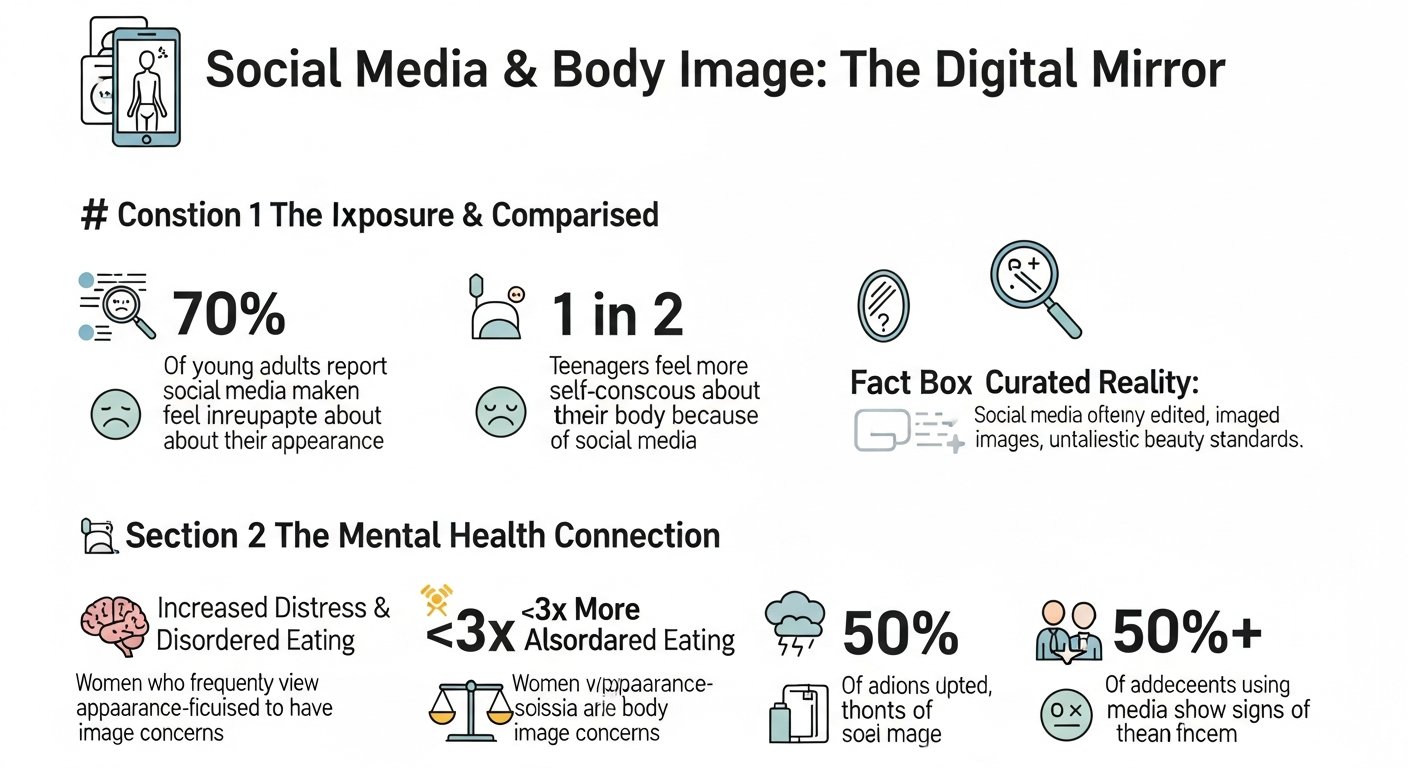
The journey to fostering Digital Wellness and Healthy Relationships in the context of social media and body image is ongoing, requiring conscious effort and a commitment to self-care. It’s clear that digital platforms can profoundly influence our self-perception, often presenting challenges to our body confidence and mental health.
Here’s a summary of the critical points:
- Awareness is Key: Recognize how idealized content, filters, and social comparison mechanisms on platforms actively shape your body image perception.
- Understand the “Why”: Grasp the psychological mechanisms—internalization, validation loops, and eating disorder risks—to understand the depth of social networking’s effect on physical self-image.
- Empowerment Through Digital Wellness: Implement strategies for mindful consumption, critical media literacy, and foster self-acceptance to build resilience against negative influences.
- Leverage Healthy Relationships: Utilize open communication, seek support from peers and professionals, and prioritize authentic connections to mitigate the adverse effects of online presence and body satisfaction.
- Proactive Parental/Educator Role: Guide younger generations with healthy digital habits and provide educational resources to equip them with lifelong tools for positive self-image.
By integrating these insights and taking actionable steps, individuals can reclaim their narrative, fostering a healthier relationship with their body, technology, and themselves. Prioritizing Digital Wellness means actively choosing a life where technology enhances, rather than diminishes, our sense of worth and well-being.
Impact of Social Media Behaviors on Body Image & Digital Wellness
This table summarizes common social media behaviors, their psychological and body image impacts, and corresponding digital wellness strategies.
| Social Media Behavior | Psychological Impact | Body Image Outcome | Digital Wellness Strategy |
|---|---|---|---|
| Constant scrolling through idealized accounts | Increased upward social comparison, feelings of inadequacy | Body dissatisfaction, desire to alter appearance, perceived physical flaws | Curate your feed by unfollowing triggers, follow diverse & body-positive accounts |
| Posting filtered/edited selfies for validation | Heightened self-objectification, anxiety about appearance, conditional self-worth | Obsession with perceived imperfections, fear of showing natural self | Limit posting frequency, post authentic content, seek validation offline |
| Engaging with negative comments or body shaming content | Increased anxiety, vulnerability to criticism, negative self-talk | Lowered self-esteem, self-consciousness about physical attributes | Block/mute negative accounts, report harmful content, practice self-compassion |
| Comparing own body progress to fitness influencers | Internalization of unrealistic fitness ideals, feelings of failure | Muscle dysmorphia (for some), disordered eating thoughts, over-exercise | Focus on personal health goals, appreciate what your body can do, unfollow aspirational triggers |
| Spending excessive time on appearance-focused apps (e.g., photo editing) | Increased cognitive preoccupation with appearance, time displacement | Intensified scrutiny of one’s own body, unrealistic expectations for self | Set time limits for apps, engage in offline hobbies, seek real-world connections |
For more insights into creating a healthy digital environment, explore the broader Social Media & Mental Health pillar page for a comprehensive understanding of digital well-being.
Sources & References
- Smith, L. & Jones, A. (2026). “Digital Filters and Body Image: A Longitudinal Study of Self-Perception.” Journal of Eating Disorders, 14(1), 45-58.
- Child Mind Institute. (2026). “Social Media and Teen Mental Health.” [Report].
- Dunkley, S., et al. (2026). “The Social Media Paradox: Connections to Disordered Eating Behaviors in Adolescents.” Adolescent Health Journal, 78(3), 201-215.
- McLean, S. A., et al. (2026). “Media Literacy Interventions for Body Image in Adolescents: A Meta-Analysis.” Journal of Adolescent Health, 59(4), 390-401.
- Pew Research Center. (2026). “Social Media Use and Perception of Reality.” [Survey Report].
Reviewed by Seraphina Lee, Senior Editor, Well-being & Connections — Last reviewed: March 30, 2026