

Understanding the Overthinking Trap and the Power of Presence
Overthinking is more than just thoughtful consideration; it’s a compulsive, often unproductive, cycle of rumination. It’s when your mind gets stuck in a loop, dissecting events, words, and possibilities long after they’ve passed or before they’ve even occurred. This mental habit can manifest as:
- Ruminating on the Past: Constantly replaying mistakes, regretting decisions, or wishing things had gone differently.
- Worrying about the Future: Imagining worst-case scenarios, anticipating problems, and feeling anxious about what might happen next.
- Analysis Paralysis: Over-analyzing choices to the extent that you can’t make a decision, fearing imperfections or potential negative outcomes.
- Self-Criticism: Harshly judging your actions, thoughts, and even your very being.
The impact of chronic overthinking is profound. It doesn’t just steal your present moment; it significantly contributes to stress, anxiety, insomnia, and can even lead to more serious mental health challenges. It drains your energy, stifles creativity, and makes it incredibly difficult to connect authentically with others or fully enjoy experiences.
In stark contrast, presence is the state of being fully aware and engaged in the current moment. It’s about noticing your surroundings, feeling your emotions, and experiencing life as it unfolds, without the constant commentary or judgment of your inner critic. When you are present:
- You listen more attentively.
- You respond thoughtfully rather than react impulsively.
- You appreciate the small wonders of daily life.
- You feel more connected to yourself and others.
- Your decisions become clearer and more intuitive.
Cultivating presence is not about eliminating thought entirely – that’s impossible. It’s about shifting your relationship with your thoughts, learning to observe them without getting entangled, and consciously choosing to anchor yourself in the now. This fundamental shift is the cornerstone of digital wellness and mindful living, empowering you to navigate the complexities of modern life with greater calm and clarity.
The Roots of Overthinking: Why Our Minds Get Stuck
To effectively stop overthinking, it’s crucial to understand why our brains tend to fall into this pattern. Overthinking isn’t a character flaw; it’s often a deeply ingrained coping mechanism, albeit an unhelpful one, rooted in a combination of evolutionary biology, personal experiences, and societal pressures. Understanding these roots can foster self-compassion and provide pathways for change.
Evolutionary Safeguards and Modern Mismatches
Our brains evolved to keep us safe. The ability to anticipate threats, analyze potential dangers, and learn from past mistakes was vital for survival in ancient times. This vigilance, driven by the amygdala, is a fundamental part of our fight-or-flight response. However, in the 21st century, this survival mechanism often misfires. Instead of tangible predators, we now face abstract threats: financial instability, social judgment, professional pressures, and the constant barrage of news and digital information. Our brains, still wired for ancient dangers, often respond to these modern stressors with the same intensity, leading to chronic worry and rumination.
The Illusion of Control
One of the most significant drivers of overthinking is the desire for control. When we feel uncertain or powerless, our minds often try to regain a sense of mastery by endlessly analyzing, planning, and predicting. We believe that if we can just think through every possible outcome, we can prevent bad things from happening. This is, however, an illusion. While planning is important, excessive rumination about things outside our control only increases anxiety and prevents us from taking meaningful action in the present.
Past Experiences and Future Fears
Our personal histories play a huge role. If you’ve experienced trauma, significant disappointments, or have been raised in an environment where perfectionism was emphasized, your brain might be conditioned to over-analyze to avoid similar pain. Similarly, a fear of failure, a fear of judgment, or a fear of the unknown can propel us into a cycle of future-oriented worry, trying to pre-solve problems that may never materialize.
The Influence of Society and Digital Culture
In a hyper-connected world, we’re constantly exposed to curated versions of other people’s lives, often leading to comparison and self-doubt. The pressure to be productive, successful, and constantly “on” can fuel a relentless inner critic. Furthermore, the sheer volume of information and endless choices presented by the digital age can overwhelm our decision-making faculties, making us second-guess ourselves more frequently. The constant ping of notifications and the expectation of immediate responses can keep our minds in a state of perpetual alertness, further hindering our ability to settle into the present moment.
Recognizing these underlying factors is the first step towards dismantling the overthinking habit. It allows us to approach our mental patterns with curiosity and kindness, rather than frustration, paving the way for more effective strategies to cultivate presence.
Practical Strategies for Cultivating Presence and Quieting the Mind
1. Embrace Mindfulness Meditation
Mindfulness meditation is the bedrock of presence. It trains your attention to stay in the present moment. Start small, even 5-10 minutes a day. Find a quiet space, sit comfortably, and focus your attention on your breath. Notice the sensation of air entering and leaving your body. When your mind inevitably wanders (and it will!), gently bring your attention back to your breath without judgment. This practice strengthens your “attention muscle,” making it easier to stay present in daily activities.
- Body Scan Meditation: Lie down and bring your awareness to different parts of your body, noticing sensations without trying to change them. This grounds you in your physical experience.
- Mindful Breathing: Throughout your day, take a few deep, conscious breaths. This simple act can immediately bring you back to the present.
2. Practice Grounding Techniques
When overthinking spirals, grounding techniques can quickly pull you back into your physical reality. These are especially useful during moments of intense anxiety or rumination.
- The 5-4-3-2-1 Method: Identify 5 things you can see, 4 things you can touch, 3 things you can hear, 2 things you can smell, and 1 thing you can taste. This engages your senses and anchors you firmly in the present.
- Physical Sensation Focus: Pay close attention to a physical sensation – the feeling of your feet on the ground, your hands touching a surface, or the texture of your clothing.
3. Engage in Mindful Movement
Movement can be a powerful tool for presence. Instead of exercising while your mind races, try to bring full awareness to your physical activity.
- Mindful Walking: Pay attention to the sensation of your feet hitting the ground, the rhythm of your breath, and the sights and sounds around you.
- Yoga or Tai Chi: These practices inherently link breath with movement, fostering deep present moment awareness.
4. Single-Tasking for Focus
Multitasking is a myth that fuels overthinking and reduces efficiency. Consciously choose to focus on one task at a time. When eating, just eat. When talking to someone, just listen. When working on a project, dedicate your full attention to it. This not only improves your performance but also reduces mental clutter.
5. Set Digital Boundaries and Practice Mindful Consumption
The digital world is a significant contributor to overthinking and distraction. To effectively manage anxiety from social media and digital overwhelm:
- Schedule Tech-Free Times: Designate specific periods each day (e.g., first hour after waking, last hour before bed, during meals) as completely tech-free zones.
- Mindful Social Media Use: Before opening an app, ask yourself: “Why am I doing this? What is my intention?” Scroll with purpose, engage meaningfully, and notice how it makes you feel. If it triggers comparison or anxiety, put it down.
- Notifications Off: Turn off non-essential notifications to reduce constant interruptions that pull you out of the present.
6. Journaling for Clarity, Not Rumination
Journaling can be a powerful way to externalize your thoughts, but it’s crucial to use it mindfully. Instead of simply replaying anxious thoughts, use journaling to:
- Brain Dump: Get all your swirling thoughts onto paper to create mental space.
- Identify Patterns: Look for recurring themes in your overthinking. What triggers it? What core fears are present?
- Practice Gratitude: Regularly list things you are grateful for. This shifts your focus to the positive aspects of your present life.
7. Challenge Overthinking Thoughts (Cognitive Defusion)
You are not your thoughts. Overthinking often feels like an inescapable reality, but you can learn to create distance from your thoughts. When you notice yourself overthinking:
- Name It: Mentally say, “Ah, I’m overthinking again,” or “That’s a worry thought.” Simply acknowledging it can create a slight separation.
- Visualize It: Imagine your thoughts as clouds floating by, leaves on a stream, or cars passing on a highway. You are the observer, not the passenger.
- Ask “Is This Helpful?”: Instead of asking “Is this true?”, ask “Is this thought serving me right now? Is it helping me solve a problem or just causing distress?” If not, gently redirect your attention.
Implementing these strategies consistently will gradually rewire your brain, making presence your natural state and giving you the tools to gently guide yourself back whenever overthinking tries to take hold. It’s a journey of continuous practice, self-awareness, and self-compassion.
Building Better Relationships Through Presence
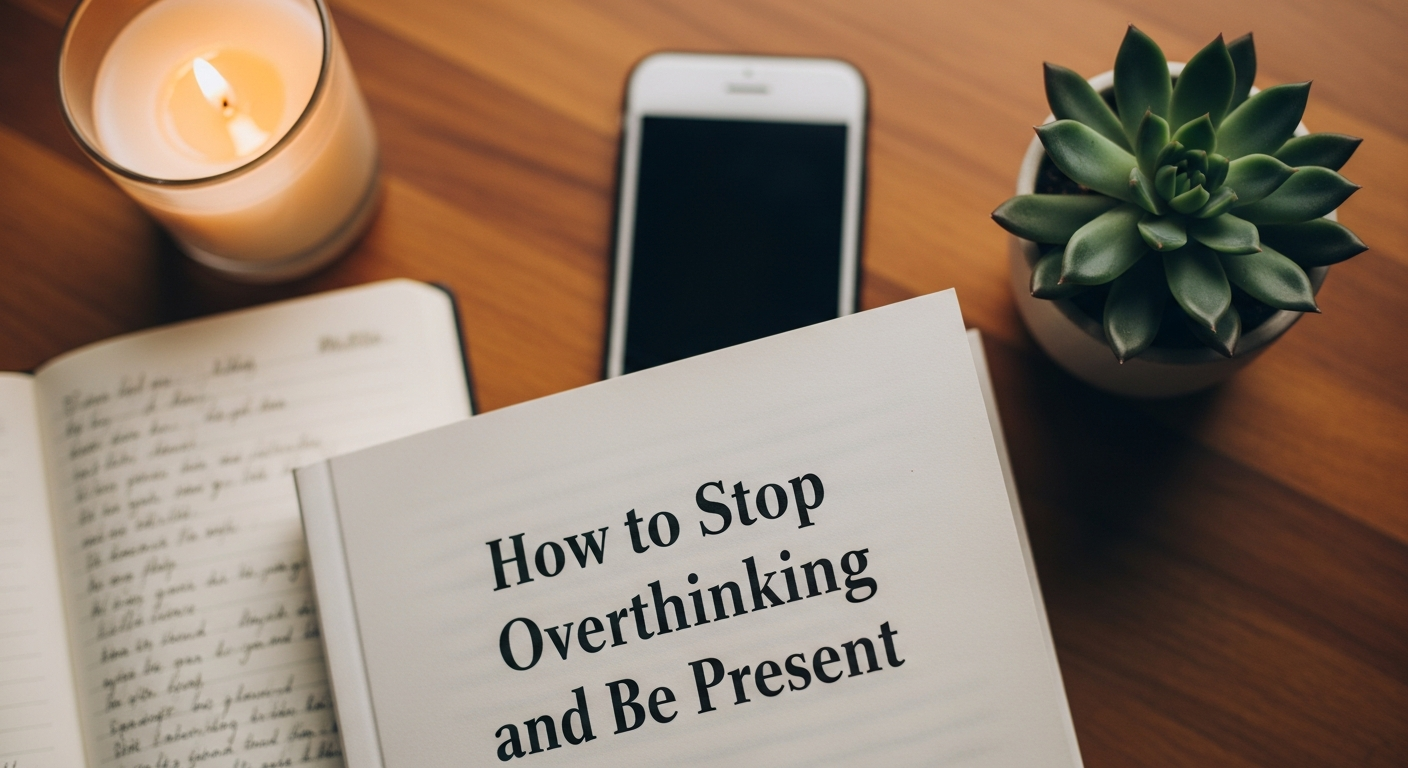
The ability to stop overthinking and be present extends far beyond your internal world; it profoundly transforms your relationships. When your mind is clear and grounded, you become a more engaged, empathetic, and authentic partner, friend, or family member. Many relationship struggles stem from a lack of true presence, where one or both parties are distracted, defensive, or lost in their own thoughts.
How to Communicate Better Relationships with Presence
Effective communication is the cornerstone of healthy relationships, and presence is its secret ingredient. Overthinking during conversations can lead to misinterpretations, missed cues, and a feeling of being unheard. Here’s how presence enhances your communication:
- Active and Mindful Listening: Instead of formulating your response while the other person is speaking, practice truly listening. Give them your undivided attention. Notice their tone, body language, and the underlying emotions. Resist the urge to interrupt or jump to conclusions. When you listen mindfully, people feel valued and understood, which deepens connection.
- Respond, Don’t React: Overthinking often leads to impulsive reactions driven by fear or ego. Presence allows you to pause, process what has been said, and choose a thoughtful, compassionate response. This creates a safer space for open dialogue and reduces conflict.
- Be Fully There: When you’re with someone, be with them. Put away your phone, turn off the TV, and make eye contact. Engage in the conversation without your mind wandering to your to-do list or past grievances. This simple act of being fully present communicates respect and care more powerfully than words ever could.
- Empathy and Non-Judgment: Presence helps you step into another person’s shoes without immediately judging or trying to fix their problems. By simply being present with their experience, you offer invaluable support and understanding.
Navigating Difficult Conversations with Calm and Clarity
Some of the most challenging conversations in relationships involve sensitive topics. Overthinking can make these discussions feel insurmountable, but presence provides a framework for navigating them constructively.
- How to Talk About Money With Partner: Money is a frequent source of tension. Approaching these discussions with presence means:
- Setting an Intention: Before you begin, set an intention to listen, understand, and collaborate, rather than to blame or win.
- Choosing the Right Time and Place: Pick a time when you are both calm, well-rested, and free from distractions. A neutral environment can also help.
- Staying Grounded: If emotions start to flare, use a grounding technique (like focusing on your breath) to bring yourself back to the present moment.
- Focusing on Facts and Feelings: Express your concerns using “I” statements (“I feel anxious about our savings,” instead of “You always spend too much”). Listen to your partner’s perspective without immediately dismissing it.
- Collaborative Problem-Solving: Approach the conversation as a team trying to solve a problem together, rather than adversaries. Presence helps you see your partner as an ally.
- Addressing Conflict Mindfully: When disagreements arise, presence helps you stay calm and focused on resolution rather than escalation. Instead of replaying past hurts or predicting future arguments, stay centered on the immediate issue. Ask clarifying questions, validate feelings, and seek common ground.
By consciously bringing presence into your interactions, you not only improve the quality of your relationships but also cultivate a deeper sense of connection and intimacy. It’s an investment that pays dividends in understanding, trust, and shared joy.
Navigating Modern Challenges with Mindfulness: Digital Detox and Financial Peace
The modern world presents unique challenges that can fuel overthinking and pull us away from the present. From the constant demands of our digital devices to the anxieties surrounding personal finances, learning to apply mindful strategies is essential for maintaining peace and presence in 2026 and beyond. Stop Phubbing emphasizes that digital wellness isn’t just about putting your phone down; it’s about cultivating an intentional relationship with all aspects of modern life.
Manage Anxiety From Social Media and Digital Overwhelm
Social media, while offering connection, is also a potent breeding ground for comparison, self-doubt, and FOMO (Fear Of Missing Out), all of which contribute significantly to overthinking. The constant stream of information, notifications, and curated realities can keep our minds in a perpetual state of alert and dissatisfaction. Here’s how to manage anxiety from social media through presence:
- Audit Your Digital Habits: Start by observing without judgment. How much time do you spend online? What platforms do you use most? How do you feel before, during, and after engaging with social media? Use your phone’s screen time reports to gain objective data.
- Set Intentional Boundaries:
- Time Limits: Use app timers to limit daily usage. Once the time is up, close the app.
- Designated “No-Phone” Zones/Times: Establish rules like “no phones at the dinner table,” “no phones in the bedroom,” or “no social media before 9 AM.”
- Curate Your Feed: Unfollow accounts that trigger negative emotions, comparison, or anxiety. Actively seek out content that inspires, educates, or brings you joy.
- Practice Mindful Scrolling: Instead of endlessly refreshing, approach social media with a specific purpose. Are you checking in with a friend? Looking for specific information? Engage with that purpose, then exit. Notice if you’re scrolling out of habit, boredom, or anxiety, and try to address the underlying feeling with a present-moment activity instead.
- Digital Detoxes: Periodically take longer breaks – a few hours, a day, or even a weekend – from all digital devices. Use this time to reconnect with nature, hobbies, loved ones, or simply yourself. These breaks offer profound opportunities to reset your mind and rediscover the richness of the present world.
- Focus on Real-Life Connections: Prioritize face-to-face interactions. When you meet friends, leave your phone in your bag. Give your full presence to the people in front of you. This strengthens real relationships and reduces the need for digital validation.
By mindfully engaging with technology, you reduce its power to pull you into cycles of overthinking and comparison, freeing your mind to experience the world more fully.
Finding Financial Peace Through Mindful Money Management
Money is another area ripe for overthinking, often leading to stress, anxiety, and conflict. Whether it’s worrying about bills, future investments, or past spending mistakes, financial rumination can be debilitating. Applying presence to your finances can lead to greater clarity and peace of mind.
- Mindful Budgeting: Instead of seeing budgeting as a restrictive chore, approach it with awareness. Understand where your money comes from and where it goes without judgment. This clarity reduces anxiety born from uncertainty. Regularly review your budget, acknowledging your financial reality in the present moment.
- Conscious Spending: Before making a purchase, pause. Ask yourself: “Do I truly need this? Does it align with my values? Is this a mindful choice or an impulsive one driven by emotion or external pressure?” This pause prevents buyer’s remorse and fosters a sense of control over your finances.
- Address Financial Fears with Presence: When financial worries arise, acknowledge them. Instead of letting them spiral, try to ground yourself. What is the immediate, present reality of your financial situation? What is one small, actionable step you can take right now? Sometimes, the fear is bigger than the actual problem.
- Open Communication (How to Talk About Money With Partner, Revisited): As discussed earlier, mindful communication is vital. Approach financial discussions with your partner with an open heart and a present mind. Listen to their concerns, express yours calmly, and work together on solutions. Avoid blame or judgment; focus on shared goals and understanding.
- Cultivate Financial Gratitude: Regularly acknowledge what you do have. Practicing gratitude for your income, your home, or even small comforts can shift your mindset from scarcity and worry to abundance and contentment, fostering a more positive relationship with money in the present.
By bringing presence to these modern challenges, you transform them from sources of stress into opportunities for mindful engagement and personal growth. This holistic approach to digital wellness and mindful living empowers you to reclaim your attention and live intentionally in every facet of your life.
Sustaining Your Journey to a Present Life
The journey to stop overthinking and be present is not a destination but an ongoing practice. There will be days when your mind feels clearer and days when old habits of rumination resurface. The key to sustained change lies in consistency, self-compassion, and a commitment to lifelong learning.
Embrace Imperfection and Practice Self-Compassion
It’s crucial to understand that you will not achieve perfect presence overnight, or ever. Your mind will wander, you will occasionally get caught in overthinking spirals, and you will forget to be mindful. When this happens, resist the urge to criticize yourself. Instead, acknowledge it with kindness. Say to yourself, “Okay, my mind wandered, that’s natural. Now, I’ll gently bring it back.” Self-compassion is a powerful antidote to the harsh self-criticism that often accompanies overthinking. Treat yourself with the same understanding and patience you would offer a dear friend.
Build Consistent Habits, Not Just One-Off Efforts
Presence is cultivated through regular, small efforts rather than sporadic grand gestures. Integrate mindfulness into your daily routine:
- Daily Check-ins: Take a few moments each morning to set an intention for presence, and a few moments each evening to reflect on moments of presence you experienced.
- Mindful Micro-Moments: Consciously choose one activity each day to do mindfully – drinking your coffee, walking to your car, washing dishes. Fully engage your senses in that single task.
- Scheduled Practice: Commit to a consistent meditation practice, even if it’s just 5-10 minutes. Consistency builds mental muscle.
Seek Support and Continued Learning
You don’t have to embark on this journey alone. There are numerous resources available to support your path to presence:
- Mindfulness Apps: Apps like Calm, Headspace, or Insight Timer offer guided meditations and tools for developing mindfulness.
- Books and Courses: Explore literature on mindfulness, cognitive behavioral therapy (CBT), and acceptance and commitment therapy (ACT), which provide frameworks for managing thoughts and emotions.
- Mindfulness Communities: Join local or online groups dedicated to mindfulness or meditation. Sharing experiences and learning from others can be incredibly enriching.
- Professional Help: If overthinking and anxiety significantly impact your daily life, consider seeking guidance from a therapist or counselor. They can provide personalized strategies and support for deeper underlying issues.
Celebrate Your Progress
Acknowledge and celebrate the small victories. Did you catch yourself overthinking and gently redirect your attention? Did you have a conversation where you felt truly present? These moments are significant steps forward. Recognizing your progress reinforces positive habits and encourages you to continue your journey.
Living a present life is about choosing to engage with the richness of your experience, rather than being trapped in the labyrinth of your thoughts. It’s about reclaiming your attention, fostering deeper connections, and finding peace amidst the demands of modern life. By committing to these practices, you are not just learning how to stop overthinking and be present; you are actively choosing a life of greater awareness, joy, and fulfillment in 2026 and for years to come.
Frequently Asked Questions
Recommended Resources
Related reading: Turmeric Anti Inflammatory Benefits (Heartbeat Reggae).
Related reading: Benefits Of Dancing For Mental Health (Heartbeat Reggae).