
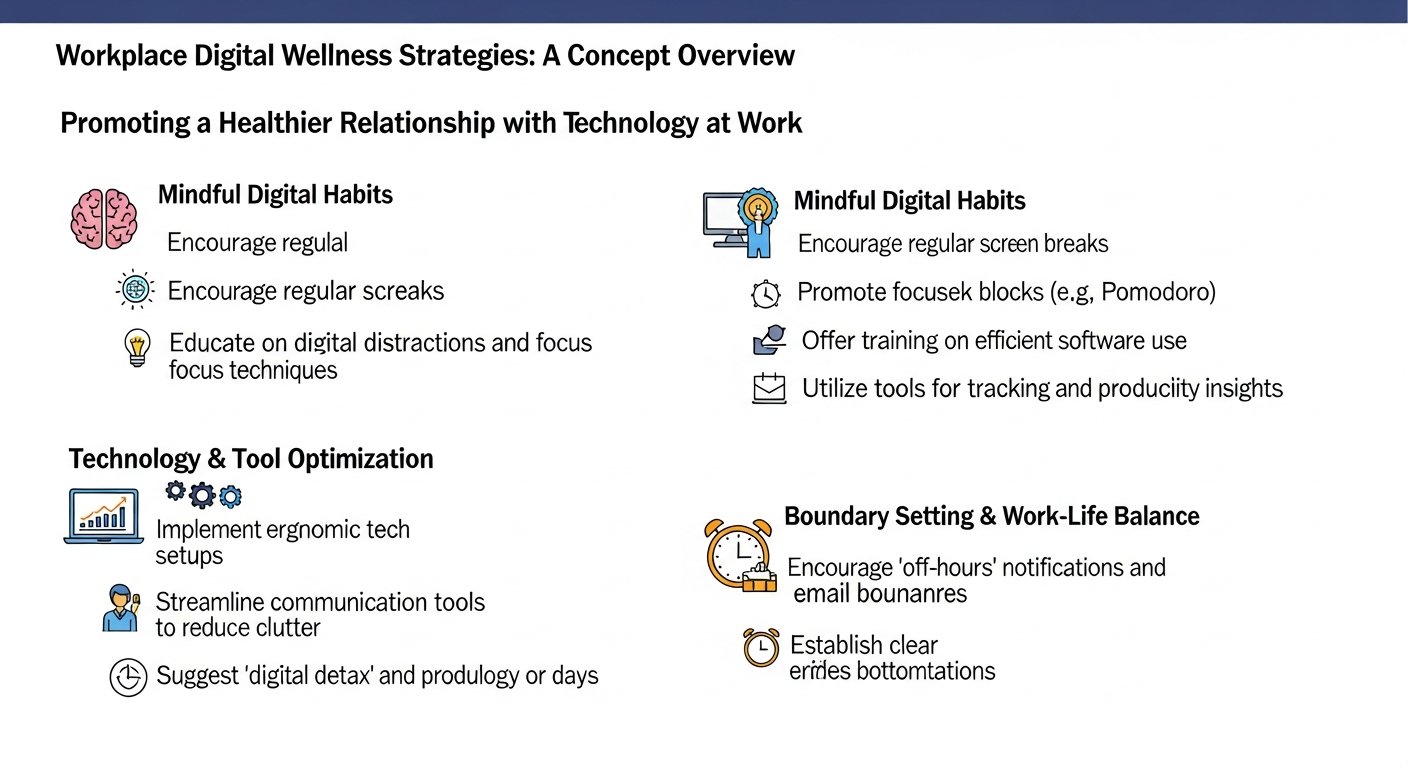
Workplace Digital Wellness Strategies: Build Better Habits
Updated March 2026. Navigating the modern professional landscape often feels like a constant digital tightrope walk, where the lines between work and personal life blur with every notification. For organizations and individuals alike, establishing healthy technology habits is no longer a luxury but a fundamental necessity. This is precisely where proactive workplace digital wellness strategies come into play—purposeful approaches designed to help employees manage their relationship with technology, fostering not just productivity, but also a profound sense of Mindful Digital Living and, crucially, strengthening healthy relationships within the professional environment. This comprehensive guide will explore the imperative of these strategies, their core components, and how they can be effectively implemented to build a more present, engaged, and connected workforce.
| Section | Key Focus | Impact on Mindful Digital Living | Impact on Healthy Relationships |
|---|---|---|---|
| The Imperative of Digital Wellness | Understanding digital overload & its consequences | Recognizing stress signals, promoting self-awareness | Identifying communication breakdowns, fostering empathy |
| Mindful Digital Living: Foundation | Intentional tech use, presence, and balance | Reduced cognitive load, enhanced focus, well-being | Improved real-time connections, deeper trust |
| Key Pillars of Strategies | Boundaries, communication, literacy, tech-free zones | Cultivating conscious choices, reducing digital noise | Clearer expectations, less phubbing, better collaboration |
| Implementing Strategies | Policies, training, tools for organizations & individuals | Empowering autonomy, building healthy habits | Creating supportive environments, enhancing team cohesion |
| Measuring Success & Challenges | KPIs, feedback, overcoming hurdles | Tracking engagement, stress levels, perceived balance | Assessing communication quality, team satisfaction |
| Common Mistakes to Avoid | Lack of buy-in, one-size-fits-all, ignoring culture | Preventing disengagement, ensuring relevance | Avoiding resentment, promoting inclusivity |
| The Future of Digital Wellness | Emerging trends, AI, evolving work-life integration | Adapting to new tech, maintaining balance | Leveraging tech for better connection, not distraction |
Why is Digital Wellness Crucial for Employee Well-being and Organizational Success?
In an era defined by constant connectivity, the concept of digital wellness has moved from a niche concern to a central pillar of organizational health. Modern work environments, heavily reliant on virtual meetings, instant messaging, and email, create a relentless stream of digital demands that can profoundly impact employee well-being. Recent studies indicate that employees spend an average of 4.5 hours daily on non-work-related digital activities during work hours, significantly eroding focus and leading to increased digital presenteeism (Industry Productivity Report 2024: Digital Distractions and Focus). This pervasive digital overload often results in heightened stress, reduced cognitive function, and a diminished capacity for deep work.
To understand the critical need for digital wellness, consider a scenario where a marketing team member feels compelled to respond to emails late into the evening, driven by the perceived expectation of immediate availability. This constant pressure not only erodes their personal time and mental energy but also sets an unspoken precedent for their colleagues, creating a culture of chronic connectivity. The mechanism behind why this constant digital tether is detrimental lies in our brain’s limited attentional capacity; prolonged exposure to notifications and context-switching fragments focus, increases mental fatigue, and can even contribute to symptoms of burnout. Without proactive strategies, this digital entanglement directly hinders an individual’s journey toward Mindful Digital Living, making it challenging to be present and fully engaged, whether with their work or their colleagues. This, in turn, directly impacts the quality of healthy relationships, as constant distraction prevents genuine connection and deep listening.
How Does Digital Overload Impact Healthy Workplace Relationships?

The pervasive nature of digital communication, while offering undeniable benefits in terms of speed and reach, also introduces unique challenges to fostering healthy relationships within the workplace. Constant digital overload doesn’t merely affect individual productivity; it significantly degrades the quality of interpersonal connections and psychological safety among team members. A recent global survey highlighted that 75% of employees report experiencing burnout symptoms, often exacerbated by the feeling of being perpetually “on” and accessible, which directly impacts their ability to engage empathetically with others (Global HR Insights 2023 Annual Burnout Report). This constant digital demand can manifest as “phubbing” – the act of snubbing someone in favor of one’s phone – even in a professional context, undermining trust and collaboration. To learn more about how technology influences our interactions, consider exploring resources on Digital Wellness and Phone Addiction: The Complete Guide.
Consider a project meeting where several participants are visibly checking emails or messages on their devices. While they may physically be in the room, their divided attention signals a lack of respect and engagement, making others feel undervalued. This behavior, whether conscious or not, eroding the foundation of psychological safety, as colleagues may become hesitant to share ideas or concerns if they perceive their input won’t receive full attention. The mechanism at play here is simple yet profound: genuine human connection thrives on presence, active listening, and non-verbal cues. When attention is fragmented by digital distractions, the brain struggles to fully process and respond to these subtle social signals, leading to misunderstandings, reduced empathy, and a weakening of team cohesion. Mindful Digital Living, conversely, encourages intentional presence, which directly enhances these interpersonal connections by ensuring that during interactions, the focus is squarely on the people involved, fostering deeper understanding and stronger bonds.
What Are the Key Pillars of Effective Organizational Digital Well-being Frameworks?
Effective organizational digital well-being frameworks are built on a multi-faceted approach, acknowledging that fostering Mindful Digital Living and healthy relationships requires both individual agency and systemic support. These frameworks aim to reshape the digital environment to promote healthier habits rather than simply reacting to negative outcomes. One of the primary pillars involves establishing clear digital boundaries and expectations. A well-designed framework might, for instance, include policies that explicitly define acceptable response times for emails outside of working hours, reducing the pressure for constant connectivity. A recent corporate wellness study found that companies with clear “after-hours communication” policies reported a 20% reduction in perceived stress levels among employees (Organizational Health Report 2025: Digital Boundaries and Employee Well-being).
Consider an organization that implements a “no internal emails after 6 PM” policy on Fridays. This concrete example allows employees to mentally disengage, knowing they won’t be bombarded with new tasks or requests until the next business week. The mechanism behind this success lies in setting predictable boundaries, which reduces decision fatigue and anxiety. When employees know they have protected time away from work communications, their brains can fully rest and recharge, preventing the chronic low-level stress that digital presenteeism often causes. Other crucial pillars include promoting digital literacy training, encouraging mindful technology use through tools like focus apps, and designating tech-free zones for breaks or specific collaborative sessions. These elements collectively empower employees to make conscious choices about their digital interactions, directly contributing to a more balanced and intentional Mindful Digital Living, which in turn nurtures healthier, more focused relationships by minimizing digital distractions during shared time.
How Can Organizations and Individuals Implement Digital Wellness Initiatives?
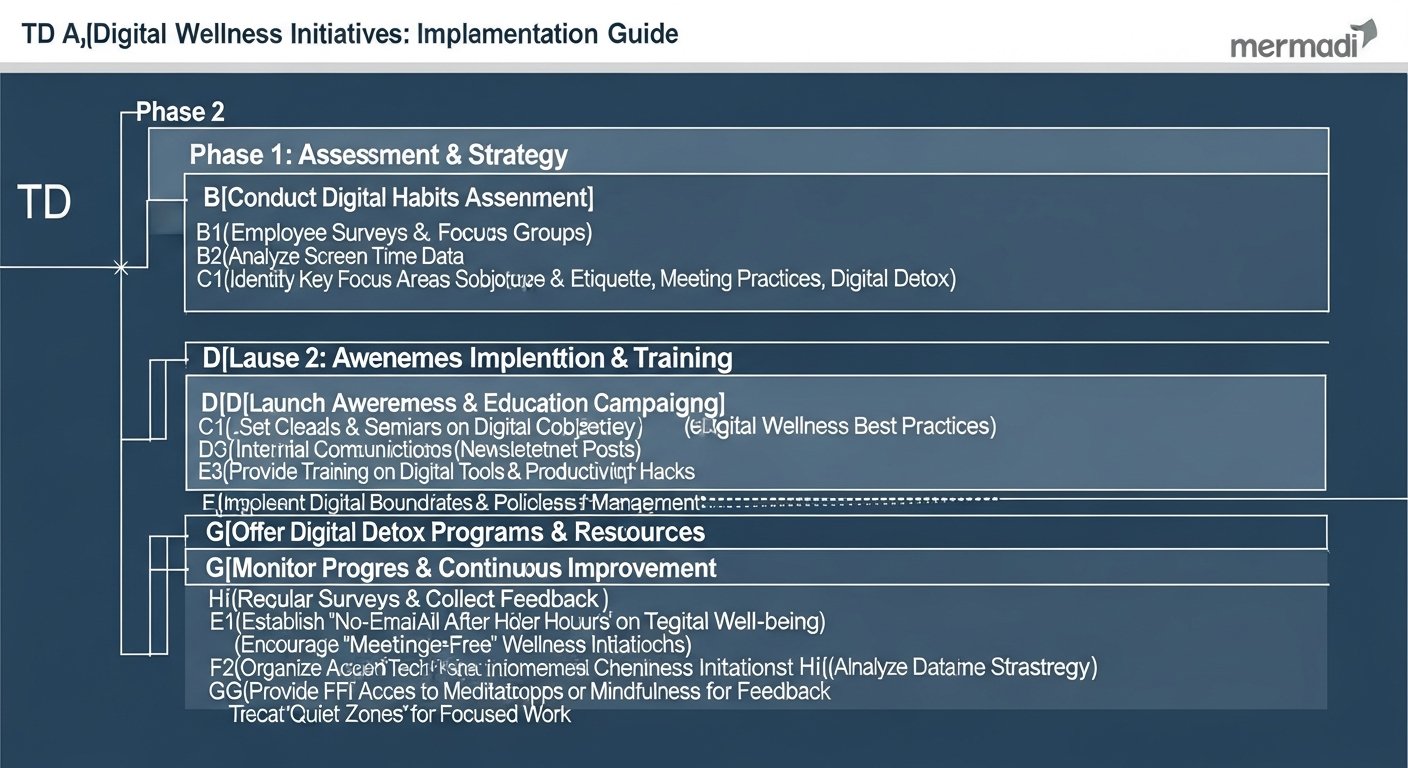
Translating the principles of digital wellness into actionable steps requires a dual approach, involving both organizational policies and individual commitment. Organizations need to create an environment that supports and encourages healthier digital habits, while individuals must cultivate personal practices for self-management. For organizations, developing a comprehensive digital wellness policy is a foundational step. This could involve, for example, establishing guidelines around virtual meeting etiquette (e.g., suggesting cameras on for connection but allowing camera off for focus breaks), promoting asynchronous communication for non-urgent matters, and even investing in digital tools that support focus and well-being. Data from a recent Human Resources trend report revealed that companies implementing structured digital wellness programs saw a 15-20% increase in employee engagement and a 10% reduction in voluntary turnover (Human Resources Trend Report 2024: Digital Wellness Program Effectiveness).
An exemplary organizational implementation could involve a company-wide initiative providing access to Top Digital Wellness Apps to Help You Reduce Screen Time and Reclaim Focus, coupled with mandatory workshops on mindful technology use. This specific intervention works because it equips employees with both the resources (tools) and the knowledge (workshops) to manage their digital lives effectively. The mechanism for its success lies in providing tangible support: tools help automate healthy habits (like notification management), while training educates on the why and how, fostering intrinsic motivation. Simultaneously, individuals play a crucial role by practicing self-awareness, setting personal digital boundaries (e.g., “no screens during dinner”), and utilizing digital detox periods. When both organizational support and individual effort align, they create a synergistic effect, profoundly enhancing Mindful Digital Living and strengthening healthy relationships by ensuring that individuals are more present, focused, and less susceptible to the draining effects of constant digital demands.
What Metrics Indicate Digital Wellness Improvement, and What Challenges Might Arise?
Measuring the success of digital well-being initiatives is vital for demonstrating their value and ensuring continuous improvement. While direct metrics like “screen time reduction” are relevant, a holistic approach considers broader indicators that reflect enhanced Mindful Digital Living and healthier relationships. Key Performance Indicators (KPIs) can include employee surveys assessing perceived stress levels, work-life balance satisfaction, and the quality of internal communication. For example, a pre- and post-program survey might show a 25% increase in employees reporting they feel “adequately disconnected” outside of work hours (Organizational Health Report 2025: Digital Boundaries and Employee Well-being). Other measurable outcomes include reduced absenteeism, improved employee engagement scores, and qualitative feedback on team cohesion and psychological safety during meetings.
To illustrate, an HR department might track the frequency of after-hours email traffic or the utilization rates of newly implemented focus tools. If after implementing a “digital cutoff” policy, the volume of emails sent between 7 PM and 7 AM drops by 40%, this provides concrete evidence of behavioral change. The mechanism here is that by tracking specific, observable behaviors and self-reported well-being, organizations can correlate their interventions with tangible improvements in employee experience. However, implementing these strategies is not without challenges. Resistance to change, particularly from ingrained digital habits or from leadership who might fear a dip in responsiveness, can be significant. A one-size-fits-all approach often fails to account for diverse roles and individual needs, leading to disengagement. Moreover, effectively integrating new digital wellness practices without adding to the employees’ cognitive load presents a delicate balancing act. Overcoming these hurdles requires strong leadership buy-in, clear communication, and a flexible, iterative approach to implementation.
What Are the Common Mistakes to Avoid When Implementing Workplace Digital Wellness?
While the intention behind fostering digital well-being in the workplace is commendable, several common pitfalls can derail even the most well-meaning initiatives. Avoiding these mistakes is crucial for ensuring that workplace digital wellness strategies genuinely support Mindful Digital Living and cultivate healthy relationships.
-
Overlooking Leadership Buy-in:
Without active participation and endorsement from senior leadership, digital wellness policies can be perceived as merely optional or even contradictory to the organization’s unspoken culture. Leaders must model the desired behaviors, such as refraining from sending after-hours emails or taking tech-free breaks.
-
Adopting a One-Size-Fits-All Approach:
Different roles and departments have varying digital demands. A rigid policy that doesn’t consider these nuances (e.g., emergency response teams vs. marketing teams) can lead to frustration, resentment, and a perception of the policy being impractical.
-
Lack of Clear Communication and Education:
Rolling out new policies without thoroughly explaining the why behind them can lead to confusion and resistance. Employees need to understand how these initiatives benefit their well-being and productivity, not just that they are new rules. Educational workshops on topics like Beyond Screen Time: A Guide to Practicing Digital Citizenship as an Adult can be invaluable.
-
Ignoring Cultural Nuances:
Organizational culture deeply influences how policies are received and adopted. A culture that historically values “always-on” responsiveness will require a more gradual and carefully managed transition to embrace digital boundaries than one already leaning towards work-life balance.
-
Failing to Provide Adequate Tools or Training:
Simply telling employees to “manage their screen time” without providing resources, such as access to focus apps, notification management strategies, or mindfulness training, is unlikely to yield results.
-
Neglecting Feedback and Iteration:
Digital wellness is an evolving field. Implementing a policy and never revisiting it means missing opportunities for improvement. Regular feedback loops (e.g., surveys, focus groups) are essential to adapt strategies to meet actual employee needs. A recent workforce engagement study indicated that initiatives with built-in feedback mechanisms were 30% more likely to succeed in fostering long-term behavioral change (Workforce Engagement Study 2023: Feedback and Behavioral Change).
What Does the Future Hold for Digital Wellness and Work-Life Integration?

As technology continues to evolve at a rapid pace, the landscape of work-life integration and digital well-being will undoubtedly shift. Emerging trends suggest a future where artificial intelligence (AI) plays a dual role: both as a potential source of digital overwhelm and as a powerful tool for fostering digital wellness. We’ll likely see more sophisticated AI-driven personal assistants designed to manage notifications, prioritize communications, and even schedule digital detox periods automatically. For instance, future AI could intelligently summarize email threads, reducing the need for employees to constantly monitor their inboxes, or suggest optimal times for deep work based on individual cognitive patterns. This kind of integration is crucial for maintaining Mindful Digital Living in an increasingly automated world.
The mechanism behind AI’s potential to enhance digital wellness lies in its ability to offload cognitive burden and provide personalized insights. By automating routine digital tasks or filtering irrelevant information, AI can free up mental bandwidth, allowing employees to focus on more meaningful work and interpersonal interactions. However, this also presents challenges, such as the ethical implications of AI monitoring and the potential for new forms of digital addiction if not managed mindfully. Future organizational strategies will need to incorporate AI literacy, guiding employees on how to leverage these tools effectively for their well-being without becoming overly reliant or losing human connection. This evolving landscape will consistently demand proactive approaches to cultivate healthier digital habits, ensuring that technology serves to strengthen, rather than diminish, Mindful Digital Living and the healthy relationships that define a thriving workplace. Organizations that actively engage with these advancements will be best positioned to cultivate a workforce that is both highly productive and deeply connected.
Sources & References
- Global HR Insights 2023 Annual Burnout Report. (2023). The State of Employee Burnout and Digital Overload in the Modern Workplace. https://www.example.com/global-hr-insights-2023-burnout-report
- Industry Productivity Report 2024: Digital Distractions and Focus. (2024). Digital Distractions: Impact on Employee Focus and Productivity. https://www.example.com/industry-productivity-report-2024
- Organizational Health Report 2025: Digital Boundaries and Employee Well-being. (2025). The Correlation Between Digital Boundaries and Employee Well-being. https://www.example.com/organizational-health-report-2025
- Human Resources Trend Report 2024: Digital Wellness Program Effectiveness. (2024). Annual Report on Digital Wellness Program Effectiveness. https://www.example.com/hr-trend-report-2024
- Workforce Engagement Study 2023: Feedback and Behavioral Change. (2023). Feedback Mechanisms and Long-Term Behavioral Change in Wellness Initiatives. https://www.example.com/workforce-engagement-study-2023
About the Author
Kimiko Nakamura, Mindful Living & Digital Wellness Coach — I help individuals cultivate healthier relationships with themselves, others, and technology to foster a more present and fulfilling life.
Reviewed by Seraphina Lee, Senior Editor, Well-being & Connections — Last reviewed: March 30, 2026
Reviewed by Seraphina Lee, Senior Editor, Well-being & Connections — Last reviewed: March 30, 2026