
Unlocking True Connection: The Transformative Power of Vulnerability in the Digital Age
What is Vulnerability, Really? Beyond Weakness to Courageous Connection
For many, the word “vulnerability” conjures images of weakness, exposure, or emotional fragility. We might envision ourselves being hurt, rejected, or taken advantage of. This deeply ingrained fear often leads us to erect emotional walls, wear masks, and present only our most polished, “perfect” selves to the world – and especially to those we care about most. However, this perception of vulnerability is fundamentally flawed. As renowned researcher and storyteller Dr. Brené Brown eloquently defines it, “Vulnerability is not winning or losing; it’s having the courage to show up and be seen when we have no control over the outcome.”
True vulnerability isn’t about oversharing or being a doormat. It’s about honesty, authenticity, and courage. It’s the willingness to let another person see the real you – your fears, your hopes, your imperfections, your struggles, and your triumphs – even when it feels uncomfortable or risky. It’s the raw, unedited version of your experience. When you choose vulnerability, you are not giving up power; you are claiming it by being unapologetically yourself. This can manifest in countless ways: admitting you made a mistake, expressing a deeply held dream, sharing a fear about the future, or even simply saying “I don’t know” when you feel pressured to have all the answers. It’s an act of radical self-acceptance that, paradoxically, opens the door to acceptance from others.
Consider the difference between a superficial conversation about the weather and a moment where you share a personal challenge you’re facing. The former keeps you safe, but the latter creates a bridge. It’s in these moments of brave sharing that real connection ignites, transforming acquaintances into friends, and partners into soulmates. It’s the foundation upon which deep, meaningful relationships are built, allowing us to move beyond the transactional and into the truly transformative.
The Science of Connection: How Vulnerability Builds Trust and Intimacy
The impact of vulnerability isn’t just anecdotal; it’s deeply rooted in human psychology and neurobiology. When we dare to be vulnerable, we activate powerful processes in our brains and in our relationships that foster trust, empathy, and intimacy.
-
Neurobiological Resonance: Empathy and Mirror Neurons
When one person shares something vulnerable, it often triggers an empathetic response in the listener. Our brains are wired for connection; specific neural networks, including mirror neurons, help us to understand and even feel what others are experiencing. Witnessing someone’s authentic struggle or joy allows us to resonate with their humanity. This shared emotional experience creates a powerful bond, making us feel less alone and more understood. It’s a biological imperative that drives us towards connection.
-
The Trust Equation: Risk and Reciprocity
Trust is not given; it’s earned. And vulnerability is a key currency in that exchange. When you open yourself up, you are taking a risk. You are showing faith in the other person’s capacity for kindness, understanding, and discretion. When that risk is met with acceptance, empathy, and respect, it builds a profound sense of trust. Psychologically, this act of “self-disclosure” often triggers “reciprocal self-disclosure” – meaning, the other person is more likely to open up in return. This creates a positive feedback loop, deepening the connection with each shared layer.
The renowned work of Dr. John Gottman and the Gottman Institute on healthy relationships emphasizes the importance of “bids for connection.” Vulnerable sharing is a powerful bid. When a partner turns towards these bids, responding with interest and care, it strengthens the emotional bank account of the relationship, making it more resilient to stress and conflict.
-
Attachment Theory: Fostering Secure Bonds
From early childhood, we learn about relationships through our attachment figures. When caregivers respond sensitively to a child’s vulnerable needs (e.g., crying, fear, hunger), a secure attachment is formed. This early pattern teaches us that it’s safe to express our needs and that others will be there for us. In adult relationships, vulnerability plays a similar role. By allowing ourselves to be seen in our less-than-perfect states and having our partners respond with care and acceptance, we reinforce the safety and security of our bond. This fosters a secure attachment style, characterized by trust, independence, and the ability to navigate challenges together.
The Digital Divide: How Screens Can Hinder Authentic Vulnerability
In our hyper-connected world, the very tools designed to bring us closer can inadvertently create barriers to genuine vulnerability. The “Stop Phubbing” movement exists because we recognize that digital distractions often pull us away from present, authentic connection. Here’s how the digital landscape can impact our capacity for vulnerability:
-
The Illusion of Connection: Superficiality Over Substance
Social media often encourages a curated version of ourselves. We share highlight reels, filtered photos, and carefully crafted captions, presenting an idealized self. This constant performance can make it harder to reveal our true, imperfect selves in real life. We become accustomed to seeking external validation through likes and comments, rather than the deeper acceptance that comes from genuine, vulnerable interactions.
-
Distraction and Diminished Presence: Phubbing’s Toll
When we’re constantly checking our phones, even in the presence of loved ones, we signal that our digital world is more important than the person in front of us. This act of “phubbing” (phone snubbing) creates an immediate barrier to vulnerability. How can someone feel safe enough to share a deep fear or a tender hope when they perceive their conversational partner to be only partially present, their attention split between two worlds? True vulnerability requires undivided attention, empathy, and a safe space, all of which are compromised by digital distraction.
-
Delayed Gratification and Emotional Avoidance
Screens offer instant gratification and, often, an escape from uncomfortable emotions. Instead of sitting with a difficult feeling or engaging in a potentially awkward but ultimately rewarding vulnerable conversation, we might reach for our phone to scroll, game, or distract ourselves. This avoidance can prevent us from practicing the emotional muscles needed for vulnerability, making it even harder to initiate those brave conversations.
-
Misinterpretation and Lack of Nuance
Complex emotional expressions, which are key to vulnerability, are easily lost in text messages, emails, or even video calls. A subtle shift in facial expression, a hesitant tone of voice, or a comforting touch – these non-verbal cues are vital for conveying empathy and creating a safe space for vulnerability. Relying heavily on digital communication can strip away these nuances, leading to misunderstandings or making it harder to gauge the other person’s receptiveness.
Recognizing these digital pitfalls is the first step. By consciously choosing to put down our phones, be present, and prioritize face-to-face interactions, we reclaim the space and attention necessary for vulnerability to flourish.
Practical Steps to Embrace Vulnerability (Safely and Authentically)
While the concept of vulnerability might feel daunting, it’s a skill that can be developed and practiced. Here are actionable steps and techniques to help you cultivate this powerful aspect of connection in your relationships:
-
Start Small: The “Vulnerability Ladder”
You don’t need to dive into your deepest trauma on day one. Think of vulnerability as a ladder; you climb one rung at a time. Begin with low-stakes disclosures:
- Share a minor insecurity or a silly mistake you made today.
- Express a genuine admiration or appreciation for someone.
- Admit when you’re feeling tired, overwhelmed, or even just “off.”
- Ask for help with something small, even if you could do it yourself.
- Share a simple hope or a small fear about an upcoming event.
As you experience positive responses, your confidence will grow, making it easier to take bigger steps.
-
Use “I” Statements for Clear Communication
When sharing vulnerable feelings or needs, frame them using “I” statements. This focuses on your experience rather than blaming or accusing the other person, making it easier for them to hear and respond empathetically.
- Instead of: “You always make me feel unheard.”
- Try: “I feel unheard when I’m speaking and you’re looking at your phone.”
- Instead of: “You never help out enough.”
- Try: “I feel overwhelmed with tasks, and I would really appreciate some help with X.”
-
Practice Mindful Presence (Put Down the Phone!)
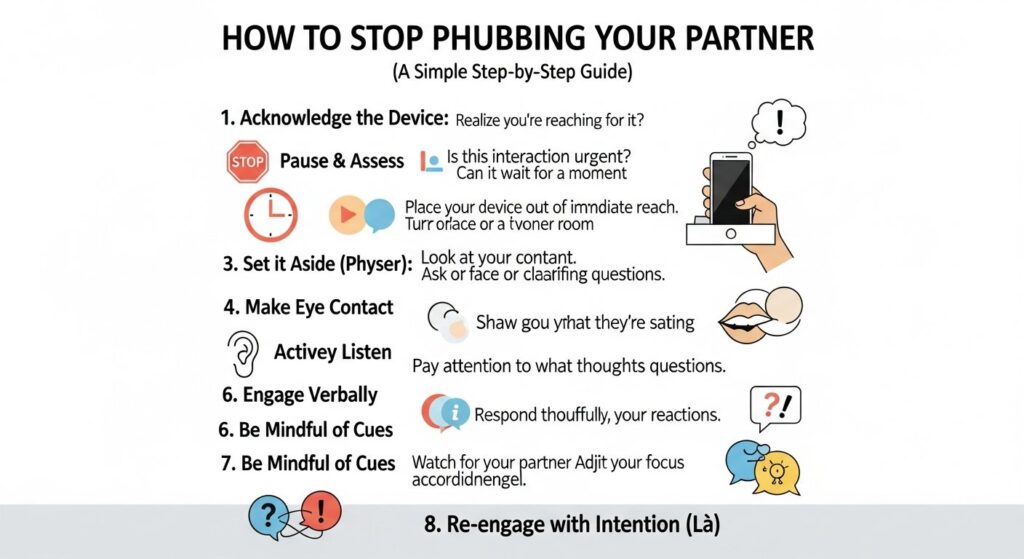
Vulnerability thrives in an environment of undivided attention. Before engaging in a conversation where you intend to be vulnerable (or hope your partner will be), consciously put away distractions. Turn off notifications, put your phone in another room, and make eye contact. Give your full, genuine presence. This signals to the other person that they are important and safe, creating the fertile ground for deep connection.
-
Cultivate Self-Compassion
Being vulnerable means accepting your imperfections. It’s crucial to extend kindness and understanding to yourself, especially when you feel exposed or fear judgment. Remember that everyone is flawed, and it’s these shared imperfections that make us human and relatable. Self-compassion builds the internal resilience needed to face the discomfort of vulnerability.
-
Seek Reciprocity and Set Boundaries
Vulnerability is a two-way street. While you initiate, a healthy relationship involves mutual sharing. Pay attention to how the other person responds. Do they listen actively? Do they reciprocate with their own vulnerability? If not, it might be a sign to adjust the level of vulnerability you share. It’s also vital to set boundaries. You don’t have to share everything with everyone. Choose trusted individuals and share at a pace that feels comfortable and safe for you.
-
Reflect and Journal
Before a significant vulnerable conversation, or even just as a regular practice, journaling can be incredibly helpful. Writing down your fears, feelings, and hopes can clarify what you want to communicate and help you process emotions. It’s a safe space to explore your inner world, making it easier to articulate those thoughts and feelings to others.
Overcoming the Fear: Navigating Common Barriers to Vulnerability
-
Fear of Rejection or Judgment
This is perhaps the most significant barrier. We fear that if others see our true selves, they will find us unworthy, unlovable, or inadequate. This fear often stems from past experiences or societal pressures to always appear strong and capable.
Navigation Strategy: Remind yourself that true connection is built on acceptance of the whole person, not just the curated parts. Those who truly care about you will appreciate your authenticity. Practice self-compassion and remember that rejection, while painful, is often more about the other person than it is about you. Focus on sharing with those you already trust to some degree.
-
Past Hurt or Betrayal
If you’ve been vulnerable in the past and it led to pain, betrayal, or ridicule, it’s completely understandable to put up walls. Your brain is trying to protect you from future harm.
Navigation Strategy: Acknowledge your past pain without letting it dictate your future. Healing from past wounds, perhaps with the help of a therapist, can create space for new experiences. When approaching new relationships, practice gradual vulnerability, observing how the other person responds before deepening your sharing. Start with people who have consistently shown themselves to be trustworthy.
-
Belief That Vulnerability is Weakness
Many cultures and upbringing emphasize stoicism and emotional toughness. Expressing feelings or needs might be perceived as a sign of weakness.
Navigation Strategy: Actively challenge this belief. Seek out stories and role models who exemplify courageous vulnerability. Remind yourself that it takes immense strength to be authentic and open, far more than it takes to hide behind a facade. Research, like Brené Brown’s work, consistently shows that vulnerability is a cornerstone of courage, not its opposite.
-
Lack of Skills or Practice
If you haven’t been taught how to express emotions effectively, or if you simply haven’t had much practice, vulnerability can feel clunky and awkward.
Navigation Strategy: This is where the “start small” approach is invaluable. Practice identifying your emotions. Use “I” statements. Read books or articles on emotional intelligence and communication. The more you practice, the more natural and comfortable it will become. Consider practicing in low-stakes environments, like sharing a minor personal observation with a trusted friend.
-
Fear of Burdening Others
Some people avoid vulnerability because they worry they will be a burden to their loved ones, or that their problems are “too much” for others to handle.
Navigation Strategy: Understand that allowing others to support you can actually strengthen your relationship. It provides them an opportunity to show care and commitment, deepening their own sense of purpose and connection. Often, the act of listening and being present is a gift in itself, and it allows others to feel needed and valued.
Navigating these fears requires patience, self-awareness, and a willingness to step outside your comfort zone. Each small step you take is a victory, moving you closer to deeper, more fulfilling connections.
Embrace the Power of Presence and Authenticity
In a world that often encourages us to hide behind filters and distractions, choosing vulnerability is a revolutionary act. It’s a courageous step towards building relationships that are not just strong, but deeply meaningful and resilient. By understanding what vulnerability truly is, recognizing its profound impact on trust and intimacy, and consciously navigating the challenges of our digital age, you equip yourself with the most powerful tool for authentic connection.
At Stop Phubbing, we champion the idea that true presence is the ultimate gift you can give to another person, and to yourself. When you put down your phone and open your heart, you create space for the magic of vulnerability to unfold. It may feel uncomfortable at first, but the rewards – richer relationships, profound self-acceptance, and a life truly lived with purpose and connection – are immeasurable. Dare to be seen. Dare to be real. Your most authentic connections are waiting.