
Breaking Free: Your Practical Guide to Overcoming Smartphone Addiction and Cultivating Mindful Connection
Understanding Smartphone Addiction: What It Is and Why It Matters
Before we dive into recovery, it’s crucial to understand what smartphone addiction truly entails. It’s not simply about using your phone frequently; it’s about a pattern of compulsive use that negatively impacts various aspects of your life, despite your desire to cut back. Psychologists often refer to it as “problematic smartphone use” or “smartphone dependency,” aligning it with behavioral addictions like problem gambling or excessive internet use.
The line between heavy use and problematic use can be subtle. Many of us use our phones for work, education, or essential communication, making it challenging to differentiate healthy engagement from unhealthy dependence. However, the key differentiator lies in the impact and the loss of control. A heavy user might spend hours on their phone but can put it down without distress, maintain their responsibilities, and prioritize real-world interactions. Someone struggling with smartphone addiction, however, experiences withdrawal symptoms like anxiety or irritability when separated from their device, neglects duties, and finds their relationships suffering, even as they acknowledge the problem.
Why does this distinction matter? Because recognizing it is the first step toward healing. Problematic smartphone use isn’t a moral failing; it’s a behavioral pattern driven by complex psychological mechanisms that can severely compromise your mental, emotional, and even physical health. Studies show a strong correlation between excessive smartphone use and increased rates of anxiety, depression, sleep disturbances, and loneliness. It can impair cognitive functions like concentration and memory, reduce empathy, and, most relevant to our mission at Stop Phubbing, directly undermine the quality of your in-person relationships. When your gaze is constantly drawn to a screen, you miss out on the subtle cues, shared laughter, and genuine presence that nourish human connection. Understanding this isn’t about judgment; it’s about empowering you with knowledge to initiate positive change.
Recognizing the Signs: Is Your Smartphone Use Problematic?

Self-awareness is paramount in addressing any behavioral pattern. While the signs of smartphone addiction can manifest differently for everyone, they generally fall into behavioral, emotional, and physical categories. Be honest with yourself as you review these indicators.
Behavioral Signs
- Compulsive Checking: You find yourself reaching for your phone frequently, even when there’s no clear reason or notification. This might include checking social media, email, or news apps within minutes of putting it down.
- Inability to Disconnect: You struggle to put your phone away during social gatherings, meals, or family time, often prioritizing your screen over direct interaction.
- First and Last Thing: Your phone is the first thing you check in the morning and the last thing you look at before bed, often disrupting sleep patterns.
- Using it in Inappropriate Situations: You use your phone while driving, during important meetings, in the bathroom, or during intimate moments.
- Lying About Usage: You minimize or conceal the amount of time you spend on your phone from friends, family, or even yourself.
- Failed Attempts to Cut Back: You’ve tried to reduce your screen time but consistently find yourself unable to stick to your own rules.
- Neglect of Responsibilities: Your smartphone use interferes with your work, school, chores, or other important duties.
- “Phantom Vibrations”: You frequently feel your phone vibrate or hear it ring when it hasn’t, indicating a heightened anticipation for interaction.
Emotional Signs
- Anxiety or Irritability: You feel anxious, restless, or irritable when your phone is out of reach, has a low battery, or when you can’t access it. This is a common withdrawal symptom.
- Preoccupation: You constantly think about your phone or what you might be missing online, even when engaged in other activities.
- Feeling of Emptiness: You experience a sense of boredom, loneliness, or emptiness when you don’t have your phone to distract you.
- FOMO (Fear of Missing Out): An intense anxiety that you’re missing out on social interactions, news, or important information if you’re not constantly online.
- Emotional Regulation: You use your phone as a primary coping mechanism to escape negative emotions like stress, boredom, sadness, or anger.
Physical Signs
- Eye Strain and Headaches: Prolonged screen time can lead to digital eye strain, blurred vision, and tension headaches.
- “Tech Neck”: Persistent neck and shoulder pain due to constantly looking down at your device.
- Sleep Disturbances: The blue light emitted by screens suppresses melatonin production, making it harder to fall asleep and reducing sleep quality.
- Carpal Tunnel Syndrome/Thumb Tendinitis: Repetitive strain injuries from excessive typing or swiping.
- Poor Posture: Hunching over your phone for extended periods can lead to chronic posture problems.
Self-Assessment Questions:
Reflect on these questions to gain further insight:
- Do I often find myself spending more time on my phone than I intended?
- Do I feel uncomfortable or anxious if my phone isn’t nearby or accessible?
- Have my relationships suffered because of my phone use?
- Do I use my phone to escape problems or negative feelings?
- Have I tried to cut down on my phone use but failed?
- Do I sometimes choose to interact with my phone over people in my immediate environment?
The Psychological Roots: Why We Get Hooked
Understanding why smartphones are so addictive is crucial for developing effective recovery strategies. Our devices are expertly designed to tap into fundamental human psychological needs and vulnerabilities.
The Dopamine Reward Loop
One of the primary drivers of smartphone addiction is the dopamine reward system. Every notification, “like,” new email, or text message offers a shot of dopamine – a neurotransmitter associated with pleasure and motivation. This creates a powerful, variable reward loop. Because you don’t know exactly when the next reward will come, your brain is encouraged to keep checking, hoping for that next hit. This “intermittent reinforcement” is incredibly effective at fostering habit formation and addiction, much like a slot machine.
FOMO (Fear of Missing Out)
In a hyper-connected world, the fear of being left out of social events, important news, or online conversations is a significant psychological trigger. Social media platforms, in particular, exacerbate FOMO by constantly showcasing what others are doing, leading to a pervasive sense that you need to be online to stay relevant or informed. This anxiety drives compulsive checking and makes it incredibly difficult to disconnect, even when you want to.
Social Validation
Our innate need for social connection and acceptance is skillfully leveraged by smartphone apps. “Likes,” comments, shares, and follower counts provide immediate social validation, boosting self-esteem and creating a feedback loop where more engagement leads to more validation. This quest for external approval can become a powerful motivator for excessive use, especially among younger demographics, but it affects all ages.
Escapism and Emotional Regulation
Smartphones offer an immediate, convenient escape from boredom, stress, loneliness, or uncomfortable emotions. Feeling anxious? Scroll through social media. Bored during a commute? Play a game. Lonely? Text a friend or browse dating apps. This constant availability of distraction prevents us from confronting difficult feelings or engaging in deeper self-reflection. Over time, the phone becomes a primary, often unhealthy, coping mechanism, hindering our ability to develop healthier emotional regulation strategies.
Cognitive Biases and Behavioral Economics
App designers employ sophisticated techniques rooted in behavioral psychology. “Infinite scroll” eliminates natural stopping points. “Streaks” gamify continuous engagement. Notifications are designed to be attention-grabbing. These features exploit our cognitive biases, making it harder to disengage and reinforcing the habit of constant interaction. The illusion of productivity, where checking emails or news feels like “work,” can also mask excessive use.
Understanding these psychological traps is not about blaming technology; it’s about empowering yourself with the knowledge to consciously break free from their grip. It reveals that the problem isn’t a lack of willpower, but rather a deeply ingrained habit fostered by powerful design principles.
Your Recovery Journey: Practical Strategies for Digital Detox and Mindful Use

Embarking on a recovery journey from problematic smartphone use is a process of small, consistent steps, not a single dramatic leap. The goal isn’t necessarily to abandon your phone entirely, but to cultivate a healthier, more intentional relationship with it.
1. Cultivate Awareness: Know Your Habits
The first step is always awareness. Most smartphones now have built-in “Digital Well-being” or “Screen Time” features that track your usage. Use them! Monitor how much time you spend on your phone and, more importantly, which apps consume most of your attention. This data can be incredibly eye-opening and provide a baseline for setting realistic goals. Consider keeping a manual “phone journal” for a few days, noting down why you picked up your phone each time.
2. Set Clear Boundaries: Establish No-Phone Zones and Times
- Bedroom Ban: Make your bedroom a phone-free zone. Get an alarm clock and charge your phone in another room overnight. This dramatically improves sleep quality and prevents late-night scrolling.
- Dining Table Rule: Insist on no phones at the dining table, whether you’re alone or with others. Use meal times as opportunities for mindful eating or genuine conversation.
- Bathroom Break: Resist the urge to bring your phone into the bathroom. It’s a small but significant step towards breaking the habit of constant companionship.
- Scheduled Breaks: Designate specific “phone-free” hours during your day. This could be the first hour after waking, the last hour before bed, or a block of time during your workday when you focus entirely on a task.
- “Digital Sabbath”: Experiment with a longer period, like a few hours or even a full day once a week, where you intentionally disconnect from all non-essential screens.
3. Master Your Notifications: Take Back Control
Notifications are dopamine triggers. Take proactive control:
- Turn Off Non-Essential Notifications: Go into your phone settings and disable notifications for most social media apps, games, news alerts, and anything that isn’t absolutely critical (like calls or essential messages).
- Use “Do Not Disturb” Effectively: Schedule “Do Not Disturb” mode during work, sleep, and family time. Allow only essential contacts to break through if necessary.
- Greyscale Mode: Experiment with setting your phone to greyscale. The lack of vibrant colors makes apps less appealing and reduces the psychological pull.
4. Digital Declutter: Simplify Your Screen
- Delete Unnecessary Apps: Remove apps that are major time sinks, trigger compulsive checking, or don’t add real value to your life. If you can’t delete them, move them to a hidden folder.
- Organize Your Home Screen: Keep only essential tools (phone, camera, maps) on your home screen. Bury distracting apps several folders deep.
- Unfollow/Unsubscribe: Curate your social media feeds. Unfollow accounts that make you feel inadequate, anxious, or aren’t genuinely engaging. Unsubscribe from newsletters you never read.
5. Mindful Interaction: Pause Before You Pick Up
- The “Why” Question: Before picking up your phone, pause and ask yourself: “Why am I picking up my phone right now? What is my intention?” This simple act of mindfulness can often reveal that you’re just reaching for it out of habit or boredom.
- Single-Tasking: When you do use your phone, try to use it for one specific purpose and then put it down. Avoid opening multiple apps simultaneously.
- Delay Gratification: When a notification comes in, resist the immediate urge to check it. Practice waiting 5, 10, or even 30 minutes. You’ll often find it wasn’t urgent.
6. Analog Alternatives: Replace Phone Habits
Identify moments when you typically reach for your phone (waiting in line, during commercials, feeling bored) and consciously replace that habit with an analog alternative:
- Carry a small book or journal.
- Listen to a podcast or music (without looking at your phone).
- Observe your surroundings.
- Engage in a quick mindfulness exercise.
- Have a conversation with someone nearby.
These strategies are building blocks. Start with one or two that feel manageable, celebrate your small victories, and gradually integrate more as you gain confidence and experience the benefits of a less tethered life.
Building a Life Beyond the Screen: Fostering Authentic Connection and Well-being
Reducing screen time is only half the battle; the other, equally important half is actively filling that space with meaningful activities and genuine human connection. This is where the true essence of Stop Phubbing comes alive – shifting your focus from digital interactions to real-world engagement.
1. Rediscover and Cultivate Hobbies
What did you love doing before smartphones consumed so much of your free time? Or what new skill have you always wanted to learn? Engage in activities that require your full attention and don’t involve a screen. This could be painting, playing a musical instrument, gardening, cooking, hiking, knitting, writing, or learning a new language. Hobbies provide a sense of accomplishment, reduce stress, and offer a natural, healthy outlet for your energy and creativity.
2. Prioritize In-Person Connections
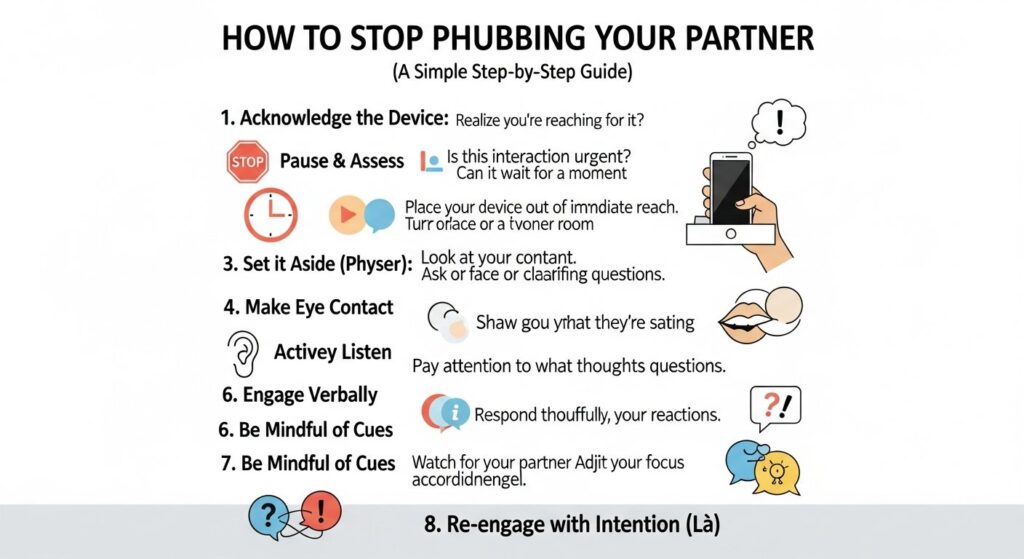
The core mission of Stop Phubbing is to bring people back together. Make a conscious effort to schedule and prioritize face-to-face interactions. Invite a friend for coffee, plan a dinner party, join a local club or group (book club, sports league, volunteer organization). When you are with others, practice active listening, make eye contact, and resist the urge to check your phone. Model the behavior you wish to see in others. These authentic connections are vital for our emotional well-being and sense of belonging.
3. Embrace Boredom and Solitude
Our phones have conditioned us to avoid even a moment of boredom. However, boredom is a fertile ground for creativity, problem-solving, and self-reflection. Instead of immediately reaching for your phone when you have downtime, allow yourself to simply be. Let your mind wander. This can lead to new ideas, a deeper understanding of your thoughts, and a greater sense of peace. Similarly, embrace solitude – moments when you are alone with your thoughts, without digital distraction. This is crucial for self-discovery and personal growth.
4. Connect with Nature
Spending time outdoors has profound benefits for mental and physical health. Whether it’s a walk in a park, a hike in the mountains, gardening in your backyard, or simply sitting on a bench and observing your surroundings, nature provides a powerful antidote to digital overwhelm. It reduces stress, improves mood, enhances creativity, and offers a natural sense of perspective.
5. Practice Mindfulness and Meditation
Mindfulness is the practice of being fully present and aware of the current moment, without judgment. Meditation techniques, even for just a few minutes a day, can significantly improve your ability to focus, manage stress, and reduce the compulsive urge to check your phone. There are many apps available to guide you, but the ultimate goal is to integrate mindfulness into your everyday life, observing your thoughts and feelings without getting swept away by them.
6. Engage Your Senses
Our phones primarily engage sight and sound. Intentionally engage your other senses. Cook a fragrant meal, listen to music without distractions, touch different textures, savor the taste of your food, notice the scents around you. The more you engage with the richness of the physical world, the less appealing the two-dimensional screen becomes.
By actively cultivating a rich, engaging life beyond your screen, you’re not just reducing screen time; you’re building resilience, deepening your relationships, and fostering a profound sense of well-being that no digital interaction can replicate. This holistic approach makes your recovery sustainable and deeply rewarding.
Sustaining Your Progress: Long-Term Strategies and Relapse Prevention
Overcoming smartphone addiction is not a one-time event; it’s an ongoing journey that requires continuous effort and adaptation. Just like any behavioral change, there will be good days and challenging days. The key is to develop long-term strategies that support your new habits and help prevent relapse.
1. Regular Digital Check-ins and Adjustments
Don’t just set rules and forget them. Periodically review your screen time reports and assess how your current strategies are working. Are there new apps or habits creeping in? Do your no-phone zones need reinforcement? Life changes, and your digital boundaries might need to adapt. This isn’t about perfection, but about consistent self-awareness and willingness to make adjustments.
2. Develop Healthy Coping Mechanisms
Identify the triggers that typically make you reach for your phone (e.g., stress, boredom, loneliness, anxiety). Instead of turning to your device, develop a repertoire of healthy alternatives. This might include:
- For stress: Deep breathing, a short walk, listening to calming music, journaling, talking to a friend.
- For boredom: Reading, pursuing a hobby, light exercise, looking out the window, planning something fun.
- For loneliness: Calling a friend, joining a community group, visiting family, engaging in volunteer work.
Having these go-to strategies ready will significantly reduce the likelihood of mindlessly reaching for your phone.
3. Cultivate an Accountability System
Share your goals with a trusted friend, family member, or partner. An accountability partner can offer encouragement, gentle reminders, and celebrate your successes. You might even embark on a digital wellness journey together, supporting each other in setting boundaries and exploring screen-free activities.
4. Embrace Imperfection and Practice Self-Compassion
There will be days when you slip up. You might spend too much time scrolling, or find yourself checking your phone in a “no-phone zone.” When this happens, don’t descend into self-criticism or give up entirely. Acknowledge the slip, understand what triggered it, and gently redirect yourself. Self-compassion is crucial; treat yourself with the same kindness and understanding you would offer a friend. View setbacks as learning opportunities, not failures.
5. Mindful Re-introduction of Technology
The goal is not necessarily to live without technology, but to use it intentionally. As you gain control, you might find ways to reintroduce certain apps or digital activities in a mindful way. For example, using social media specifically to connect with distant relatives for a set amount of time, rather than endless scrolling. The key is purposeful engagement versus passive consumption.
6. Seek Professional Support if Needed
If you find yourself consistently struggling despite implementing these strategies, or if your smartphone use is severely impacting your mental health, relationships, or work, consider seeking professional help. Therapists specializing in behavioral addictions or digital wellness can provide tailored support, often employing techniques from Cognitive Behavioral Therapy (CBT) to help you understand and change your relationship with technology. There are also support groups and online resources dedicated to digital detox and mindful tech use.
Remember, building a mindful relationship with your smartphone is a continuous process of learning, adapting, and growing. Each step you take towards greater presence and authentic connection is a victory for your well-being and your relationships.
Conclusion: Reclaiming Your Presence in a Digital World
Your smartphone is a tool, and like any tool, its power lies in how you choose to wield it. This journey from problematic use to mindful engagement is not about demonizing technology; it’s about empowerment – reclaiming your attention, nourishing your relationships, and rediscovering the richness of a life lived fully in the present. It’s about shifting from reactive scrolling to intentional interaction, from constant distraction to deep connection.
As you implement these strategies, be patient and compassionate with yourself. Change is a process, not an overnight transformation. There will be moments of challenge, but each conscious choice to put your phone down and engage with the world around you is a victory. At Stop Phubbing, we believe that the most profound connections happen when we are truly present for one another. By taking these steps, you’re not just improving your own well-being; you’re setting an example, inspiring those around you to look up, connect, and thrive in the beautiful, messy, and wonderfully analog world we all share. Start