

Understanding the Foundation of Healthy Relationships
Before diving into the specific markers, it’s essential to grasp the fundamental nature of what constitutes a truly healthy relationship. It is far more than the absence of conflict or a constant state of euphoria. Instead, a healthy relationship is a dynamic, evolving partnership built on a bedrock of trust, mutual respect, and a shared commitment to growth. It acknowledges that both individuals are distinct entities with their own needs, dreams, and challenges, and that the relationship itself is a third entity requiring dedicated nourishment. It’s about creating a safe space where vulnerabilities can be shared without fear of judgment, and where both partners feel seen, heard, and valued.
Many misconceptions persist about what a healthy connection looks like. Some might believe it means never arguing, while others might equate passion with possessiveness. However, a truly healthy relationship embraces disagreement as an opportunity for deeper understanding, and it celebrates independence as much as interdependence. It thrives on open dialogue, empathetic listening, and a willingness to adapt and compromise. It is a journey of continuous learning, self-reflection, and mutual support, where both individuals are invested in the well-being and happiness of the other, not out of obligation, but out of genuine care and affection.
The landscape of relationships is also continually shaped by external factors, including the pervasive influence of technology. In 2026, understanding how digital habits impact connection is paramount. A healthy relationship proactively addresses these influences, setting boundaries and fostering mindful technology use to ensure that screens enhance, rather than detract from, intimacy. This foundational understanding sets the stage for recognizing the specific signs that indicate your relationship is not just surviving, but truly thriving.
The Core Pillars: Communication and Respect
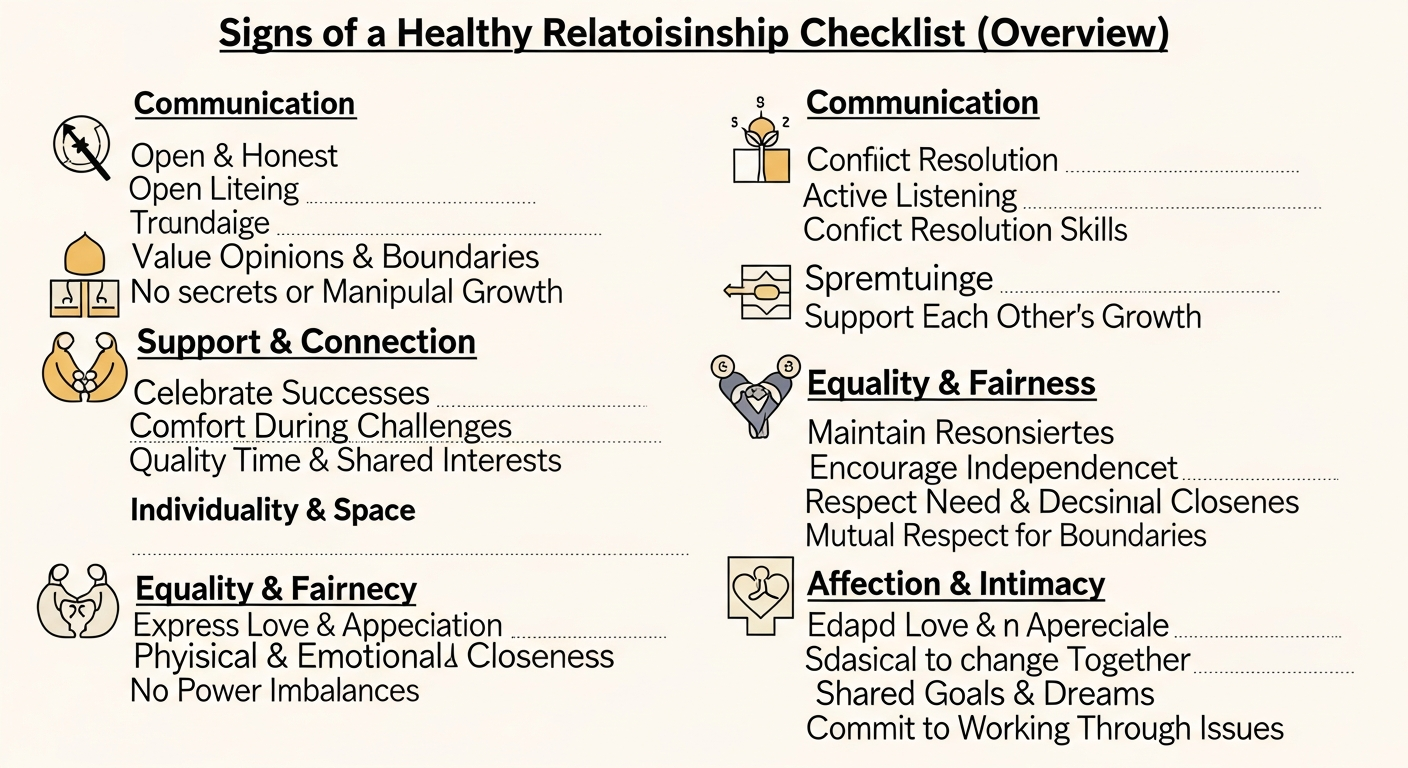
At the heart of every enduring and fulfilling relationship lies an unwavering commitment to open communication and profound respect. These two pillars are inextricably linked; one cannot truly exist without the other. Effective communication isn’t merely about exchanging words; it’s about conveying thoughts, feelings, and needs in a way that fosters understanding, empathy, and connection. Respect, in turn, provides the essential framework within which this communication can occur safely and constructively.
Open and Honest Dialogue: A Hallmark of Connection
One of the most significant signs of a healthy relationship is the presence of open and honest dialogue. This means both partners feel comfortable expressing their true selves, their joys, fears, frustrations, and desires, without reservation or fear of retribution. It involves active listening – truly hearing and understanding your partner’s perspective, rather than simply waiting for your turn to speak. This includes asking clarifying questions, reflecting back what you’ve heard, and validating their feelings, even if you don’t fully agree with their viewpoint. This foundational aspect of How To Communicate Better Relationships is not a skill you master once; it’s a continuous practice of tuning into your partner and ensuring your messages are received as intended.
- You feel safe to express your opinions and feelings: There’s no fear of judgment, ridicule, or dismissal, even on sensitive topics.
- You actively listen to each other: Both partners make an effort to truly understand the other’s perspective, rather than just formulating a response.
- Constructive conflict resolution is present: Disagreements are handled respectfully, focusing on solutions rather than blame, and both partners are willing to compromise.
- There is transparency and honesty: You share information openly and truthfully, building trust and avoiding secrets that could erode the relationship.
- You communicate needs clearly: Both partners are comfortable articulating what they need from the relationship and from each other.
Unwavering Mutual Respect: The Bedrock of Trust
Respect is the oxygen that allows a relationship to breathe and flourish. It means valuing your partner’s individuality, their boundaries, their beliefs, and their autonomy. It’s about treating them with dignity, even during disagreements, and recognizing their inherent worth. A relationship built on respect sees each partner as an equal, worthy of consideration and honor. This extends to respecting their time, their personal space, their career, and their relationships with others.
- You respect each other’s boundaries: Both physical and emotional boundaries are recognized and honored without pressure or manipulation.
- You value each other’s opinions and ideas: Even when you disagree, you acknowledge the validity of your partner’s perspective.
- You support each other’s individual pursuits: There’s encouragement for personal hobbies, friendships, and career goals, understanding that individual growth strengthens the partnership.
- You speak kindly to and about each other: Publicly and privately, your words reflect admiration and affection, avoiding derogatory language or undermining remarks.
- There is equality in decision-making: Major life choices are made collaboratively, considering both partners’ needs and desires.
Cultivating these pillars requires conscious effort, especially in the modern age where digital distractions can often interrupt meaningful exchanges. Ensuring that conversations are uninterrupted by screens and that attention is fully present reinforces both communication and respect, paving the way for a truly robust connection.
Emotional Intelligence and Mutual Support
Empathy and Emotional Validation: Feeling Understood
One of the most comforting and affirming signs of a healthy relationship is the ability of partners to offer each other empathy and emotional validation. This doesn’t mean always agreeing with your partner’s feelings, but rather acknowledging and accepting them as valid experiences. When a partner shares their sadness, anger, or joy, an emotionally intelligent response is to listen without judgment, to try and understand the feeling from their perspective, and to communicate that you hear and care about what they are experiencing. This act of validation creates a safe haven where emotions can be freely expressed, deepening intimacy and trust.
- You acknowledge and validate each other’s feelings: Even if you don’t share the same emotion or perspective, you respect your partner’s emotional experience.
- You show genuine empathy: You make an effort to put yourself in your partner’s shoes and understand their emotional state.
- You are attuned to each other’s non-verbal cues: You pick up on subtle signs of distress, happiness, or discomfort, indicating a deep understanding of each other.
- You manage your own emotions constructively: Both partners take responsibility for their emotional reactions and express them in healthy, non-destructive ways.
Being a Reliable Source of Support: Through Thick and Thin
Mutual support is the scaffolding that holds a relationship steady through life’s inevitable ups and downs. It’s about being each other’s greatest cheerleader, confidant, and rock. This support manifests in various ways: celebrating successes with genuine enthusiasm, offering comfort during times of sorrow, providing practical help when needed, and standing by each other through challenges. It creates an unwavering sense of partnership, where both individuals feel they are part of a team facing the world together. This isn’t just about grand gestures; it’s often the small, consistent acts of kindness, understanding, and reassurance that build a strong foundation of support.
- You celebrate each other’s successes wholeheartedly: There’s no envy or competition, only genuine joy and pride in your partner’s achievements.
- You offer comfort and reassurance during difficult times: You are present for each other in moments of stress, grief, or uncertainty, providing a shoulder to lean on.
- You are each other’s biggest advocates: You speak positively about your partner and defend them when necessary, fostering a sense of loyalty.
- You provide practical help when needed: Whether it’s running an errand, helping with a project, or simply listening, you’re there to assist.
- You empower each other to pursue goals: Both partners encourage and facilitate each other’s personal and professional aspirations.
In a world increasingly prone to isolation despite hyper-connectivity, the emotional warmth and unwavering support found in a healthy relationship are invaluable. It creates a sanctuary where both individuals feel utterly safe, understood, and cherished, knowing they have a steadfast ally in their corner, ready to embrace the journey of life alongside them.
Growth, Individuality, and Shared Futures
A truly vibrant relationship doesn’t just maintain the status quo; it actively fosters individual and collective growth. It understands that while two people come together to form a unit, they remain distinct individuals with their own paths to forge. The balance between maintaining individuality and building a shared future is a delicate yet crucial aspect of a healthy, evolving partnership. It’s about creating a synergy where each person’s personal development enriches the relationship, and the relationship, in turn, supports each person’s journey.
Nurturing Individual Passions and Identities
One of the clear signs of a healthy relationship is the encouragement of individual passions, hobbies, and friendships outside of the primary partnership. This isn’t about creating distance; it’s about recognizing that a well-rounded individual brings more richness and vitality to the relationship. Having separate interests and a strong sense of self prevents codependency and ensures that both partners maintain their unique identities. It allows for fresh perspectives, new experiences to share, and a healthy independence that strengthens the bond when partners come back together.
- You maintain individual friendships and social circles: Both partners have fulfilling relationships outside of the couple, which are respected and encouraged.
- You pursue personal hobbies and interests: There’s space and support for each partner to engage in activities they enjoy independently.
- You encourage each other’s personal growth and learning: Whether it’s a new skill, a course, or a career change, you support each other’s self-improvement.
- You maintain a strong sense of self and autonomy: Neither partner feels lost in the relationship or pressured to conform entirely to the other’s identity.
- There is respect for alone time and personal space: Both partners understand and honor the need for solitude and independent reflection.
Crafting a Shared Vision and Future
While individuality is vital, a healthy relationship also thrives on a shared vision for the future. This involves discussing and aligning on important life goals, values, and aspirations. It doesn’t mean agreeing on every single detail, but rather finding common ground on core principles and working together to build a life that reflects both partners’ desires. This shared trajectory provides a sense of purpose and direction for the relationship, fostering collaboration and a feeling of being a team moving towards common objectives. It requires ongoing conversations about finances, family, career, lifestyle, and legacy, ensuring both partners feel their dreams are acknowledged and integrated into the collective future.
- You discuss and align on important life goals: Conversations about career, family, finances, and lifestyle are open and collaborative.
- You share core values and principles: While differences exist, fundamental beliefs about life, ethics, and relationships are largely compatible.
- You make future plans together: From vacations to major life decisions, you plan collaboratively, considering both partners’ needs.
- There is a sense of shared purpose and direction: You feel like a team working towards a common, fulfilling future.
- You celebrate shared milestones and create new traditions: Building a rich tapestry of joint experiences and memories strengthens the bond.
The synergy between individual growth and a shared future is what makes a relationship truly dynamic and resilient. It’s a continuous dance between “me” and “we,” where both elements are honored and nurtured, leading to a partnership that is not only strong but also deeply fulfilling and ever-evolving. This balance is key for any relationship aiming for longevity and profound connection, extending well into 2026 and beyond.
Navigating Challenges: Conflict Resolution and Resilience
No relationship is a perpetual honeymoon, and the absence of conflict is not necessarily a sign of health; often, it can indicate suppressed issues or a lack of genuine engagement. What truly distinguishes a healthy relationship is not the absence of disagreements, but rather the presence of effective and respectful conflict resolution strategies, coupled with an inherent resilience to bounce back from adversity. Challenges are inevitable, but how partners navigate them determines the strength and longevity of their bond.
Constructive Conflict Resolution: Growing Through Disagreement
A hallmark of a healthy partnership is the ability to engage in constructive conflict. This means approaching disagreements as opportunities for understanding and growth, rather than battles to be won. It involves listening actively, expressing feelings without blame, and focusing on finding mutually agreeable solutions. Healthy couples understand that it’s “us against the problem,” not “me against you.” They avoid personal attacks, passive aggression, and stonewalling, opting instead for open, honest, and respectful dialogue even when emotions run high. This process often involves taking breaks when things get too heated, and returning to the discussion when both partners can approach it calmly.
- You address conflicts directly and respectfully: Issues are confronted rather than avoided or allowed to fester.
- You focus on the issue, not personal attacks: Arguments remain about the problem at hand, without resorting to name-calling or character assassination.
- You both take responsibility for your part in conflicts: There’s a willingness to acknowledge one’s own contributions to the disagreement.
- You are willing to apologize and forgive: Both partners can genuinely say “I’m sorry” and extend forgiveness, allowing for healing and moving forward.
- You learn from your conflicts: Disagreements lead to deeper understanding, changes in behavior, or improved communication strategies.
Building Resilience and Repairing Rifts
Beyond resolving individual conflicts, a healthy relationship demonstrates an overarching resilience – the capacity to withstand life’s stresses, adapt to change, and recover from setbacks stronger than before. This resilience is built through a history of successfully navigating challenges together, reinforcing the belief that you can face anything as a team. Part of this resilience involves the crucial act of How To Reconnect With Your Partner after a disagreement or a period of distance. Repair attempts are essential; these are gestures, verbal or non-verbal, that aim to de-escalate tension, show affection, or bridge the gap created by conflict. They signal a desire to mend the relationship and reaffirm the bond, even when things are tough.
- You consistently make repair attempts after conflicts: There’s an effort to mend emotional wounds and re-establish connection post-argument.
- You can bounce back from external stressors together: Life’s challenges (job loss, illness, family issues) are faced as a united front.
- You adapt to changes and transitions as a team: Both partners are flexible and willing to adjust plans and expectations when circumstances shift.
- You have a shared belief in the relationship’s ability to overcome obstacles: There’s an underlying confidence in your collective strength.
- You support each other through individual failures and setbacks: You offer comfort and encouragement, helping each other recover and learn.
The ability to navigate conflict and emerge stronger is a powerful indicator of a mature and healthy relationship. It proves that the bond is robust enough to handle reality, and that both partners are committed to the ongoing work required to make it thrive, year after year, well into 2026 and beyond.
Digital Wellness in Modern Relationships: A Crucial Element
In 2026, it is impossible to discuss the signs of a healthy relationship without addressing the profound impact of digital technology on our connections. The proliferation of smartphones, social media, and constant connectivity has introduced new dynamics, and with them, new challenges and opportunities for intimacy. Digital wellness in relationships is about consciously managing technology use to ensure it enhances, rather than detracts from, genuine human connection. Ignoring this aspect can lead to subtle but significant erosions of intimacy, trust, and presence, often manifesting as “phubbing” – the act of snubbing your partner in favor of your phone.
Mindful Technology Use: Prioritizing Presence
A key indicator of a healthy modern relationship is a shared commitment to mindful technology use. This means being aware of when and how technology is impacting your interactions and making intentional choices to prioritize your partner over your device. It’s about recognizing that constant digital distractions can lead to fragmented conversations, a lack of deep listening, and a feeling of being secondary to the digital world. Tips For Healthy Technology Use often revolve around creating boundaries and dedicating specific times and spaces for uninterrupted, screen-free interaction.
- You have established device-free zones or times: Meals, bedrooms, or specific hours are designated as tech-free to encourage presence.
- You prioritize face-to-face interaction over screens: When together, attention is given to the partner, not notifications or apps.
- You communicate about technology habits: You openly discuss concerns about screen time and agree on strategies to manage it.
- You use technology to enhance connection, not replace it: Sharing interesting articles, planning dates, or sending thoughtful messages are positive uses.
- You are present during conversations: You actively listen and engage without checking your phone or getting sidetracked by notifications.
Addressing Digital Distractions and Phubbing
The phenomenon of phubbing, where one partner ignores the other in favor of their phone, is a subtle but potent relationship toxin. It sends a clear message that the device is more important than the person, leading to feelings of neglect, resentment, and a diminished sense of importance. A healthy relationship actively identifies and addresses these digital distractions, working together to minimize their negative impact. This involves not just acknowledging the problem but proactively implementing strategies to ensure that digital devices serve as tools, not masters, of your connection.
- You are both aware of the impact of phubbing: There’s a mutual understanding that ignoring a partner for a device is disrespectful and damaging.
- You gently call out phubbing when it occurs: Both partners feel comfortable and safe to address instances of digital distraction without judgment.
- You set shared boundaries for digital device usage: This could include putting phones away during dates, turning them off during intimate moments, or having “phone baskets” at the door.
- You actively seek to engage each other in conversation instead of turning to devices: When there’s a lull, the default is to connect with your partner, not your phone.
- You use technology to plan and execute meaningful moments: Instead of endless scrolling, you use your devices to research new activities, plan dates, or send encouraging messages to your partner.
In 2026, fostering digital wellness is not an optional extra but a core component of building and maintaining a healthy relationship. By being intentional about technology use, partners can ensure that their digital lives support, rather than undermine, their precious real-world connection, strengthening intimacy and presence.
Your Healthy Relationship Checklist for 2026 and Beyond
As we’ve explored, a healthy relationship is a multifaceted construct, continually evolving and requiring conscious effort from both partners. It’s a dynamic interplay of communication, respect, emotional intelligence, mutual support, personal growth, and a shared vision for the future, all while navigating the unique challenges of the digital age. This checklist serves as a comprehensive guide for you to reflect on the strength and vitality of your partnership as we move further into 2026. Use it not as a rigid scorecard, but as a framework for discussion, self-assessment, and growth, encouraging open dialogue with your partner about where you both stand and where you aspire to be.
Review each point honestly and consider how well your relationship embodies these qualities. Remember, no relationship is perfect, but consistent effort and a shared commitment to these principles are what truly define a thriving connection.
Communication & Respect:
- Open and Honest Dialogue: Do you both feel safe and comfortable expressing your true thoughts and feelings without fear of judgment or negative repercussions?
- Active Listening: Do you truly listen to understand your partner’s perspective, rather than just waiting to respond?
- Mutual Respect: Do you consistently treat each other with dignity, valuing each other’s opinions, boundaries, and individuality?
- Constructive Conflict: Can you navigate disagreements respectfully, focusing on solutions and understanding rather than blame or personal attacks?
- Transparency: Is there a foundation of honesty and trust in your interactions, free from significant secrets or deceit?
Emotional Intelligence & Support:
- Emotional Validation: Do you acknowledge and validate your partner’s feelings, even if you don’t fully agree with them?
- Empathy: Do you consistently try to understand situations from your partner’s emotional perspective?
- Mutual Support: Are you each other’s primary source of comfort and encouragement during both triumphs and challenges?
- Shared Joy: Do you genuinely celebrate each other’s successes without envy or competition?
- Responsibility for Emotions: Do both partners take ownership of their emotional reactions and express them healthily?
Growth, Individuality & Shared Future:
- Individual Growth: Do you encourage each other’s personal development, hobbies, and individual pursuits outside the relationship?
- Healthy Autonomy: Do both partners maintain a strong sense of self and independent friendships?
- Shared Vision: Do you regularly discuss and align on important life goals, values, and a future together?
- Flexibility & Adaptation: Are you both willing to adapt and compromise as life circumstances and individual needs evolve?
- Trust in Partnership: Is there an underlying belief that you are a strong team capable of facing challenges together?
Digital Wellness & Presence:
- Mindful Technology Use: Are you both intentional about how and when you use digital devices, ensuring they don’t overshadow your connection?
- Device-Free Zones/Times: Have you established and respected boundaries for technology use during meals, intimate moments, or quality time?
- Addressing Phubbing: Do you both acknowledge the negative impact of phubbing and actively work to minimize it in your interactions?
- Prioritizing Presence: When together, do you give each other your full, undivided attention, free from digital distractions?
- Tech for Connection: Do you use technology to enhance your bond (e.g., planning dates, thoughtful messages) rather than as a substitute for real connection?
This comprehensive healthy relationship checklist for 2026 is a living document, much like your relationship itself. It’s an invitation to continuously assess, discuss, and refine the ways you connect, ensuring your partnership remains a source of profound joy, growth, and unwavering support. By committing to these principles, you are not just building a relationship; you are cultivating a mindful and fulfilling life together.