The Ultimate Guide on How to Reduce Screen Time for Adults: Reclaim Your Focus in 2026
In an era where our lives are inextricably linked to silicon and glass, the “infinite scroll” has become the default state of existence. We wake up to a digital alarm, check our emails before our eyes are fully open, and lull ourselves to sleep with the blue-light glow of social media. While technology has brought unprecedented convenience, the cost is often our mental clarity, productivity, and emotional well-being. By 2026, the average adult spends upwards of seven hours a day looking at screens, a statistic that highlights a growing crisis of digital dependency. Reducing screen time isn’t about becoming a luddite or retreating to a cave; it’s about regaining agency over your most precious resource: your attention. This comprehensive guide will walk you through the psychological, behavioral, and technical shifts required to break the cycle of phone addiction and cultivate a life of digital wellness.
1. Understanding the Anatomy of the “Digital Loop”
Before you can fix your screen habits, you must understand why they are so hard to break. Modern apps are not designed to be “used”; they are designed to be “consumed.” Engineers use a concept known as “persuasive design,” leveraging dopamine—the brain’s reward chemical—to keep you engaged. Every notification, like, and comment acts as a micro-dose of pleasure, creating a feedback loop that mirrors traditional forms of addiction.
The “variable reward schedule” is the most potent tool in a developer’s arsenal. Much like a slot machine, you don’t know when the next “win” (an interesting tweet, a funny video, or a text) will happen. This uncertainty keeps you checking your device hundreds of times a day. For adults, this often manifests as “phantom vibration syndrome,” where you feel your phone buzzing even when it isn’t. Recognizing that your struggle is a result of world-class engineering—not just a lack of willpower—is the first step toward reclaiming your time.
2. Conduct a Digital Audit: Tracking the “Zombies”
You cannot manage what you do not measure. To reduce screen time, you must first confront the raw data of your habits. Most modern smartphones have built-in tracking features, such as “Screen Time” on iOS or “Digital Wellbeing” on Android. However, in 2026, we also have advanced AI-driven tools that categorize your usage into “Productive,” “Neutral,” and “Vampire” time.
Take one week to observe your patterns without trying to change them. Look for your “trigger apps”—those platforms you open for “just a minute” only to look up an hour later. Categorize your screen time into three buckets:
* **Essential:** Work-related tasks, navigation, and banking.
* **Meaningful Connection:** Video calls with family or intentional messaging.
* **Passive Consumption:** Mindless scrolling through newsfeeds or short-form video content.
The goal isn’t to reach zero; it’s to eliminate the “Vampire” time—the hours spent in a semi-conscious state of consumption that leaves you feeling drained rather than refreshed.
3. High-Impact Technical Adjustments: “Dumbing Down” Your Smartphone
Your phone is designed to be loud, bright, and enticing. By making your device “boring,” you significantly lower its pull on your attention. Here are the most effective technical hacks to implement immediately:
#
Go Greyscale
Our brains are wired to respond to bright, saturated colors—especially red (the color of most notification badges). By switching your phone’s display to greyscale, you strip away the visual rewards of the interface. Instagram and TikTok suddenly look dull, making them much less addictive.
#
Prune Your Notifications
If your phone is buzzing every time someone likes a photo or an app has a sale, you are not in control of your time; the apps are. Disable all non-human notifications. If it isn’t a direct message from a real person or a calendar alert, you don’t need to see it in real-time.
#
The “One-Page” Rule
Keep your home screen strictly for utility: maps, calendar, notes, and camera. Move all social media and entertainment apps into folders on the second or third page. By adding even a small amount of “friction”—the extra swipes and taps needed to find the app—you disrupt the mindless habit of clicking on them.
4. Establishing Physical and Temporal Boundaries
A key strategy for digital wellness is the creation of “Sacred Spaces.” These are areas and times where technology is strictly prohibited. For adults, the most critical boundary is the bedroom. Research has consistently shown that the blue light emitted by screens suppresses melatonin, ruining sleep quality. More importantly, using your phone in bed associates your place of rest with the high-arousal state of the internet.
* **The 30/30 Rule:** Commit to no screens for the first 30 minutes of your day and the last 30 minutes before sleep. This allows your brain to transition naturally into and out of consciousness without a dopamine spike.
* **Phone-Free Zones:** Designate the dining table and the bathroom as phone-free zones. This encourages mindful eating and prevents the “doomscrolling” that often happens during idle moments.
* **The “Parking Lot”:** Create a physical station—perhaps a basket in the hallway or a drawer in the kitchen—where your phone “lives” when you are home. By separating your physical self from the device, you reduce the urge to check it every time there is a lull in conversation or activity.
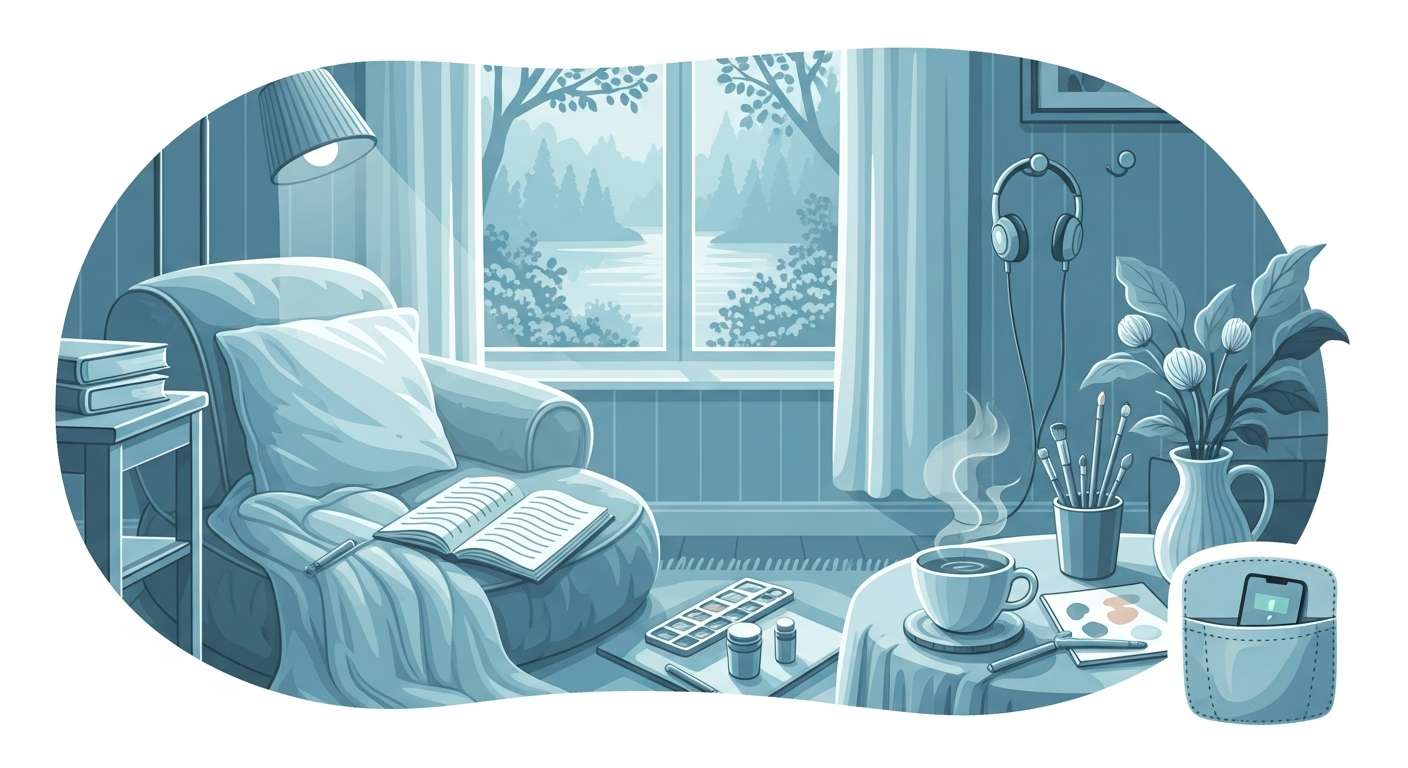
5. Replacing the Void: The Importance of Analog Alternatives
One of the biggest mistakes adults make when trying to reduce screen time is focusing only on the *subtraction*. If you take away your phone but don’t have anything to replace it with, you will inevitably succumb to boredom and reach for the device again. To succeed, you must rediscover “high-quality leisure.”
In 2026, the resurgence of analog hobbies is a testament to our collective screen fatigue. Consider these alternatives:
* **Physical Reading:** Swap your e-reader or phone app for a physical book. The tactile sensation of turning pages and the lack of hyperlinks allow for “Deep Work” and sustained focus.
* **Tactile Hobbies:** Engaging in activities that require your hands—such as gardening, cooking, painting, or woodworking—provides a sensory experience that digital interfaces cannot replicate.
* **Intentional Socializing:** Instead of “checking in” on friends via their stories, schedule a coffee date or a phone call. High-bandwidth communication (voice and face-to-face) provides significantly more emotional satisfaction than text-based interaction.
By filling your time with meaningful activities, the “need” to scroll slowly evaporates. You realize that the digital world is a thin substitute for the richness of physical reality.
6. The Long-term Mindset: Digital Minimalism as a Lifestyle
Reducing screen time is not a one-week detox; it is a fundamental shift in how you relate to the world. Digital Minimalism, a term popularized by author Cal Newport, suggests that we should focus our online time on a small number of carefully selected activities that support the things we value.
Every time you pick up your phone, ask yourself: *“What is my intention right now?”* If the answer is “to kill time,” you are essentially throwing away your most valuable asset. Embracing digital wellness means being okay with being bored. Boredom is often the precursor to creativity and self-reflection. When we fill every gap in our day with a screen, we lose the ability to process our own thoughts.
As we move through 2026, the ability to focus will become a “superpower” in the professional world. Those who can disconnect from the noise and engage in deep, concentrated thought will have a massive competitive advantage. View your screen time reduction not as a restriction, but as an investment in your future self.
—
FAQ: Frequently Asked Questions About Reducing Screen Time
**Q1: My job requires me to be on my phone and computer all day. How can I still reduce my screen time?**
A1: The goal is to reduce *unintentional* screen time. If you use a screen for work, that is productive time. Focus on your “After-Hours Audit.” Create a hard “digital sunset” where work-related devices are put away at 6:00 PM. Use separate devices for work and personal life if possible, or use “Focus Modes” to hide work apps during your personal time.
**Q2: Is “Blue Light” really that bad, or is it just a marketing gimmick?**
A2: It is backed by science. Blue light mimics sunlight, which tells your brain to stop producing melatonin. This disrupts your circadian rhythm, leading to poor sleep quality and daytime fatigue. While “Night Shift” modes help, the psychological stimulation of the content is often more damaging than the light itself.
**Q3: I’ve tried to cut back before, but I always relapse after a few days. What am I doing wrong?**
A3: You are likely relying on willpower alone. Willpower is a finite resource. You need to change your *environment*. If your phone is next to your bed, you will check it. If the apps are on your home screen, you will click them. Focus on “friction”—make the bad habits hard to do and the good habits (like reading a book) easy to do.
**Q4: Are there any apps that actually help reduce screen time?**
A4: Yes, ironically, technology can help solve the problem it created. Apps like *Freedom*, *Forest*, and *Opal* can block distracting websites and apps across all your devices. In 2026, many of these use AI to recognize when you are “zombie scrolling” and will gently nudge you to put the phone down.
**Q5: How do I handle the “Fear of Missing Out” (FOMO)?**
A5: FOMO is a byproduct of seeing a curated highlight reel of others’ lives. Remind yourself that what you see online is not reality. Practice JOMO—the *Joy of Missing Out*. Embrace the peace that comes from not knowing every piece of trivial news or what an acquaintance had for lunch. Your real life is happening in front of you, not in the palm of your hand.
—
Conclusion: Reclaiming Your Life in the Digital Age
Reducing screen time is one of the most challenging yet rewarding endeavors an adult can undertake in 2026. It requires a conscious rebellion against a trillion-dollar industry designed to keep you hooked. However, the benefits—better sleep, improved mental health, deeper relationships, and reclaimed focus—are immeasurable.
Start small. Pick one room to be phone-free or one hour a day to be completely disconnected. Notice the world around you: the sounds, the colors, and the feeling of being present. You’ll find that life is much more vivid when it’s not viewed through a five-inch screen. Digital wellness isn’t about quitting the internet; it’s about making sure the internet doesn’t quit on your real life. By setting boundaries, auditing your habits, and finding joy in the analog world, you can transform technology from a master back into a tool. The “off” button is the most powerful feature on your device—don’t be afraid to use it.