
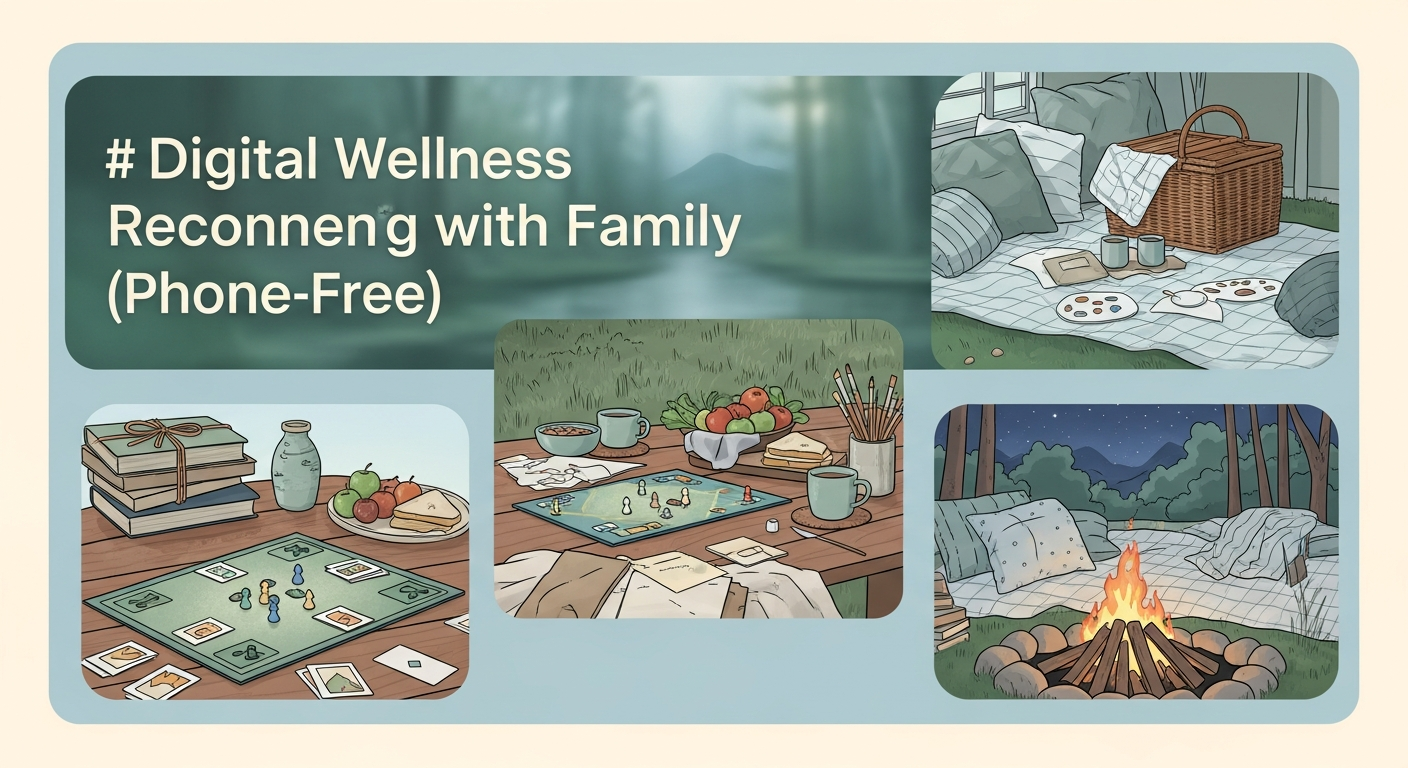
How to Reconnect with Family Without Phones: A Guide to Digital Wellness
In an era where we are more “connected” than ever, the paradox of modern life is that we have never felt more isolated from the people sitting right next to us. We navigate the world through five-inch glass screens, often prioritizing the digital updates of acquaintances over the physical presence of our own family members. As we look toward 2026, the movement toward digital wellness is no longer just a niche lifestyle choice; it has become a necessary survival strategy for the modern household. “Phubbing”—the act of snubbing someone in favor of a mobile phone—has become the silent killer of intimacy. Reconnecting with family without phones isn’t about rejecting technology entirely; it’s about reclaiming our attention and redirecting it toward the people who matter most. This guide explores how to break the cycle of digital addiction and foster deep, meaningful bonds through intentional presence and shared experiences.
Understanding the Impact of Digital Distraction on Family Bonds
Before we can fix the problem, we must understand the depth of the digital divide. Phone addiction isn’t just a bad habit; it is a neurological loop driven by dopamine hits from notifications, likes, and endless scrolling. When a parent or child is constantly glancing at their device, they are sending a subconscious message to the people around them: *“Whatever is on this screen is more important than you.”*
This constant fragmentation of attention leads to “interrupted intimacy.” Research in child development and family psychology shows that even the mere presence of a smartphone on a table reduces the quality of a conversation and the level of empathy felt between participants. In 2026, as augmented reality and even more immersive technologies become mainstream, the barrier between the digital and physical worlds will only thin. By choosing to unplug, you are fighting for the sanctity of the human connection. You are choosing to see the nuance in a sibling’s expression, the subtle change in a spouse’s tone, and the uninhibited joy in a child’s laughter—things that a camera lens or a social media post can never fully capture.
Establishing New Family Norms: Creating Phone-Free Zones
The most effective way to reduce phone usage is to remove the temptation entirely. Willpower is a finite resource; environment design is a permanent solution. To reconnect, families must establish “sacred spaces” where technology is strictly prohibited.
**The Dinner Table Sanctuary:** This is the most critical zone. Meals have historically been the cornerstone of family communication. Establish a “phone basket” or a charging station in another room. By removing the physical device, you remove the “phantom vibration” anxiety and allow the conversation to flow naturally.
**The Bedroom Reset:** Digital wellness starts with sleep. Encourage every family member to charge their phones in a central location—like the kitchen or a hallway closet—rather than on the nightstand. This prevents the “revenge bedtime procrastination” scroll and ensures that the last person you speak to at night, and the first person you see in the morning, is a family member, not a digital influencer.
**The “Transition Period”:** Implement a rule where the first 30 minutes after everyone returns home from school or work are tech-free. This allows the family to decompress and share the highlights of their day without the immediate distraction of emails or social media alerts.
Tech-Free Activities that Foster Deep Connection
Once the phones are away, the common complaint is, “What do we do now?” We have become so accustomed to digital entertainment that we have forgotten how to play and interact. Reconnecting requires active participation in shared tasks.
**1. The Resurgence of Tabletop Gaming:** Board games and card games are powerful tools for digital wellness. They require face-to-face interaction, strategic thinking, and emotional regulation. Whether it’s a high-stakes game of Monopoly or a collaborative mystery-solving game, tabletop gaming forces players to read each other’s body language and engage in “table talk” that rarely happens during a movie night.
**2. Collaborative Cooking and “Slow Food”:** Turn dinner from a chore into a family event. Assign roles: one person chops, one stirs, one sets the table. Cooking together requires communication and cooperation. It also provides a sensory experience—smell, touch, and taste—that grounds everyone in the present moment.
**3. Outdoor Exploration and Micro-Adventures:** Nature is the ultimate antidote to the digital world. Plan weekly hikes, bike rides, or even simple walks around the neighborhood. The biological effects of being in nature—lowered cortisol levels and improved mood—make family members more receptive to open communication. In the woods or at the park, there are no charging ports, and the “content” is the scenery around you.
Navigating the Initial Resistance to Unplugging
If your family is deeply entrenched in phone addiction, expect pushback. For many, especially teenagers, the phone represents their social lifeline. Removing it can trigger genuine anxiety or “FOMO” (Fear Of Missing Out).
To handle this, approach the transition with empathy rather than authority. Explain the “why” behind the change. Instead of saying, “You spend too much time on your phone,” try saying, “I’ve realized I’m missing out on your life because I’m distracted by my own phone, and I want us to spend more real time together.”
Start small. Don’t attempt a week-long digital detox right out of the gate. Begin with “Tech-Free Tuesdays” or a two-hour window on Sunday afternoons. Acknowledge the boredom that follows. Boredom is actually the precursor to creativity. When the brain isn’t being constantly stimulated by a screen, it begins to seek engagement elsewhere, leading to deeper conversations or spontaneous activities like drawing, building, or storytelling.
Mindful Communication: Relearning the Art of Conversation
When we spend years communicating through texts and emojis, our “in-person” communication muscles can atrophy. Reconnecting without phones means relearning how to speak and, more importantly, how to listen.
**Active Listening:** This involves more than just hearing words. It means maintaining eye contact, nodding, and asking follow-up questions. When a family member speaks, give them your “undivided attention”—a phrase that has become rare in the 2020s but is essential for 2026 digital wellness.
**The Art of the Open-Ended Question:** Instead of asking “How was your day?” (which usually elicits a one-word answer), try more specific prompts. “What was the most surprising thing that happened today?” or “What’s one thing you’re looking forward to this week?” These questions require more thought and invite storytelling.
**Sharing Vulnerability:** Use phone-free time to share your own thoughts and feelings. When parents model vulnerability, children feel safer doing the same. Talk about your challenges at work or your personal goals. This builds a foundation of trust that digital interactions—which are often curated and “perfect”—simply cannot replicate.
Long-Term Strategies for Sustainable Digital Wellness
Reconnecting with family isn’t a one-time event; it’s a lifestyle shift. To ensure these changes stick through 2026 and beyond, you must build sustainable systems.
**Digital Detox Retreats:** Once a quarter, consider a full weekend without devices. Go to a cabin, a national park, or even a local “staycation” where the phones stay in the car. These extended periods of disconnection allow the nervous system to fully reset and deepen the family bond.
**Habit Stacking:** Attach your phone-free time to existing habits. For example, “Every time we get into the car, the phones go in the glove box.” Or, “Every Sunday morning breakfast is a tech-free zone.”
**Lead by Example:** You cannot demand digital wellness from your children or partner if you are constantly checking your smart-watch or scrolling through news feeds. As the leader of the household, your behavior sets the ceiling for the rest of the family. Show them that you value them more than the digital world by being the first to put your device away and the last to pick it up.
FAQ: Frequently Asked Questions about Digital Wellness
**Q1: How do I handle emergency calls if we are all “unplugged”?**
A1: Digital wellness isn’t about being unreachable in a crisis. You can set your phone to “Do Not Disturb” mode but allow “Exceptions” for specific contacts or repeated calls. For family time at home, keep one landline or one phone in a centralized location on high volume for emergencies only, while keeping it out of sight.
**Q2: My kids say they are “bored” without their phones. What should I do?**
A2: Let them be bored. Boredom is the “reset” button for a dopamine-overloaded brain. Usually, after 20–30 minutes of boredom, the brain’s creative centers kick in, and children will find something to do—whether it’s playing with a pet, starting a project, or engaging in a conversation.
**Q3: Is it okay to use technology for shared family activities, like watching a movie?**
A3: Yes. There is a difference between “passive, isolated consumption” (everyone on their own phone) and “active, shared consumption” (watching a movie together and discussing it). The goal is to eliminate the screens that act as barriers between people, not necessarily all technology.
**Q4: How do I convince a reluctant spouse to join the digital wellness movement?**
A4: Focus on the benefits rather than the “rules.” Invite them into a specific activity, like a walk or a new game, rather than making it a lecture about their phone use. When they experience the improved mood and connection that comes from being unplugged, they are more likely to adopt the habit.
**Q5: What are the best 2026 trends for digital wellness?**
A5: We are seeing a rise in “analog hobbies” like film photography, vinyl records, and community gardening. These activities are popular because they provide a tactile, physical result that digital activities cannot match. Incorporating these into family life is a great way to stay ahead of the digital wellness curve.
Conclusion: The Ultimate Reward of Presence
In the end, no one on their deathbed ever wishes they had spent more time scrolling through a social media feed or responding to work emails on a Saturday afternoon. What we crave, especially as we navigate the complexities of life in 2026, is the feeling of being seen, heard, and valued by the people we love.
Reconnecting with family without phones requires effort, discipline, and a willingness to be uncomfortable in the silence. However, the rewards are immeasurable. You will find that your conversations become deeper, your laughter becomes more frequent, and your understanding of your family members grows in ways you never thought possible. By putting down the phone, you aren’t just “unplugging”; you are plugging back into the most important network you will ever belong to: your family. Digital wellness is the gift of your presence, and in a world of infinite digital distractions, your presence is the most valuable thing you have to give.