
The Ultimate Phone-Free Bedroom Guide: Reclaim Your Sleep and Mental Clarity in 2026
In our hyper-connected era, the line between our digital lives and our private rest has become dangerously blurred. For many of us, the smartphone is the last thing we see before closing our eyes and the first thing we grab upon waking. This constant tethering to the digital world has led to an epidemic of “revenge bedtime procrastination,” skyrocketing anxiety levels, and a significant decline in sleep quality. As we move through 2026, the movement toward digital wellness is no longer just a trend; it is a survival strategy for the modern mind. Creating a phone-free bedroom is the single most effective step you can take to break the cycle of phone addiction and reclaim your sanctuary. This guide will walk you through the psychological, physiological, and practical steps to banishing technology from your sleeping quarters, ensuring that your bedroom remains a place for rest, intimacy, and recovery.
Why Your Smartphone is the Enemy of Restful Sleep
To understand why a phone-free bedroom is necessary, we must first look at how these devices disrupt our biology. The most well-known culprit is blue light. Smartphones emit high-energy visible (HEV) light that mimics daylight, tricking your brain into thinking it is still afternoon. This suppresses the production of melatonin, the hormone responsible for regulating sleep-wake cycles. When melatonin is suppressed, it takes longer to fall asleep, and the quality of REM sleep—the stage responsible for cognitive processing and emotional regulation—is severely diminished.
Beyond the biological impact, there is the psychological component of “cognitive alertness.” When you scroll through social media, read a stressful news headline, or check a work email at 11:00 PM, your brain enters a state of high arousal. You are no longer winding down; you are engaging. This spikes cortisol levels, the body’s primary stress hormone, which is the direct antithesis of the calm required for deep sleep. Furthermore, the dopamine loops inherent in app designs keep you “hooked,” leading to hours of mindless scrolling that steal precious recovery time. By removing the phone from the room, you eliminate the source of these physiological and psychological disruptions at the root.
Step 1: Establish a Charging Station Outside the Bedroom
the most common reason people give for keeping their phone on the nightstand is, “I need it to charge overnight.” The solution is simple but requires a firm commitment: establish a permanent charging station in a completely different room. The kitchen, the home office, or a hallway console table are ideal locations.
The goal is to create a physical barrier between you and your device. When your phone charges in the kitchen, the “path of least resistance” to check a notification involves getting out of a warm bed and walking across the house. Most of the time, the sheer laziness of human nature will win out, and you will choose to stay in bed.
Make this a ritual. At least 60 minutes before you intend to sleep, plug your phone into its designated “docking station” and walk away. This act signals to your brain that the “on” portion of your day has officially concluded. In 2026, many digital wellness advocates refer to this as a “digital sunset.” Just as the sun goes down, your digital availability must also set.
Investing in Analog Alternatives: The Return of the Alarm Clock
The second most common excuse for the presence of a smartphone in the bedroom is the alarm clock function. While convenient, using your phone as an alarm is a “Trojan Horse” that brings the entire internet into your bed. When you reach out to silence your alarm in the morning, you are immediately met with notifications, emails, and headlines that hijack your brain before you’ve even had a glass of water.
To create a phone-free bedroom, you must invest in a dedicated, analog alarm clock. You don’t need a high-tech device; in fact, the simpler, the better. A classic bell alarm or a sunrise-simulating clock can wake you up far more gently than a jarring smartphone tone. Sunrise clocks are particularly effective for digital wellness, as they use gradually brightening light to wake you up naturally, aligning with your circadian rhythm rather than shocking your nervous system.
If you enjoy listening to white noise or guided meditations, consider a dedicated sleep machine or a small MP3 player that lacks internet connectivity. By delegating these tasks to single-purpose devices, you strip the smartphone of its “necessity” status in the bedroom.
Designing Your Sanctuary: Decor and Habits for Digital Wellness
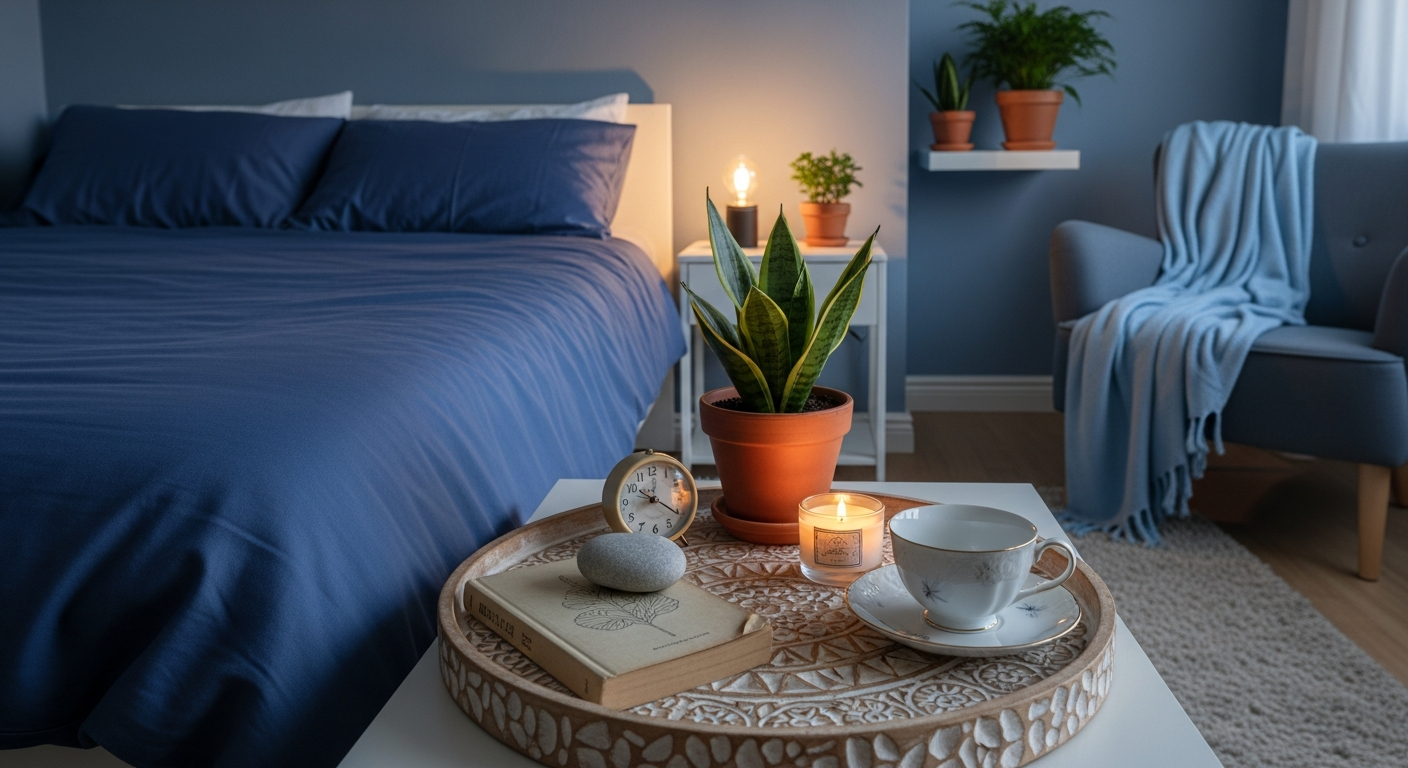
Once the phone is gone, you may find your nightstand looks strangely empty. This is an opportunity to redesign your environment to support rest rather than stimulation. Replace the charging cable with things that promote a “flow state” or relaxation.
Consider adding:
* **A physical book or e-reader with no backlight:** Reading a physical book is one of the best ways to induce sleepiness. It requires focus but doesn’t provide the rapid-fire stimulation of a screen.
* **A paper journal:** “Brain dumping” or gratitude journaling before bed can significantly reduce the middle-of-the-night anxiety that often leads people to reach for their phones.
* **Essential oil diffusers:** Scents like lavender and cedarwood have been shown to lower heart rates and prepare the body for sleep.
* **Soft, warm lighting:** Replace bright overhead lights with dimmable lamps that use warm-toned bulbs to encourage melatonin production.
By curating an environment that feels like a spa or a library, you change the “vibe” of the room. It becomes a place where a smartphone feels out of place—a discordant note in a peaceful melody.
Managing Emergency Anxiety: How to Stay Reachable Without the Screen
A significant hurdle for many people is the fear of missing an emergency call. “What if my parents need me?” or “What if there is a family crisis?” are valid concerns that keep the phone on the nightstand. However, digital wellness doesn’t mean being unreachable; it means being intentional.
Most modern smartphones (as of 2026) have sophisticated “Do Not Disturb” and “Focus” modes. You can set your phone to “Sleep Mode” while it sits in the kitchen, allowing calls only from “Favorite” contacts to ring through at full volume. If you live in a large house where you might not hear the phone from the kitchen, consider a “smart” wearable (like a watch) that only vibrates for calls from specific people, or better yet, an old-fashioned landline if your situation requires 24/7 emergency access.
For most people, the kitchen-charging-station method combined with a high ringer volume for “Favorites” is enough to bridge the gap. You will hear the phone if a true emergency occurs, but you won’t be tempted to check Instagram when you can’t sleep at 3:00 AM.
Reclaiming Your Morning: The Power of a Screen-Free First Hour
The benefits of a phone-free bedroom extend far beyond the time you spend sleeping. Perhaps the most life-changing aspect of this practice is how it transforms your morning. When your phone isn’t the first thing you touch, you regain control over your morning “mental real estate.”
Instead of reacting to the world’s demands—emails, news, social comparisons—you can spend your first hour in a proactive state. This might include stretching, meditating, enjoying a cup of coffee in silence, or talking with your partner. This “Golden Hour” sets the tone for the rest of your day. People who avoid their phones for the first 60 minutes of the day report lower stress levels, higher productivity, and better focus throughout the afternoon.
Without the phone in the room, the “check” never happens. You wake up, you use your analog clock, you get out of bed, and you start your day on your terms. By the time you finally walk to the kitchen to retrieve your device, you are already grounded, centered, and ready to handle whatever the digital world throws at you.
FAQ
**Q1: What if I use my phone for sleep tracking or white noise?**
While sleep tracking apps are popular, many people find that the “no-phone” rule provides more benefit than the data does. If you must track your sleep, use a dedicated wearable device that doesn’t have a screen or notifications. For white noise, purchase a dedicated sound machine or a fan. These devices are more effective and don’t carry the risk of digital distraction.
**Q2: I live in a studio apartment. How can I create a “separate” charging station?**
If your “bedroom” is also your living room, physical distance is key. Place your charging station as far from the bed as possible—perhaps inside a cabinet or on a high shelf in the entryway. The goal is to make it so you cannot reach the phone while lying in bed. Covering the phone or placing it in a “phone jail” box can also provide the necessary psychological boundary.
**Q3: How long does it take to get used to a phone-free bedroom?**
Most people report a “withdrawal” period of about 3 to 7 days. During this time, you might feel an “itch” to check your device or feel a sense of FOMO (fear of missing out). However, by the second week, most users report a profound sense of relief and significantly improved sleep quality.
**Q4: Is an e-reader (like a Kindle) okay in the bedroom?**
Yes, provided it is a basic e-reader without a web browser or social media apps. E-ink displays that aren’t backlit (or have a warm-light setting) are much easier on the eyes than smartphone screens. However, if you find yourself staying up too late reading, you may need to set a “lights out” time for your e-reader as well.
**Q5: My partner isn’t on board with this. What should I do?**
This is a common challenge. Start by sharing the benefits you’re looking for—better sleep and more quality time together. You can suggest a “tech-free trial week” where both of you agree to charge phones in the living room. If they refuse, you can still maintain your side of the bed as a tech-free zone and lead by example. Often, when one partner starts sleeping better and appearing more rested, the other eventually follows suit.
Conclusion: The Sanctuary You Deserve
Creating a phone-free bedroom is an act of self-respect. In a world that constantly demands your attention, your bedroom should be the one place where nobody can reach you, sell to you, or stress you out. By moving the phone to another room and returning to analog rituals, you aren’t “falling behind” the times; you are reclaiming a fundamental human need for undisturbed rest.
As we navigate the complexities of 2026, the ability to disconnect will become the ultimate luxury. Start tonight. Plug your phone in the kitchen, set your analog alarm, and rediscover the peace of a truly dark, quiet, and disconnected room. Your brain, your body, and your long-term mental health will thank you. The digital world can wait until morning; your well-being cannot.