
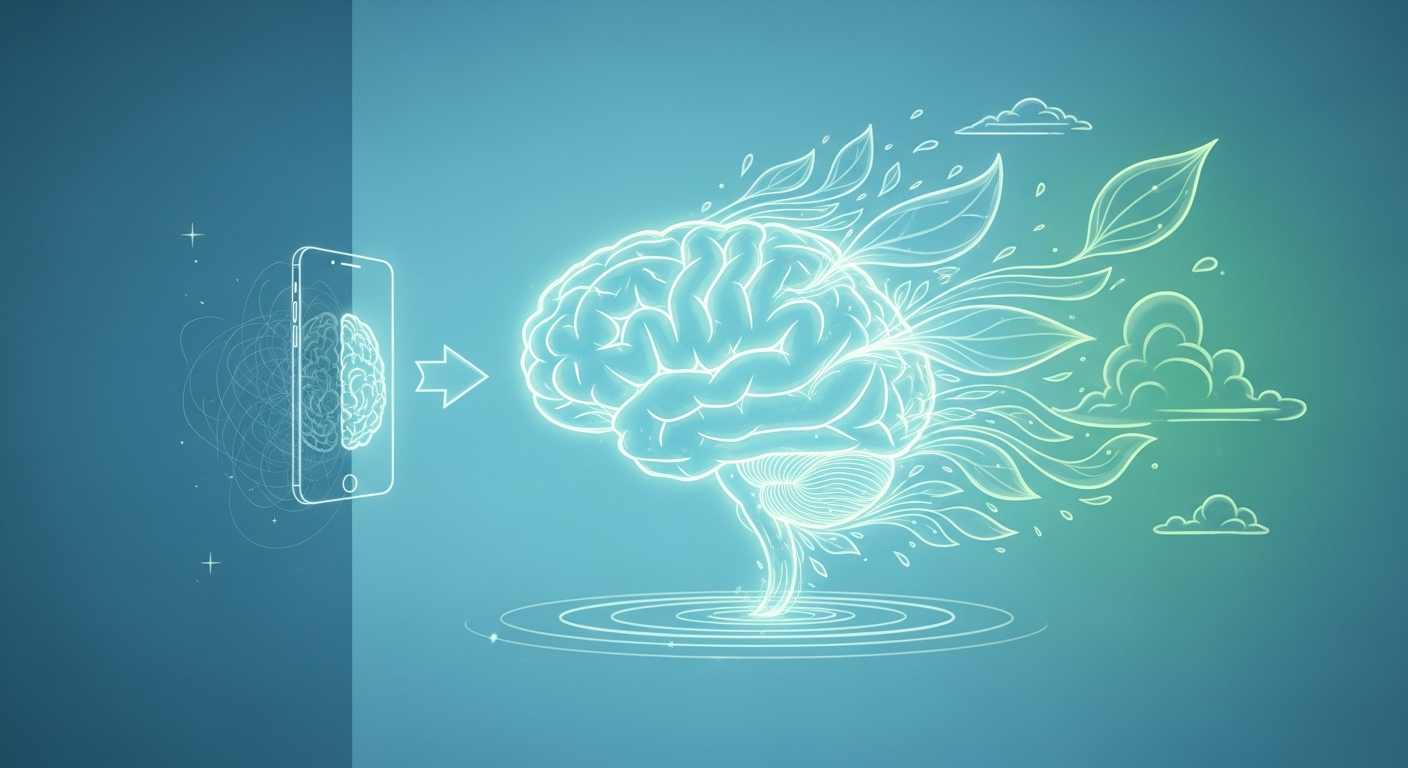
The Wired Mind: How Phone Addiction Affects Your Brain in 2026
By 2026, the smartphone has evolved from a mere communication tool into a seamless extension of the human consciousness. With the integration of advanced generative AI, hyper-personalized feeds, and near-constant connectivity, our devices are more “sticky” than ever before. While these advancements offer unprecedented convenience, they come at a biological cost. We are currently living through a massive, unintended neurological experiment. Phone addiction is no longer just a bad habit; it is a clinical phenomenon that reshapes the very physical structure of our brains. For those seeking to improve their digital wellness, understanding the “why” behind the “wired” feeling is essential. This article explores the cutting-edge neuroscience of 2026 to reveal how excessive screen time alters your dopamine pathways, erodes your attention span, and impacts your emotional resilience—and, most importantly, how you can take your cognitive sovereignty back.
—
1. The Dopamine Loop: How 2026 Algorithms Hijack Your Reward System
In 2026, the algorithms governing our favorite apps are more sophisticated than ever. They don’t just react to what you like; they predict your neurochemical fluctuations. At the heart of phone addiction lies the dopamine reward system. Dopamine is often misunderstood as the “pleasure” chemical, but in reality, it is the molecule of “more.” It drives motivation and anticipation.
When you receive a notification, a “variable reward” occurs in your brain. This is the same mechanism that makes slot machines addictive. You don’t know if the notification is a work emergency, a heartfelt message, or a meaningless “like,” so your brain releases a surge of dopamine to compel you to check.
By 2026, generative AI has perfected this. Feeds are now tuned to your specific “dopamine signature,” delivering content at the exact millisecond you are most likely to feel bored or restless. Over time, this constant stimulation leads to **downregulation**. Your brain, trying to maintain balance, reduces the number of dopamine receptors. The result? You need more screen time just to feel “normal,” and everyday activities—like a walk in the park or a deep conversation—start to feel dull and unstimulating.
2. Neuroplasticity and the Physical Reshaping of the Brain
The brain is neuroplastic, meaning it physically changes based on how we use it. In 2026, long-term longitudinal studies have finally confirmed what many researchers feared: chronic phone addiction alters the density of gray matter in key regions of the brain.
* **The Prefrontal Cortex (PFC):** This is the “CEO” of your brain, responsible for impulse control, decision-making, and emotional regulation. In individuals with high levels of digital addiction, the PFC shows decreased activity and thinning. This makes it harder to say “no” to the next scroll, creating a vicious cycle of weakened willpower.
* **The Anterior Cingulate Cortex (ACC):** This region is involved in empathy and emotional processing. Studies in 2026 suggest that the “social isolation” inherent in digital addiction can lead to a shrinking of the ACC, potentially explaining the rise in social anxiety and the decline in face-to-face emotional intelligence.
* **The Amygdala:** Conversely, the amygdala—the brain’s fear center—often becomes hyperactive. Constant connectivity keeps the brain in a state of “high alert,” scanning for social threats or missing out on information (FOMO), which keeps cortisol levels chronically elevated.
3. The Erosion of Focus: “Continuous Partial Attention”
One of the most significant impacts of phone addiction in 2026 is the death of “Deep Work.” Most users now operate in a state of **continuous partial attention**. We are rarely fully present in any single task because a portion of our cognitive load is always dedicated to the device in our pocket.
Every time your phone pings and you glance at it, you pay a “switching cost.” It can take the brain up to 20 minutes to regain full focus after a single interruption. For the average person in 2026, who checks their phone over 100 times a day, this means they are *never* reaching a state of peak cognitive performance.
This constant task-switching trains the brain to have a short attention span. We are effectively “pruning” the neural pathways required for sustained concentration and strengthening the pathways for distractibility. This has led to a rise in “acquired ADHD-like symptoms” in adults who previously had no issues with focus. To reclaim your brain, you must move from a state of reactive consumption to intentional creation.
4. The Sleep-Stress Axis: Blue Light and Digital Cortisol
The relationship between our phones and our sleep is a primary pillar of digital wellness in 2026. The brain’s circadian rhythm is governed by the suprachiasmatic nucleus, which is highly sensitive to light. The blue light emitted by modern OLED and Micro-LED screens mimics high-noon sunlight, suppressing the production of melatonin—the hormone that signals the body to sleep.
However, the impact isn’t just light-based; it’s psychological. Checking a news feed or a work email at 11:00 PM triggers a spike in **cortisol**, the stress hormone. Cortisol and melatonin are antagonists; when one is high, the other is low.
By 2026, we have identified “Revenge Bedtime Procrastination” as a major driver of brain fog. This is when individuals who feel they have no control over their daytime hours stay up late scrolling as a way to “reclaim” personal time. This sleep deprivation prevents the brain’s glymphatic system from washing away metabolic waste (including amyloid-beta plaques), which is essential for long-term cognitive health and the prevention of neurodegenerative diseases.
5. Emotional Dysregulation: The “Comparison Trap” and the Ventral Striatum
In 2026, social media has moved beyond photos into immersive, AI-enhanced “perfected realities.” When we consume this content, the ventral striatum—the brain’s reward center—is activated, but it is often followed by a “social defeat” response.
Because our brains evolved in small tribes, we are hardwired to compare ourselves to our “peers.” In the digital age, our “peers” are now the top 0.1% of the world, often filtered through AI beauty lenses and curated lifestyles. This constant comparison triggers the brain’s “threat” response. Instead of feeling inspired, the brain registers a lower social status, which can lead to depressive symptoms and chronic low self-esteem.
Phone addiction traps the brain in a loop: we feel lonely, so we turn to our phones for connection; the “connection” we find is superficial and triggers comparison, making us feel lonelier; so we scroll more to numb the feeling. Breaking this loop requires a neurological “reset” to reconnect with real-world social cues, such as eye contact and tone of voice, which release oxytocin—the true hormone of connection.
6. The Path Forward: Reclaiming Your Brain in 2026
The good news is that neuroplasticity works both ways. Just as your brain was shaped by the phone, it can be reshaped by intentional habits. Digital wellness in 2026 is about “Harm Reduction” rather than total abstinence.
* **The 48-Hour Dopamine Fast:** Periodically giving your brain a full weekend without digital stimulation allows your dopamine receptors to “upregulate.” You will find that after 48 hours, the “real world” starts to feel vivid and interesting again.
* **Grayscale Mode:** Most apps use color psychology (reds and bright yellows) to trigger the brain. By turning your phone to grayscale, you strip away the visual rewards, making the device significantly less “tasty” to your brain.
* **Environmental Design:** The brain is a slave to cues. If your phone is on your desk, your brain is using energy to *not* check it. By putting the phone in another room during work hours, you free up that cognitive energy for focus.
* **Analog Mornings:** The brain is in a highly plastic “alpha state” when you first wake up. If you check your phone immediately, you are “priming” your brain for a day of distraction. Wait at least 60 minutes before engaging with the digital world.
—
FAQ: Phone Addiction and Brain Health in 2026
**Q: How do I know if my brain is actually “addicted” to my phone?**
A: Common signs in 2026 include “phantom vibration syndrome” (feeling your phone vibrate when it hasn’t), an inability to sit through a 10-minute movie without checking your device, and feeling heightened irritability or anxiety when you are separated from your phone.
**Q: Can the brain damage from phone addiction be reversed?**
A: Yes. Because of neuroplasticity, the brain is remarkably resilient. Studies show that consistent digital detoxing and “focus training” (like meditation or deep reading) can begin to restore gray matter density and improve the prefrontal cortex’s executive function within weeks.
**Q: Is AI making phone addiction worse in 2026?**
A: In many ways, yes. Generative AI allows for “hyper-personalization,” meaning the content you see is tailored specifically to your psychological weaknesses. However, AI can also be used as a wellness tool, such as AI assistants that proactively block distracting apps based on your stress levels.
**Q: Why does my phone make me feel tired but wired at the same time?**
A: This is the “Cortisol-Dopamine Clash.” The dopamine keeps you seeking more content (wired), while the constant cognitive load and lack of true rest exhaust your brain’s energy reserves (tired).
**Q: How much screen time is considered “healthy” for the brain?**
A: There is no magic number, but the *type* of screen time matters. “Active” usage (creating, learning, communicating) has a much lower negative impact than “passive” usage (mindless scrolling). Most experts in 2026 recommend capping passive consumption at 60–90 minutes per day.
—
Conclusion: Toward Digital Sovereignty
As we navigate the complexities of 2026, the smartphone remains one of the most powerful tools ever invented. However, the price of that power is the constant threat to our neurological health. Phone addiction is not a failure of character; it is a natural biological response to a world designed to capture our attention.
By understanding how these devices affect our dopamine pathways, focus, and emotional health, we can begin to build a healthier relationship with technology. Digital wellness isn’t about moving backward to a pre-digital age; it’s about moving forward with intention. It’s about ensuring that your brain remains *your* brain, capable of deep thought, genuine connection, and lasting peace in an increasingly noisy world. The first step to reclaiming your mind is simply putting the phone down and remembering what the world looks like in three dimensions.