Breaking Free from the Scroll: Your Definitive Guide to Stopping Doom Scrolling for Good in 2026
Understanding the Doom Scroll Cycle: Why Our Brains Get Hooked
Before we can dismantle doom scrolling, we need to understand its architecture – the psychological mechanisms that make it so compelling and difficult to stop. It’s not a moral failing; it’s a sophisticated interplay between our evolutionary wiring and modern digital design.
The Brain’s Negativity Bias: Our Evolutionary Predisposition
Our brains are hardwired for survival. For millennia, paying close attention to potential threats was a matter of life and death. This “negativity bias” means we naturally give more weight and attention to negative information than positive. News algorithms, designed to maximize engagement, inadvertently feed into this bias by prioritizing content that triggers strong emotional responses – often fear, anger, or sadness. When we encounter upsetting news, our primitive brain flags it as critical information we “need” to know, compelling us to keep searching for more context, more details, more potential threats.
The Dopamine Loop: How Infinite Feeds Exploit Reward Pathways
Social media platforms and news aggregators are masters of the variable reward schedule – the same psychological trick slot machines use. Every new scroll is a pull of the lever, offering the chance of a novel, interesting, or validating piece of content. Even if most of what we see is negative, the intermittent reward of finding something engaging – a funny meme, a heartwarming story, a piece of vital information – is incredibly powerful. This unpredictable reward system floods our brains with dopamine, a neurotransmitter associated with pleasure and motivation, creating a compulsive loop that makes it incredibly hard to stop. We’re not just looking for information; we’re chasing that next dopamine hit.
The Illusion of Control and Preparedness: Why We Keep Searching for Answers
In times of uncertainty or crisis, our natural human instinct is to seek information to feel prepared and in control. Doom scrolling offers the illusion that if we just consume enough news, we’ll understand the situation better, predict future outcomes, or find a solution. However, the vast majority of information we encounter online is beyond our direct control or influence. This relentless search for answers that don’t exist, or can’t be acted upon, leaves us feeling more powerless and anxious, rather than informed and empowered. It’s a classic example of our good intentions leading us down an unhelpful path.
The Emotional Rollercoaster: Anxiety, Fear, and Powerlessness
Identifying Your Triggers: The First Step to Freedom
To effectively stop doom scrolling, we must first become detectives of our own habits. What situations, emotions, or times of day typically lead you down the rabbit hole? Understanding your unique triggers is paramount.
Internal Triggers: Emotions, Thoughts, Boredom, Stress, Loneliness
Often, doom scrolling isn’t about the content itself, but about what we’re trying to escape or numb internally.
* Boredom: The phone is an instant antidote to an empty moment, but it’s a poor substitute for meaningful engagement.
* Stress & Anxiety: We might scroll to distract ourselves from overwhelming feelings, paradoxically increasing them.
* Loneliness: Seeking connection online, even through passive consumption, can be a way to cope with feelings of isolation.
* Uncertainty: As discussed, the desire for control drives us to seek answers.
* Fatigue: When our willpower is low, or we’re mentally drained, reaching for the phone becomes an automatic, low-effort activity.
External Triggers: Notifications, Environment, Specific Times/Places
Our environment and daily routines also play a huge role in triggering the scroll.
* Notifications: The incessant pings and vibrations are designed to pull our attention.
* Physical Proximity: Having your phone constantly within arm’s reach makes it an easy default.
* Specific Times/Places: Do you always scroll in bed, on the toilet, during meals, or while waiting? These routine moments become ingrained cues.
* Social Contagion: Seeing others scrolling can normalize the behavior and make you more likely to do it.
The Doom Scrolling Journal: A Practical Self-Assessment Tool
For one week, try keeping a simple journal or notes on your phone (ironic, but effective if done mindfully). Each time you catch yourself doom scrolling, briefly note:
* Time of day: (e.g., 7:30 AM, 1:00 PM)
* Location: (e.g., in bed, on the couch, at my desk)
* What was I doing just before? (e.g., finished breakfast, waiting for a meeting, felt a pang of anxiety)
* What emotion was I feeling? (e.g., bored, stressed, curious, lonely, restless)
* What content did I find myself consuming? (e.g., news headlines, political arguments, celebrity gossip)
* How did I feel after? (e.g., worse, more anxious, drained, guilty, slightly informed but mostly overwhelmed)
This exercise provides invaluable insights into your personal patterns, allowing you to proactively address your triggers rather than reactively trying to stop the scroll once it’s already started.
Crafting Your Digital Sanctuary: Environment & Technology Strategies
Once you understand why and when you doom scroll, the next step is to create an environment and set up your technology in a way that supports your goal of mindful living. This isn’t about deprivation; it’s about intelligent design.
The “Out of Sight, Out of Mind” Principle: Physical Distance
Our phones are designed to be irresistible. Make them less accessible.
* Design a “Phone Home”: Designate a specific spot in your home – a charging station in the kitchen, a drawer in your office – where your phone lives when you’re not actively using it for a specific purpose. This creates a physical barrier.
* Bedroom Ban: The bedroom should be a sanctuary for sleep and intimacy, not a scrolling zone. Charge your phone outside the bedroom, or at least across the room, to avoid pre-sleep and post-wake scrolling. Use an old-fashioned alarm clock.
* Pocket or Bag: When out and about, keep your phone in your pocket or bag rather than holding it in your hand. The extra effort of retrieving it can be enough to interrupt an impulsive scroll.
Notification Naming & Taming: Reclaiming Your Focus
Notifications are digital interruptions. You are the master of your attention, not your apps.
Turn Off Non-Essential Notifications: Be ruthless. Do you really* need a ping every time someone likes your post or a news app sends a breaking alert? Keep only the truly essential ones (e.g., calls, urgent messages from specific contacts).
* Batch Notifications: For apps you still want to hear from but aren’t urgent, schedule notifications to arrive at specific times, e.g., once an hour, or a few times a day.
* Use “Do Not Disturb” Liberally: Activate “Do Not Disturb” mode during work, meals, conversations, or focused activities. Many phones allow you to set exceptions for important contacts.
Curating Your Digital Diet: Unfollow, Mute, Block
Your digital feed is a reflection of your choices. Make it a positive space.
* Unfollow Accounts That Trigger Negativity: This is perhaps the most powerful step. If an account consistently leaves you feeling anxious, angry, or inadequate, unfollow it. You don’t owe anyone your attention.
* Mute Conversations: For group chats or threads that become overwhelming, mute them without leaving.
* Seek Out Positive Content: Actively follow accounts that inspire, educate, entertain mindfully, or bring you joy. Make your feed a source of upliftment, not dread.
App Limits & Grayscale Modes: Making the Phone Less Appealing
* Set App Limits: Most smartphones have “Screen Time” (iOS) or “Digital Wellbeing” (Android) features. Use them to set daily time limits for social media, news, or other apps that trigger doom scrolling. When the limit is reached, the app becomes unavailable, forcing a conscious decision to override.
* Grayscale Mode: Studies suggest that vibrant colors make apps more appealing and addictive. Switching your phone to grayscale mode (often found in accessibility settings) can make it significantly less engaging, turning it into more of a utility device than a dazzling entertainment hub.
The Digital Sunset & Sunrise: Establishing Screen Boundaries
Just as we have bedtimes, we need screen times.
* Digital Sunset: Establish a “digital sunset” time (e.g., 9 PM) after which all non-essential screens are put away. This allows your mind to unwind naturally before sleep, improving sleep quality.
* Digital Sunrise: Resist the urge to check your phone first thing in the morning. Give yourself at least 30 minutes (ideally an hour) to wake up, hydrate, stretch, or plan your day before diving into the digital world. This sets a calm, intentional tone for your day.
Rewiring Your Mindset: Mindfulness & Behavioral Shifts
Changing external factors is important, but true freedom from doom scrolling comes from within. It requires a shift in mindset and the cultivation of new internal responses.
The Pause and Observe Method: Mindful Check-ins
Before you pick up your phone, or when you notice yourself starting to scroll, pause. Take a deep breath. Ask yourself:
* “What am I feeling right now?” (Boredom? Anxiety? Curiosity? Escape?)
* “What do I hope to gain from picking up my phone/scrolling?” (Information? Distraction? Connection? Entertainment?)
* “Is this truly the best way to meet that need?”
* “How will I feel after this interaction?”
This mindful pause creates a gap between impulse and action, giving you a chance to choose a different path.
The “20-Second Rule” for Breaking the Loop: Simple Friction
Psychologist James Clear, author of Atomic Habits, suggests making bad habits harder to do. The “20-second rule” applies perfectly here.
* Add Friction: Instead of leaving your phone on your bedside table, put it in a drawer in another room. The “extra” 20 seconds it takes to get up, walk to the drawer, and retrieve it can be enough to interrupt the automatic urge to scroll.
* Log Out: Log out of social media apps after each use. The need to re-enter your password adds a small but significant barrier.
* Move Apps: Move your most tempting apps off your home screen and into a folder on a secondary screen. The extra swipe and tap create friction.
The Power of Intentional Engagement: Why Are You Picking Up Your Phone?
Every time you pick up your phone, make it an intentional act. Instead of mindlessly opening apps, identify a specific purpose.
* “I am picking up my phone to text Sarah back.”
* “I am picking up my phone to check the weather.”
* “I am picking up my phone to look up this specific piece of information.”
* Once that task is complete, put the phone down. This transforms your phone from an endless portal into a tool.
Replacing the Scroll: Healthy Coping Mechanisms
Nature abhors a vacuum. If you remove doom scrolling, you need to replace it with something fulfilling.
* Engage Your Senses: When you feel the urge to scroll, choose an activity that engages your senses in the real world: listen to music, make a cup of tea, light a candle, step outside for fresh air, pet your dog.
* Movement: A quick walk, some stretches, or even just getting up and moving around can shift your state and break the digital trance.
* Creative Outlets: Doodle, write in a journal, play an instrument, knit. Engaging in creative activities uses different parts of your brain and offers a sense of accomplishment.
* Read a Physical Book: Keep a paperback book handy in places where you typically scroll (e.g., by your bed, in your bag).
* Mindful Tasks: Do a chore mindfully – wash dishes, fold laundry, water plants. Focus entirely on the task at hand.
Self-Compassion, Not Self-Criticism: A Kinder Approach
This journey won’t be linear. There will be days when you slip up, moments when you find yourself scrolling again. When this happens, resist the urge to self-criticize or feel guilty.
* Acknowledge, Don’t Judge: Simply observe that you’re scrolling. “Ah, I’m doing it again.” No judgment.
* Gently Redirect: Instead of a harsh command, offer a gentle suggestion: “Okay, I’ve seen enough. I’m going to put this down now and [do something else].”
* Learn from Relapses: If you slip, review your Doom Scrolling Journal. What triggered it? What could you do differently next time? Every “failure” is a learning opportunity.
Cultivating Connection: Reclaiming Your Real-World Life
At its heart, “Stop Phubbing” is about fostering authentic human connection. Doom scrolling, by its very nature, pulls us away from the present moment and the people in front of us. Reclaiming your real-world life is the ultimate antidote.
The Antidote to Isolation: Prioritizing In-Person Interaction
Our brains are wired for face-to-face connection. It releases oxytocin, the “bonding hormone,” which reduces stress and fosters well-being.
* Schedule Face-to-Face Time: Make intentional plans with friends, family, or colleagues. Even a short coffee break or a walk in the park can be incredibly restorative.
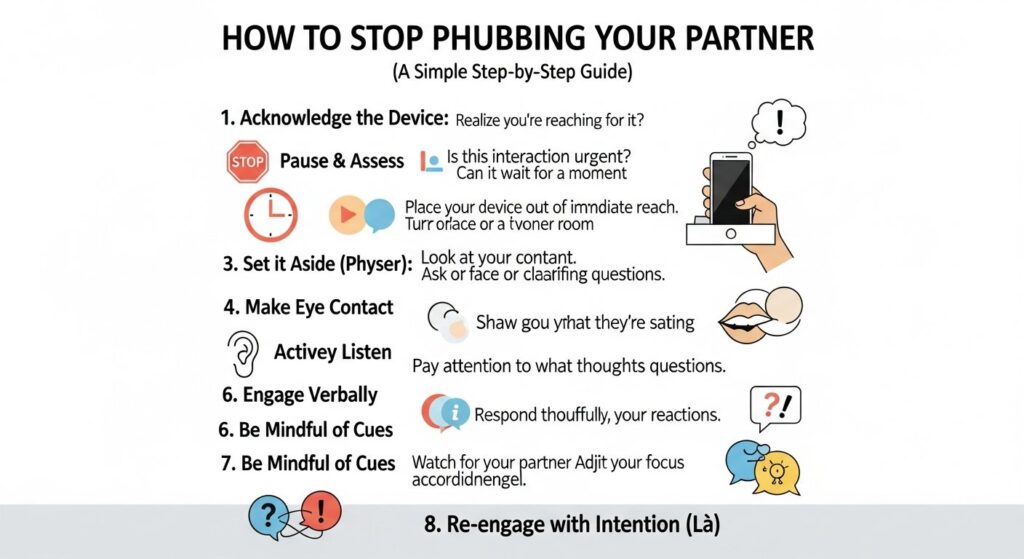
* Eye Contact & Active Listening: When you are with someone, practice truly being present. Put your phone away, make eye contact, and listen actively without formulating your response or checking notifications.
Mindful Meal Times & Conversations: Phubbing’s Opposite
Mealtimes are sacred opportunities for connection.
* Phone-Free Meals: Declare meal times a phone-free zone, whether you’re alone or with others. Use this time to savor your food, reflect, or engage in meaningful conversation.
* “Phone Stacking”: If dining with friends, try “phone stacking” – everyone places their phone face down in the middle of the table. The first person to touch their phone pays the bill (or buys the next round of drinks!).
Nature’s Reset Button: Disconnecting to Reconnect
Spending time in nature has profound benefits for mental well-being, reducing stress and improving mood.
* Regular Nature Doses: Integrate daily or weekly walks in a park, a hike, or simply sitting in your backyard. Leave your phone behind, or put it on airplane mode, and truly immerse yourself in your surroundings.
* Practice Forest Bathing: Mindfully engage all your senses in nature – notice the sounds, smells, textures, and sights.
Purposeful Engagement: Volunteering, Learning, Creating
Filling your life with purpose and meaningful activities naturally reduces the urge to scroll.
* Volunteer: Contribute to a cause you care about. Helping others provides a deep sense of satisfaction and connection.
* Learn a New Skill: Take a class, pick up a new hobby. Learning keeps your mind engaged and provides a sense of accomplishment.
* Create Something: Write, paint, cook, build – the act of creation is inherently fulfilling and provides a healthy alternative to passive consumption.
Building Long-Term Resilience: Sustaining Your Freedom
Stopping doom scrolling isn’t a one-time event; it’s an ongoing practice. Building resilience means developing strategies to maintain your progress and navigate inevitable challenges.
The Relapse Is Not Failure: Learning and Moving Forward
Understand that occasional slips are a normal part of habit change. A relapse doesn’t erase your progress; it’s an opportunity to learn.
* Re-evaluate Your Triggers: What led to the relapse? Was it a particularly stressful day? A new piece of alarming news? Use this information to refine your strategies.
* Get Back on Track Immediately: Don’t let a slip become a slide. Acknowledge it, forgive yourself, and recommit to your goals with the next interaction.
Digital Detoxes & Mini-Breaks: Regular Recalibration
Just like physical vacations, digital breaks are essential for mental health.
* Scheduled Digital Detoxes: Plan longer periods (a weekend, a full day) where you completely disconnect from non-essential screens. Inform friends and family so they know not to expect immediate responses.
* Micro-Breaks: Throughout your day, take 5-10 minute “tech-free” breaks. Step away from your computer, put your phone down, and simply be present.
Finding Your Accountability Partner: Shared Goals
Enlisting support can significantly boost your success.
* Share Your Goals: Tell a trusted friend, family member, or partner about your intention to stop doom scrolling.
* Team Up: Consider doing a digital detox or setting screen time goals together. Mutual encouragement and shared commitment can make a huge difference.
Celebrating Small Wins: Reinforcing Positive Behavior
Acknowledge and celebrate your progress, no matter how small.
* Track Your Success: Use your journal to note when you successfully avoided a scroll, chose a different activity, or spent a phone-free hour.
* Reward Yourself: When you hit a milestone (e.g., a full week without doom scrolling, a successful digital detox), reward yourself with a non-digital treat – a new book, a walk in nature, a special meal out. This positive reinforcement strengthens the new neural pathways associated with healthy habits.
Your Journey to a More Present and Connected Life in 2026
Breaking free from doom scrolling isn’t just about reducing screen time; it’s about reclaiming your agency, your peace of mind, and your capacity for authentic human connection. It’s a journey towards a more mindful, intentional, and deeply fulfilling life in 2026 and beyond.
Remember, this isn’t about perfection, but about progress. Embrace self-compassion, celebrate your small victories, and understand that every conscious choice you make to put down your phone and engage with the real world is a step towards a richer, more vibrant existence. At Stop Phubbing, we believe in the power of presence, the strength of genuine connection, and the profound joy that comes from living fully in the here and now. You have the power to create a digital life that serves you, rather than controls you. Start today, and step into a future where your attention, your time, and your connections are truly your own.