
Are You Truly Ready for Love? A Mindful Guide to Relationship Readiness in the Digital Age
The Foundation: Cultivating Self-Awareness and Personal Growth
Before you can truly connect with another person, you must first connect deeply with yourself. Self-awareness is the bedrock of relationship readiness. It’s the honest understanding of your values, beliefs, strengths, weaknesses, triggers, and aspirations. Without this internal compass, you risk drifting into relationships that don’t align with who you are, or worse, becoming a chameleon, adapting to your partner’s identity rather than expressing your own.
Think of it this way: if you don’t know your own emotional landscape, how can you expect someone else to navigate it? This isn’t about being “perfect,” but about being aware. It means recognizing your patterns of behavior, understanding why certain situations provoke strong reactions in you, and taking responsibility for your own emotional state. For example, do you tend to shut down during conflict, or do you become overly aggressive? Do you seek external validation, or are you secure in your self-worth?
Cultivating self-awareness is an ongoing process, and it often requires us to step away from the constant noise of our digital lives. Here are some actionable techniques:
* Journaling for Discovery: Dedicate 15-20 minutes each day to free-writing. Ask yourself prompts like: “What truly makes me happy?” “What are my non-negotiables in a partner?” “What recurring fears do I have about relationships?” “What parts of myself do I hide?” This practice, free from the pressure of an audience, allows for unfiltered introspection.
* Mindfulness Meditation: Even 5-10 minutes of daily mindfulness can drastically improve your ability to observe your thoughts and feelings without judgment. Apps and guided meditations can help, but the core idea is to simply sit with yourself, noticing sensations, thoughts, and emotions as they arise, without getting swept away. This practice trains your brain to be present, a crucial skill for both self-awareness and relationship building.
* Seeking Feedback (from trusted sources): Ask close friends or family members (who you trust to be honest and kind) how they perceive your strengths and areas for growth in relationships. Sometimes, an external perspective can offer valuable insights we miss ourselves.
Emotional Intelligence: Navigating Your Inner World (and Theirs)
Emotional intelligence (EQ) is often cited by psychologists as a stronger predictor of relationship success than IQ. It’s your ability to understand, use, and manage your own emotions in positive ways to relieve stress, communicate effectively, empathize with others, and overcome challenges. For relationship readiness, this translates into several key areas:
* Emotional Regulation: Can you manage your strong emotions without letting them overwhelm you or dictate your reactions? This means being able to soothe yourself when upset, rather than lashing out or withdrawing completely. It’s about pausing before reacting, taking a breath, and choosing your response consciously.
* Empathy: The capacity to understand or feel what another person is experiencing from within their frame of reference. This is critical for connecting with a partner. It’s about listening to understand, not just to respond. It’s seeing things from their perspective, even if you don’t agree with it.
* Effective Communication: This goes beyond just talking. It involves active listening, expressing your needs clearly and respectfully, and being able to engage in constructive conflict resolution. Healthy relationships aren’t devoid of conflict; they’re characterized by how couples navigate disagreements.
* Motivation and Resilience: Being emotionally intelligent means you have an internal drive and the ability to bounce back from setbacks. This is important for navigating the inevitable ups and downs of a relationship, and for not placing the burden of your happiness solely on your partner.
To strengthen your emotional intelligence, practice these techniques:
* Expand Your Emotional Vocabulary: Use a “feelings wheel” or similar tool to identify nuanced emotions beyond “happy,” “sad,” or “angry.” The more specific you can be about what you’re feeling, the better you can understand and communicate it.
* Practice Active Listening: When someone is speaking, put away your phone, make eye contact, and truly focus on what they’re saying, both verbally and non-verbally. Resist the urge to interrupt, formulate your response, or compare their experience to your own. Reflect back what you hear to ensure understanding (“So, what I hear you saying is…”).
* Boundary Setting: Learn to identify your personal limits – what you are and aren’t comfortable with – and communicate them clearly and respectfully. This applies to your time, energy, and emotional space. Healthy boundaries are a cornerstone of mutual respect in any relationship.
Emotional intelligence allows you to navigate the complexities of human interaction with grace and understanding, ensuring you’re ready to contribute positively to a partnership and receive love in return.
Healing & Integration: Learning from Your Past
We all carry a past, and often, that past includes experiences that have shaped our views on relationships, love, and ourselves. Whether it’s a painful breakup, a challenging family dynamic, or even past rejections, these experiences can leave scars. True readiness often involves acknowledging these wounds, processing them, and learning to integrate their lessons without letting them dictate your future.
Bringing unresolved baggage into a new relationship is like trying to build a new house on a shaky foundation. You might find yourself:
* Projecting past hurts onto a new partner.
* Sabotaging potential connections out of fear of abandonment or intimacy.
* Repeating unhealthy patterns.
* Struggling to trust or fully commit.
Here’s how to approach healing and integration:
* Reflect and Process: Take time to reflect on past relationships and significant life events. What were the lessons? What role did you play? How have these experiences changed you? Writing about these experiences can be incredibly therapeutic.
* Practice Self-Compassion: Be kind to yourself as you revisit difficult memories. Acknowledge that you did the best you could with the resources you had at the time. Forgiveness – of yourself and others – is a powerful step in releasing resentment and moving forward.
* Seek Professional Support: If past traumas or chronic patterns are significantly impacting your life, working with a therapist or counselor can provide invaluable guidance and tools. A professional can help you navigate complex emotions, reframe negative thought patterns, and develop healthier coping mechanisms. This isn’t a sign of weakness; it’s a profound act of self-care and a commitment to showing up as your best self.
* Break the Rebound Cycle: In the digital age, it’s easy to jump onto dating apps immediately after a breakup. Resist the urge to use a new connection as a temporary bandage. Give yourself time to grieve, heal, and rediscover your individuality before seeking another partnership.
Healing isn’t about forgetting; it’s about transforming pain into wisdom. When you’ve processed your past, you enter a new relationship with an open heart, ready to create something new, rather than trying to fix or relive something old.
Life Stability & Practical Readiness: Building a Secure Base
While emotional and psychological readiness are paramount, practical considerations also play a role in your ability to sustain a healthy relationship. This isn’t about having a “perfect” life, but about having a baseline of stability that allows you to contribute positively to a partnership without excessive external pressures.
* Financial Independence: You don’t need to be rich, but being able to support yourself financially removes a significant source of stress from a relationship. It signifies responsibility, independence, and the ability to manage your own life.
* Time and Energy Availability: A healthy relationship requires time, energy, and consistent effort. Are you currently in a life phase where you can genuinely dedicate these resources? If you’re overwhelmed with work, family obligations, or personal projects, you might struggle to nurture a new connection.
* Healthy Social Support System: Do you have friends, family, or a community outside of a romantic partner? Relying solely on a partner for all your social and emotional needs can create an unhealthy dependency and put immense pressure on them. A robust support system indicates a balanced life and contributes to your overall well-being.
* Personal Space and Independence: A healthy relationship thrives when two whole individuals come together, not two halves trying to make a whole. Do you have your own hobbies, interests, and personal space? Maintaining your individuality within a partnership is crucial for long-term satisfaction.
* Digital Balance: As a Stop Phubbing advocate, we emphasize the importance of managing your digital life. Are you able to put down your phone and be fully present? If your screen time regularly encroaches on your personal time, how will it impact your ability to connect authentically with a partner? Ensuring your digital habits support, rather than detract from, your real-world connections is a key aspect of practical readiness.
These practical elements create a secure base from which you can offer stability and presence to a partner. It’s about ensuring that you’re not looking for a relationship to solve your practical problems, but rather to enrich a life that is already fulfilling.
Defining Your Relationship Vision: Clarity Amidst the Noise
In a world full of options and fleeting digital encounters, it’s easy to get swept up in what others want or what society dictates a relationship “should” look like. True readiness involves taking the time to define your own relationship vision – not a rigid checklist, but a clear understanding of what you genuinely seek in a partner and a partnership.
This process moves beyond superficial desires (like a certain height or job title) to delve into deeper compatibility. Ask yourself:
* What are my core values? (e.g., honesty, adventure, family, intellectual growth, spirituality). How important is it that a partner shares these?
* What kind of emotional connection do I crave? (e.g., deep intimacy, playful companionship, intellectual stimulation).
* What does “support” look like to me in a relationship? How do I give and receive it?
* What are my non-negotiables and deal-breakers? Be clear about what you absolutely need and what you absolutely cannot tolerate, but also be open to healthy compromise on less critical points.
* How do I want to grow, both individually and with a partner? Do you seek a partner who challenges you, encourages you, or both?
This vision isn’t about finding a “perfect” person, but about aligning yourself with someone who shares a similar life direction and complements your authentic self. It helps you recognize a good match when you see one and prevents you from settling for less than what truly fulfills you.
In the digital sphere, this clarity is even more vital. Don’t let the curated profiles and idealized images on dating apps cloud your judgment. Focus on understanding the person behind the screen, their actions, and their values, rather than just their carefully selected photos. When you know your vision, you can more easily filter out connections that are not aligned and invest your energy into those with genuine potential for authentic connection.
The Mindful Presence: Disconnecting to Connect Deeply
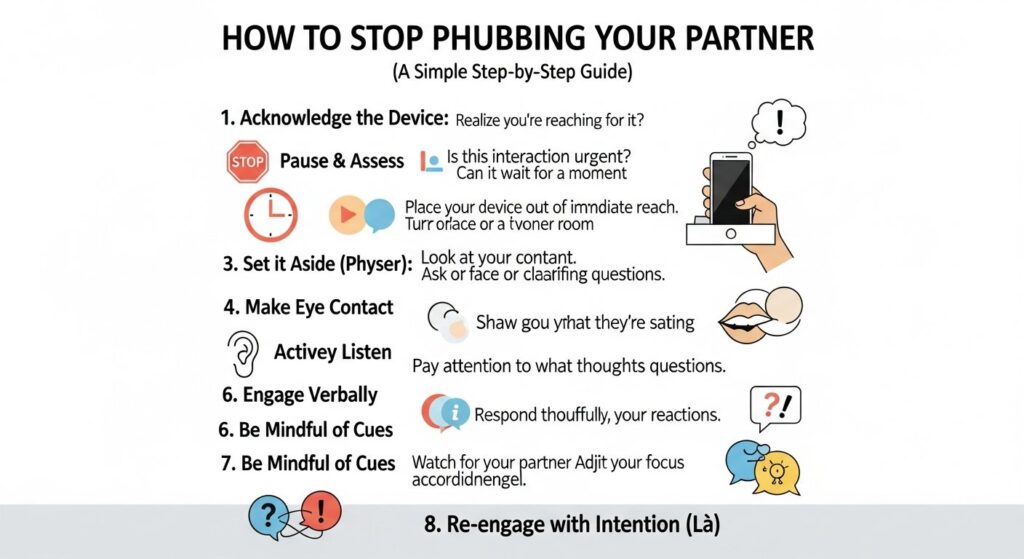
At Stop Phubbing, our core mission revolves around the power of presence. This isn’t just a catchy phrase; it’s a fundamental aspect of relationship readiness. In a digitally saturated world, the ability to truly be present with another human being is a rare and precious gift. Phubbing – the act of snubbing someone in favor of your phone – is the antithesis of this.
Being ready for a relationship means being ready to put down your device and engage fully. It means:
* Active Engagement: When you’re on a date or spending time with a potential partner, your phone should be out of sight and on silent. Give them your undivided attention. Make eye contact, listen intently, and respond thoughtfully. This communicates respect, interest, and value.
* Shared Screen-Free Experiences: Plan activities where phones are naturally put away – a walk in nature, a cooking class, a board game night, or simply a deep conversation over coffee. These shared experiences, free from digital distraction, foster genuine bonding and create lasting memories.
* Setting Digital Boundaries Together: As a relationship progresses, you and your partner can discuss and agree upon digital boundaries. When are phones allowed? When should they be put away? How do you manage notifications during quality time? Establishing these norms early on sets a healthy precedent for a mindful, connected partnership.
The Power of Undivided Attention: Psychologists emphasize that undivided attention is one of the most powerful forms of love and respect. When you give someone your full presence, you’re communicating, “You matter. What you’re saying matters. We* matter.” This is the foundation of deep intimacy and trust.
Being mindful of your digital habits isn’t just about being polite; it’s about cultivating the capacity for authentic human connection. If you can’t be present with yourself or with the person sitting across from you, how can you expect to build a truly meaningful relationship? Relationship readiness, in the 2026 and beyond, inherently includes the readiness to prioritize real-world connection over digital distractions.
Embrace the Journey to Authentic Connection
The journey to relationship readiness is a profound and deeply personal one. It’s an invitation to turn inward, to understand yourself with compassion, and to cultivate the emotional and practical foundations necessary for a thriving partnership. It’s not a race to find “the one,” but a mindful process of becoming “the one” – a whole, self-aware, and emotionally intelligent individual ready to give and receive love authentically.
In our screen-obsessed world, choosing to be present with yourself and then with another human being is an act of radical self-love and profound connection. As you embark on this path, remember that readiness isn’t a destination, but a continuous evolution. Be patient with yourself, celebrate your growth, and trust that when you are truly ready, you will attract a connection that aligns with your authentic self, fostering a relationship built on presence, understanding, and genuine human connection.
“`json
{
“@context”: “https://schema.org”,
“@graph”: [
{
“@type”: “Article”,
“headline”: “Are You Truly Ready for Love? A Mindful Guide to Relationship Readiness in the Digital Age”,
“description”: “Explore the comprehensive guide to understanding when you’re truly ready for a relationship, focusing on self-awareness, emotional intelligence, healing past wounds, practical stability, and mindful presence in the smartphone age.”,
“image”: {
“@type”: “ImageObject”,
“url”: “https://stopphubbing.com/images/relationship-readiness-guide.jpg”,
“width”: 1200,
“height”: 675
},
“author”: {
“@type”: “Organization”,
“name”: “Stop Phubbing”
},
“publisher”: {
“@type”: “Organization”,
“name”: “Stop Phubbing”,
“logo”: {
“@type”: “ImageObject”,
“url”: “https://stopphubbing.com/images/logo.png”
}
},
“datePublished”: “2026-03-10T08:00:00+00:00”,
“dateModified”: “2026-03-10T08:00:00+00:00”,
“mainEntityOfPage”: {
“@type”: “WebPage”,
“@id”: “https://stopphubbing.com/blog/relationship-readiness”
},
“articleSection”: [
“Relationships & Communication”,
“Digital Wellness”,
“Mindful Living”
],
“keywords”: “relationship readiness, healthy relationships, self-awareness, emotional intelligence, mindful living, digital wellness, authentic connection, communication skills, healing from past, relationship advice”,
“articleBody”: “In an era saturated with curated profiles, instant connections, and the endless scroll, the pursuit of a meaningful relationship can often feel like navigating a crowded digital marketplace. We’re constantly bombarded with images of \”perfect\” partnerships, leading many to wonder: Am I ready for that? Am I doing enough? The truth is, relationship readiness isn’t about hitting a specific age, achieving a certain life milestone, or even perfecting your online dating profile. It’s a profound internal journey, a cultivation of self-awareness and emotional maturity that allows you to show up authentically and build a genuine connection, not just a fleeting digital interaction. Here at Stop Phubbing, we believe that true connection begins with presence – presence with yourself, and then presence with another. So, let’s peel back the layers and explore what it truly means to be ready for the beautiful, challenging, and deeply rewarding experience of a committed partnership in a world that often distracts us from what matters most.\n\n
The Foundation: Cultivating Self-Awareness and Personal Growth
\nBefore you can truly connect with another person, you must first connect deeply with yourself. Self-awareness is the bedrock of relationship readiness. It’s the honest understanding of your values, beliefs, strengths, weaknesses, triggers, and aspirations. Without this internal compass, you risk drifting into relationships that don’t align with who you are, or worse, becoming a chameleon, adapting to your partner’s identity rather than expressing your own.\n\nThink of it this way: if you don’t know your own emotional landscape, how can you expect someone else to navigate it? This isn’t about being \”perfect,\” but about being aware. It means recognizing your patterns of behavior, understanding why certain situations provoke strong reactions in you, and taking responsibility for your own emotional state. For example, do you tend to shut down during conflict, or do you become overly aggressive? Do you seek external validation, or are you secure in your self-worth?\n\nCultivating self-awareness is an ongoing process, and it often requires us to step away from the constant noise of our digital lives. Here are some actionable techniques:\n\n
- \n
- Journaling for Discovery: Dedicate 15-20 minutes each day to free-writing. Ask yourself prompts like: \”What truly makes me happy?\” \”What are my non-negotiables in a partner?\” \”What recurring fears do I have about relationships?\” \”What parts of myself do I hide?\” This practice, free from the pressure of an audience, allows for unfiltered introspection.
- Mindfulness Meditation: Even 5-10 minutes of daily mindfulness can drastically improve your ability to observe your thoughts and feelings without judgment. Apps and guided meditations can help, but the core idea is to simply sit with yourself, noticing sensations, thoughts, and emotions as they arise, without getting swept away. This practice trains your brain to be present, a crucial skill for both self-awareness and relationship building.
- Seeking Feedback (from trusted sources): Ask close friends or family members (who you trust to be honest and kind) how they perceive your strengths and areas for growth in relationships. Sometimes, an external perspective can offer valuable insights we miss ourselves.
\n
\n
\n
\n\nWhen you’re deeply connected to your inner self, you become less susceptible to external pressures, including the temptation to jump into a relationship out of loneliness or societal expectation. You’ll choose a partner from a place of wholeness, not neediness, fostering a more balanced and authentic connection.\n\n
Emotional Intelligence: Navigating Your Inner World (and Theirs)
\nEmotional intelligence (EQ) is often cited by psychologists as a stronger predictor of relationship success than IQ. It’s your ability to understand, use, and manage your own emotions in positive ways to relieve stress, communicate effectively, empathize with others, and overcome challenges. For relationship readiness, this translates into several key areas:\n\n
- \n
- Emotional Regulation: Can you manage your strong emotions without letting them overwhelm you or dictate your reactions? This means being able to soothe yourself when upset, rather than lashing out or withdrawing completely. It’s about pausing before reacting, taking a breath, and choosing your response consciously.
- Empathy: The capacity to understand or feel what another person is experiencing from within their frame of reference. This is critical for connecting with a partner. It’s about listening to understand, not just to respond. It’s seeing things from their perspective, even if you don’t agree with it.
- Effective Communication: This goes beyond just talking. It involves active listening, expressing your needs clearly and respectfully, and being able to engage in constructive conflict resolution. Healthy relationships aren’t devoid of conflict; they’re characterized by how couples navigate disagreements.
- Motivation and Resilience: Being emotionally intelligent means you have an internal drive and the ability to bounce back from setbacks. This is important for navigating the inevitable ups and downs of a relationship, and for not placing the burden of your happiness solely on your partner.
\n
\n
\n
\n
\n\nTo strengthen your emotional intelligence, practice these techniques:\n\n
- \n
- Expand Your Emotional Vocabulary: Use a \”feelings wheel\” or similar tool to identify nuanced emotions beyond \”happy,\” \”sad,\” or \”angry.\” The more specific you can be about what you’re feeling, the better you can understand and communicate it.
- Practice Active Listening: When someone is speaking, put away your phone, make eye contact, and truly focus on what they’re saying, both verbally and non-verbally. Resist the urge to interrupt, formulate your response, or compare their experience to your own. Reflect back what you hear to ensure understanding (\”So, what I hear you saying is…\”).
- Boundary Setting: Learn to identify your personal limits – what you are and aren’t comfortable with – and communicate them clearly and respectfully. This applies to your time, energy, and emotional space. Healthy boundaries are a cornerstone of mutual respect in any relationship.
\n
\n
\n
\n\nEmotional intelligence allows you to navigate the complexities of human interaction with grace and understanding, ensuring you’re ready to contribute positively to a partnership and receive love in return.\n\n
Healing & Integration: Learning from Your Past
\nWe all carry a past, and often, that past includes experiences that have shaped our views on relationships, love, and ourselves. Whether it’s a painful breakup, a challenging family dynamic, or even past rejections, these experiences can leave scars. True readiness often involves acknowledging these wounds, processing them, and learning to integrate their lessons without letting them dictate your future.\n\nBringing unresolved baggage into a new relationship is like trying to build a new house on a shaky foundation. You might find yourself:\n
- \n
- Projecting past hurts onto a new partner.
- Sabotaging potential connections out of fear of abandonment or intimacy.
- Repeating unhealthy patterns.
- Struggling to trust or fully commit.
\n
\n
\n
\n
- \n
- Reflect and Process: Take time to reflect on past relationships and significant life events. What were the lessons? What role did you play? How have these experiences changed you? Writing about these experiences can be incredibly therapeutic.
- Practice Self-Compassion: Be kind to yourself as you revisit difficult memories. Acknowledge that you did the best you could with the resources you had at the time. Forgiveness – of yourself and others – is a powerful step in releasing resentment and moving forward.
- Seek Professional Support: If past traumas or chronic patterns are significantly impacting your life, working with a therapist or counselor can provide invaluable guidance and tools. A professional can help you navigate complex emotions, reframe negative thought patterns, and develop healthier coping mechanisms. This isn’t a sign of weakness; it’s a profound act of self-care and a commitment to showing up as your best self.
- Break the Rebound Cycle: In the digital age, it’s easy to jump onto dating apps immediately after a breakup. Resist the urge to use a new connection as a temporary bandage. Give yourself time to grieve, heal, and rediscover your individuality before seeking another partnership.
\n
\n
\n
\n
\n\nHealing isn’t about forgetting; it’s about transforming pain into wisdom. When you’ve processed your past, you enter a new relationship with an open heart, ready to create something new, rather than trying to fix or relive something old.\n\n
Life Stability & Practical Readiness: Building a Secure Base
\nWhile emotional and psychological readiness are paramount, practical considerations also play a role in your ability to sustain a healthy relationship. This isn’t about having a \”perfect\” life