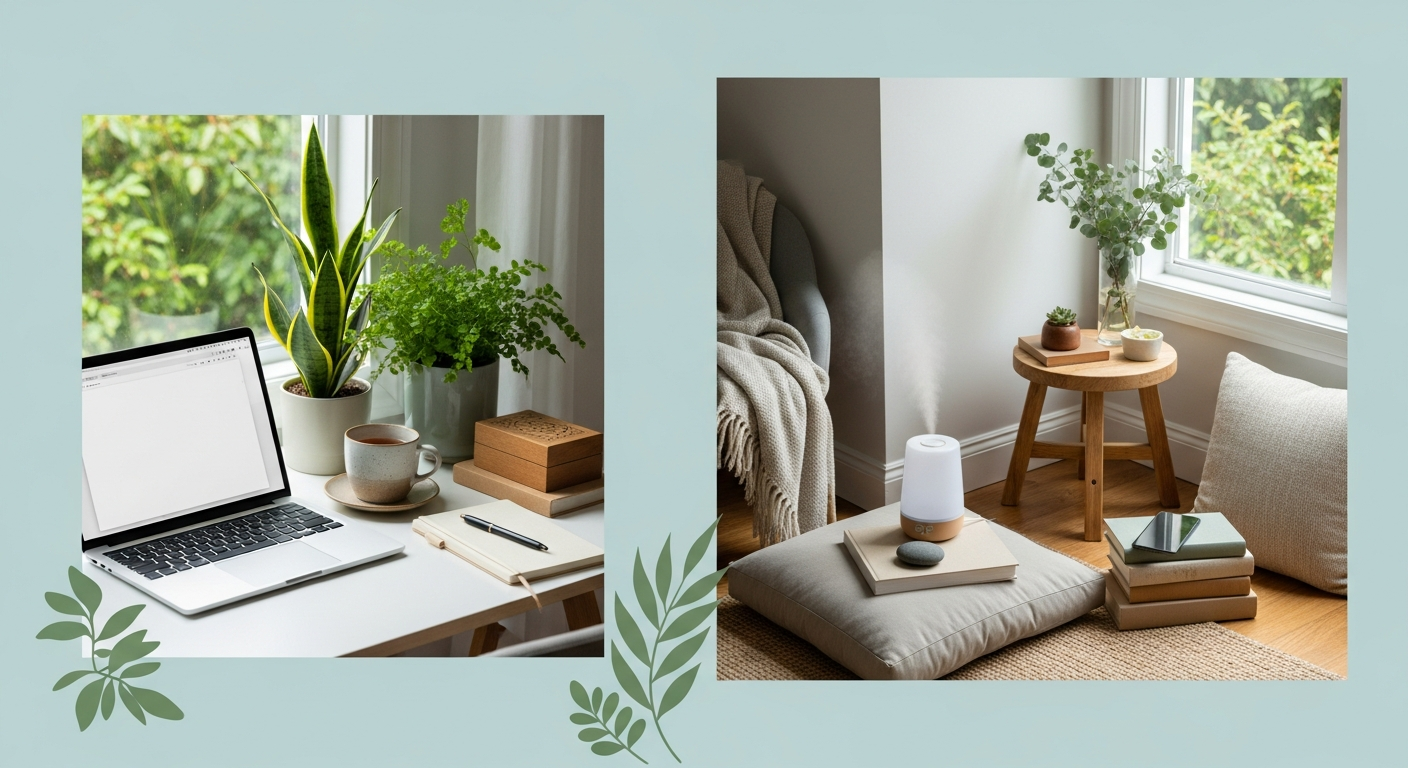
Reclaiming Your Time: The Ultimate Guide to Tech-Life Balance While Working from Home
The dream of working from home was always centered on freedom. We imagined mid-day yoga sessions, home-cooked lunches, and the end of the grueling commute. However, as we navigate the landscape of 2026, the reality for many is far different. The “office” is now in our pockets, and the boundary between professional obligations and personal peace has become dangerously thin. Without a physical commute to signal the end of the day, many remote workers find themselves trapped in a state of perpetual “on-call” readiness. This digital tether doesn’t just impact productivity; it fuels phone addiction and erodes our mental well-being. Achieving a sustainable tech-life balance is no longer a luxury—it is a survival skill in the modern age. To truly thrive while working from home, we must learn to master our devices rather than allowing them to master us, moving toward a future of intentional connectivity and digital wellness.
1. Understanding the “Always-On” Trap: Why Your Brain Can’t Let Go
To fix our relationship with technology, we must first understand why it is so difficult to put down the phone. Modern apps and work platforms are engineered using “persuasive design”—a psychological framework intended to keep users engaged for as long as possible. When you receive a Slack notification or a LinkedIn “like,” your brain releases a small hit of dopamine. Over time, your brain begins to crave these micro-rewards, leading to the compulsive checking of devices even when no work is being done.
In a work-from-home environment, this is exacerbated by “productivity guilt.” Because your boss or colleagues cannot see you at your desk, there is a subconscious urge to respond to messages instantly to prove you are working. This creates a cycle of hyper-responsiveness that shatters your “deep work” capabilities. By 2026, research has shown that the average remote worker switches tasks every six minutes, largely due to digital interruptions. Recognizing that your phone addiction is a result of calculated design and psychological pressure is the first step toward breaking the cycle. You are not “lazy” or “unfocused”; you are fighting a battle against sophisticated algorithms designed to capture your attention.
2. Architecting Your Environment: Creating Physical Boundaries for Digital Peace
One of the most effective ways to reduce phone addiction is to make the undesirable behavior difficult to perform. In the office, the environment itself dictates behavior. At home, you must become the architect of your own space. If you work in the same spot where you relax, your brain becomes confused, leading to “work-bleed,” where professional stress leaks into your personal time.
Start by designating a “phone-free zone” in your home. The bedroom is the most critical area to protect. By 2026, sleep hygiene has become a cornerstone of digital wellness; charging your phone in another room prevents the “infinite scroll” before sleep and immediately upon waking. Additionally, consider a “Phone Hotel”—a designated basket or drawer in the kitchen or hallway where your device lives from 6:00 PM to 8:00 AM.
If you find yourself mindlessly reaching for your phone during the workday, place it in a different room or a timed kitchen safe. The “out of sight, out of mind” principle is remarkably effective. When the physical barrier is removed, the mental barrier often follows. By creating a dedicated workspace that is tech-optimized for work but tech-restricted for distraction, you prime your brain for high-level focus.
3. Digital Minimalism: Auditing Your Apps and Notifications
Digital wellness isn’t about deleting all technology; it’s about “Digital Minimalism.” This philosophy, popularized by authors like Cal Newport, suggests that we should only use tools that provide significant value to our lives. For the remote worker, this means performing a ruthless audit of your digital ecosystem.
Begin by categorizing your apps into “Tools” and “Toys.” Tools (Maps, Banking, Work Email) are allowed on your home screen. Toys (Social Media, Games, News Aggregators) should be moved to the last page of your phone or hidden in folders. Even better, delete social media apps from your phone entirely and only access them via a desktop browser. This adds “friction” to the experience, making it a conscious choice rather than a reflexive habit.
The next step is the “Notification Purge.” In 2026, we are bombarded by hundreds of pings daily. Go into your settings and turn off all non-human notifications. You do not need a buzz in your pocket to tell you that someone liked a photo or that a sale is happening. Limit notifications to phone calls and direct messages from specific people. Furthermore, try the “Grayscale” trick. By turning your phone screen to black and white, you strip away the vibrant, rewarding colors that make apps like Instagram or TikTok so addictive. A gray screen is functional but boring, which is exactly what a tool should be.
4. The Power of “Leaking” Work: Establishing Hard Start and Stop Times
In the absence of a physical commute, we must create “conceptual commutes.” Without a clear transition between “Work You” and “Home You,” the workday simply stretches to fill every waking hour. This is the primary driver of remote work burnout. To combat this, you must establish hard boundaries—not just for your colleagues, but for yourself.
A “Shutdown Ritual” is essential. At the end of your workday, physically close your laptop, clear your desk, and say out loud: “The workday is over.” This verbal cue signals to your brain that it can stop scanning for work-related threats. After the shutdown, engage in a 15-minute physical activity—a walk around the block, a quick stretching routine, or even just making a cup of tea. This acts as the bridge between your professional and personal life.
Furthermore, leverage the “Focus Modes” that have become standard by 2026. Set your devices to automatically enter “Do Not Disturb” at 6:00 PM. Communicate these boundaries to your team. Most people find that the “emergency” they feared would happen if they went offline rarely occurs. By being unavailable at certain times, you actually increase the value of your time when you are available.
5. Analog Resurgence: Reconnecting with the Physical World
To reduce phone addiction, you need to provide your brain with an alternative source of engagement that doesn’t involve a screen. We are physical beings living in a digital world, and our brains crave tactile sensations. An “Analog Resurgence” in your daily routine can dramatically improve your digital wellness.
During your lunch break, leave all screens behind. Read a physical book, write in a paper journal, or engage in a hobby that requires your hands, such as gardening, cooking, or woodworking. These activities require a different type of attention—”slow focus”—which helps repair the damage done by the “rapid-fire focus” of digital consumption.
Additionally, reconsider your “utility” devices. If you use your phone as an alarm clock, a calculator, a watch, and a notebook, you are giving yourself four reasons to pick it up. By 2026, many wellness advocates have returned to single-use devices: a dedicated alarm clock for the bedside, a physical notebook for ideas, and a traditional wristwatch. Every time you replace a phone function with an analog tool, you remove a potential gateway to a social media rabbit hole.
6. Leveraging 2026 Technology to Fight Technology
While it may seem counterintuitive, technology can be a powerful ally in your quest for tech-life balance if used correctly. By 2026, AI-driven wellness assistants have become highly sophisticated, moving beyond simple screen-time trackers to proactive habit-forming tools.
Modern digital wellness apps can now analyze your usage patterns and intervene before you enter a “doom-scroll” state. For example, some tools use AI to detect when you’ve been on a distracting site for more than 10 minutes and will slowly dim the screen or introduce a “breathing pause” before letting you continue. Other 2026 innovations include “Smart Focus” routers that can be programmed to cut off internet access to specific entertainment devices during work hours while keeping your professional tools online.
Wearable technology has also shifted. Instead of smartwatches that mirror every phone notification, we see the rise of “Screenless Wearables”—rings or bands that only vibrate for emergency contacts, allowing you to leave your phone in another room without the fear of missing something vital. Using these tools allows you to outsource the “willpower” part of the equation, making digital wellness a default setting rather than a constant struggle.
***
FAQ: Navigating Digital Wellness in the WFH Era
#
1. Is it actually possible to be “offline” while working a remote job?
Yes, but it requires proactive communication. Most employers in 2026 value results over “presence.” Establish clear expectations with your manager about your response times. If you deliver high-quality work during your focus hours, few will complain if you aren’t reachable at 8:00 PM.
#
2. How do I stop the urge to check my phone first thing in the morning?
The “First Hour” rule is life-changing. Do not touch your phone for the first 60 minutes of the day. Buy a physical alarm clock so your phone doesn’t have to be on your nightstand. Use that first hour for movement, meditation, or a quiet breakfast. This sets a tone of intentionality for the rest of the day.
#
3. I feel lonely working from home; isn’t social media my way of connecting?
Social media often provides “empty calories” of social interaction. It feels like connection, but it lacks the depth of real-world interaction, often leaving you feeling more isolated. Instead of scrolling, schedule a 10-minute video coffee chat with a friend or, better yet, meet someone in person after work.
#
4. What is the “Rule of Three” for digital wellness?
The Rule of Three suggests that you should have three non-negotiable tech-free times every day: during meals, during exercise, and the hour before bed. Protecting these three windows provides a structural foundation for your tech-life balance.
#
5. Can digital wellness improve my professional productivity?
Absolutely. Chronic phone checking leads to “attention residue,” where your brain is still thinking about a previous notification while you’re trying to work. By eliminating distractions and practicing deep work, you can often finish eight hours of work in five, giving you more true “life” time.
***
Conclusion: Designing a Future of Intentionality
As we move further into 2026, the challenge of tech-life balance will only grow as technology becomes more integrated into our lives. However, working from home offers a unique opportunity to reclaim our autonomy. It allows us to step away from the performative “busyness” of the office and focus on what truly matters: high-quality work and a fulfilling personal life.
Reducing phone addiction isn’t about moving to a cabin in the woods and throwing your laptop in a lake; it’s about setting boundaries that protect your mental space. By architecting your environment, practicing digital minimalism, and embracing analog experiences, you can break the “always-on” cycle. Remember, your attention is your most valuable resource. Don’t give it away for free to every app that pings. By taking control of your digital habits today, you aren’t just improving your productivity—you are reclaiming your life.