
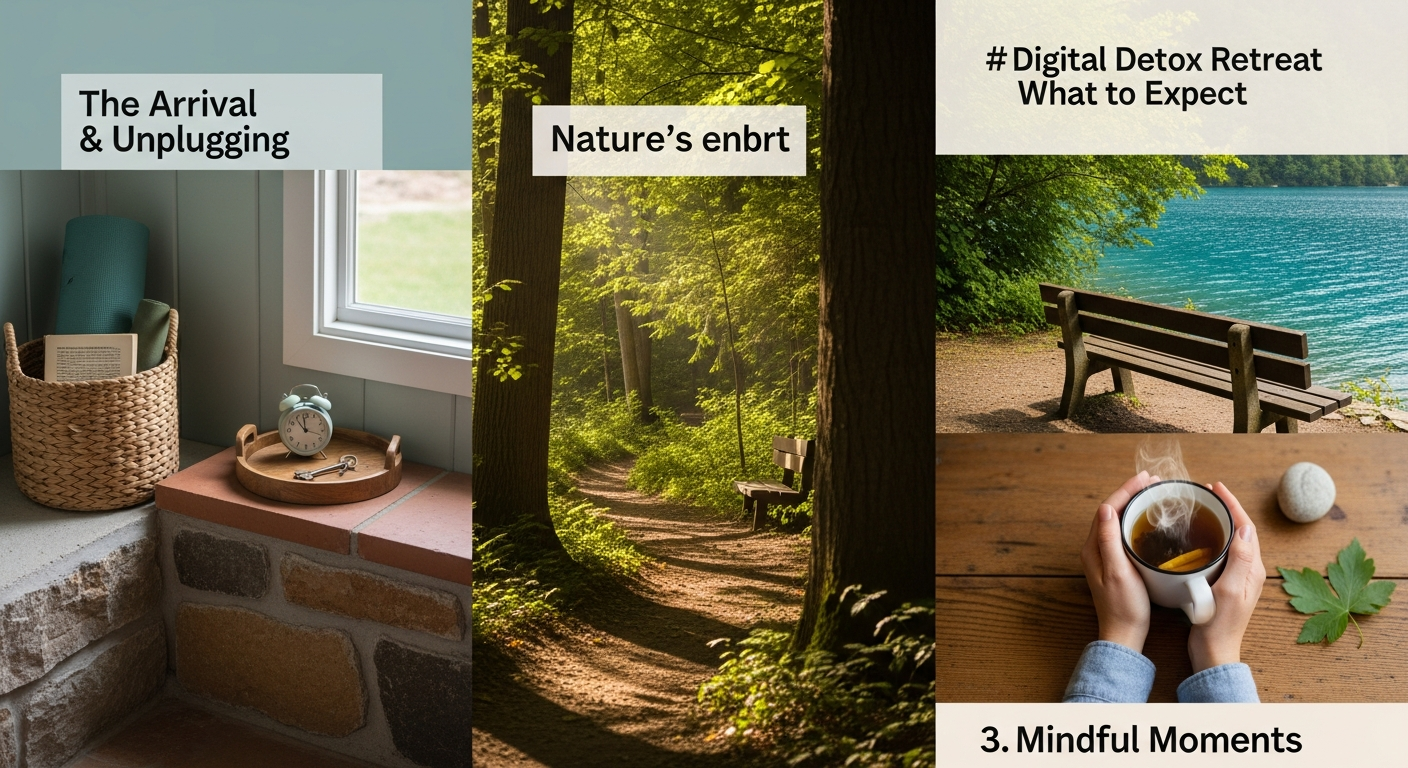
Digital Detox Retreat What to Expect: Your Ultimate Guide to Reclaiming Focus and Inner Peace
In an era where the average person checks their smartphone over 150 times a day, the concept of “unplugging” has shifted from a luxury to a psychological necessity. We live in a state of perpetual “high alert,” our nervous systems constantly bombarded by pings, haptic vibrations, and the infinite scroll of dopamine-looping algorithms. This hyper-connectivity has led to a global rise in “technostress,” sleep deprivation, and a thinning of our attention spans. A digital detox retreat offers a radical intervention—a structured sanctuary where you can surrender your devices and rediscover the rhythm of your own thoughts. But for many, the prospect of being without a phone for three to seven days is as daunting as it is alluring. This guide explores exactly what to expect when you step away from the screen and into the silence of a digital wellness sanctuary in 2026 and beyond.
The Anatomy of a Digital Detox Retreat: Beyond Just “No Wi-Fi”
When people first search for a digital detox retreat, they often envision a simple hotel in a remote area with poor reception. However, a true digital wellness retreat is a curated psychological experience. It is not merely the absence of technology; it is the intentional presence of analog alternatives.
Most retreats begin with a “handover ceremony.” This is a symbolic and practical moment where guests surrender their smartphones, tablets, and laptops to be kept in a secure vault for the duration of their stay. For many, this is the most anxiety-inducing part of the experience. You might feel a phantom vibration in your pocket or a sudden surge of “FOMO” (fear of missing out).
The environment is typically designed to soothe the overstimulated brain. You can expect locations that prioritize “Biophilic Design”—architecture that integrates natural light, plants, and organic materials. Whether it is a forest cabin in the Pacific Northwest or a silent monastery in the mountains of Italy, the setting is your first tool for recovery. These retreats replace the blue light of screens with the “soft fascination” of nature, a concept in environmental psychology that allows the brain’s directed attention mechanisms to rest and recharge.
Preparing for the Disconnect: The Pre-Arrival Phase
Preparation is the key to preventing “digital withdrawal” from ruining your first 24 hours. Once you book your retreat, the preparation phase begins at home. You cannot go from ten hours of screen time on Friday to zero on Saturday without a biological backlash.
In the week leading up to your retreat, experts suggest a “tapering” process. Start by moving your most addictive apps—usually Instagram, TikTok, or work email—off your home screen. Set an “Out of Office” reply that explicitly states you will have **zero** access to communication. This manages the expectations of others and relieves your internal pressure to respond.
Crucially, you should notify your inner circle about the retreat’s emergency contact number. Almost every reputable digital detox center provides a landline or a staff number that your family can call in case of a genuine crisis. Knowing that you can still be reached for life-altering news allows the “vigilance” part of your brain to finally stand down.
A Typical Day in the Life: From Scrolling to Soul-Searching
What do you actually *do* all day without a phone? This is the question most first-timers ask. Without the constant interruption of notifications, time begins to expand in a way that feels almost supernatural. A typical itinerary is designed to move you through three stages: Detox, Reflection, and Re-entry.
* **The Morning Ritual:** Instead of reaching for a phone to check the news or weather, you might start with a guided meditation or a “silent walk.” Without the immediate cortisol spike of an unread email, your natural circadian rhythms begin to take over. Breakfast is often a communal, “mindful eating” experience where the focus is on the flavor and texture of the food rather than photographing it.
* **The Mid-Day Workshop:** Afternoons are usually dedicated to “flow state” activities. These might include pottery, journaling, forest bathing (Shinrin-yoku), or restorative yoga. These activities are chosen because they require “deep work” and tactile engagement, helping to rewire the brain’s ability to focus on a single task for an extended period.
* **The Evening Wind-down:** Evenings often revolve around a communal fire or a stargazing session. Without the blue light of a screen inhibiting your melatonin production, you will likely find yourself feeling naturally tired by 9:00 PM. Many retreat-goers report that the sleep they experience on night three or four is the deepest they have had in years.
The Psychology of Unplugging: Navigating the “Phantom Vibrate”
It is important to manage your expectations regarding your mood. A digital detox is not a linear path to bliss; it is a neurological recalibration. Within the first 24 to 48 hours, you may experience symptoms of withdrawal. This includes irritability, a shortened temper, and a profound sense of boredom.
Boredom is actually the goal. In our modern lives, we use our phones to “medicate” away every spare second of downtime—waiting for a coffee, sitting on a bus, or lying in bed. When you remove the phone, you are forced to sit with your own thoughts. This is when the “Default Mode Network” (DMN) of the brain kicks in. The DMN is associated with creativity, self-reflection, and problem-solving.
You will likely experience “Phantom Vibration Syndrome,” where you feel a twitch in your thigh as if a phone is vibrating in your pocket. This is a testament to how deeply our technology has integrated into our nervous systems. Acknowledge these moments without judgment. They are a sign that the detox is working, as your brain slowly realizes it no longer needs to be on high alert for incoming data.
The Tangible Benefits: What You Gain When You Give Up the Screen
By the third or fourth day, the “fog” usually lifts. Participants often describe a feeling of “mental clarity” that is difficult to find in daily life. This isn’t just a feeling; there are documented physiological and psychological shifts occurring during a retreat:
1. **Restoration of the Prefrontal Cortex:** This part of the brain is responsible for executive function, impulse control, and focus. Constant multitasking on digital devices fatigues this area. Restoring it leads to better decision-making and emotional regulation.
2. **Lowered Cortisol Levels:** Constant notifications keep us in a state of “fight or flight.” Removing the devices allows the parasympathetic nervous system to take over, lowering blood pressure and reducing systemic inflammation.
3. **Improved Social Cognition:** When you can’t look at a screen, you look at people. You begin to pick up on non-verbal cues, micro-expressions, and the nuances of tone. This fosters a level of empathy and connection that is often lost in text-based communication.
4. **Enhanced Memory Consolidation:** Because you aren’t outsourcing your memory to Google or your camera roll, your brain begins to encode experiences more deeply. You will likely remember the details of your retreat more vividly than the last six months of your digital life.
Bringing the Zen Home: Post-Retreat Integration
The true test of a digital detox retreat isn’t how you feel while you are there; it’s how you live once you get back. The final day of a retreat is usually focused on “integration.” You will work with facilitators to create a sustainable digital wellness plan for 2026.
This doesn’t mean deleting all your social media and moving to the woods. It means establishing “Analog Zones” in your life. You might decide that your bedroom is a phone-free sanctuary or that the first hour of your day will be spent offline.
Expect to feel a sense of “digital overwhelm” the moment you turn your phone back on. Seeing 500 unread messages can be a shock to the system. Most experts recommend waiting until you are home and settled before powering up. This allows you to maintain the “buffer” of peace you built during the retreat. Many people choose to keep their phones in “Greyscale” mode permanently after a retreat, making the screen less stimulating and reducing the urge to mindlessly scroll.
FAQ: Frequently Asked Questions
**1. Can I bring a camera if it’s not a smartphone?**
Most retreats allow dedicated digital or film cameras, provided they do not have Wi-Fi or cellular capabilities. The goal is to separate the act of “capturing a memory” from the act of “sharing a post.” However, many people find that not taking photos at all allows them to be more present in the moment.
**2. What if I have a family emergency while I’m away?**
Retreat organizers provide an emergency landline or a staff mobile number that you can give to your family. If there is a genuine emergency, the staff will find you immediately. This “safety net” is crucial for allowing your brain to fully disconnect.
**3. Is a digital detox retreat just for people with a “gaming” or “social media” addiction?**
No. While it is highly beneficial for those with clinical levels of addiction, these retreats are for anyone feeling the weight of the “always-on” culture. This includes corporate executives, creative professionals, and parents who feel they are losing their ability to focus and connect.
**4. How long does a retreat need to be to see results?**
While a 24-hour break is helpful, research suggests that it takes about 72 hours for the nervous system to fully down-regulate and for the “phantom vibrations” to subside. A three-to-five-day retreat is generally considered the “sweet spot” for long-term benefits.
**5. Will I be forced to participate in group activities?**
While community is a part of many retreats, most offer a balance of group workshops and “noble silence.” If your goal is solitude, you can find retreats that focus more on individual reflection and less on social interaction.
Conclusion: Reclaiming the Narrative of Your Life
A digital detox retreat is not about hating technology; it is about loving your life more than your screen. In 2026, the “attention economy” is more aggressive than ever, designed to capture every spare second of our consciousness. Taking the time to step away is an act of rebellion and self-care.
When you return from a retreat, you don’t just bring back a lower stress level; you bring back a sense of agency. You realize that you—not the algorithm—get to decide where your attention goes. By understanding what to expect—from the initial anxiety of the device handover to the profound clarity of the final day—you can approach your digital detox with confidence. The world will still be there when you turn your phone back on, but after a retreat, you will be better equipped to engage with it on your own terms. The silence isn’t empty; it’s full of everything you’ve been too busy to notice.