
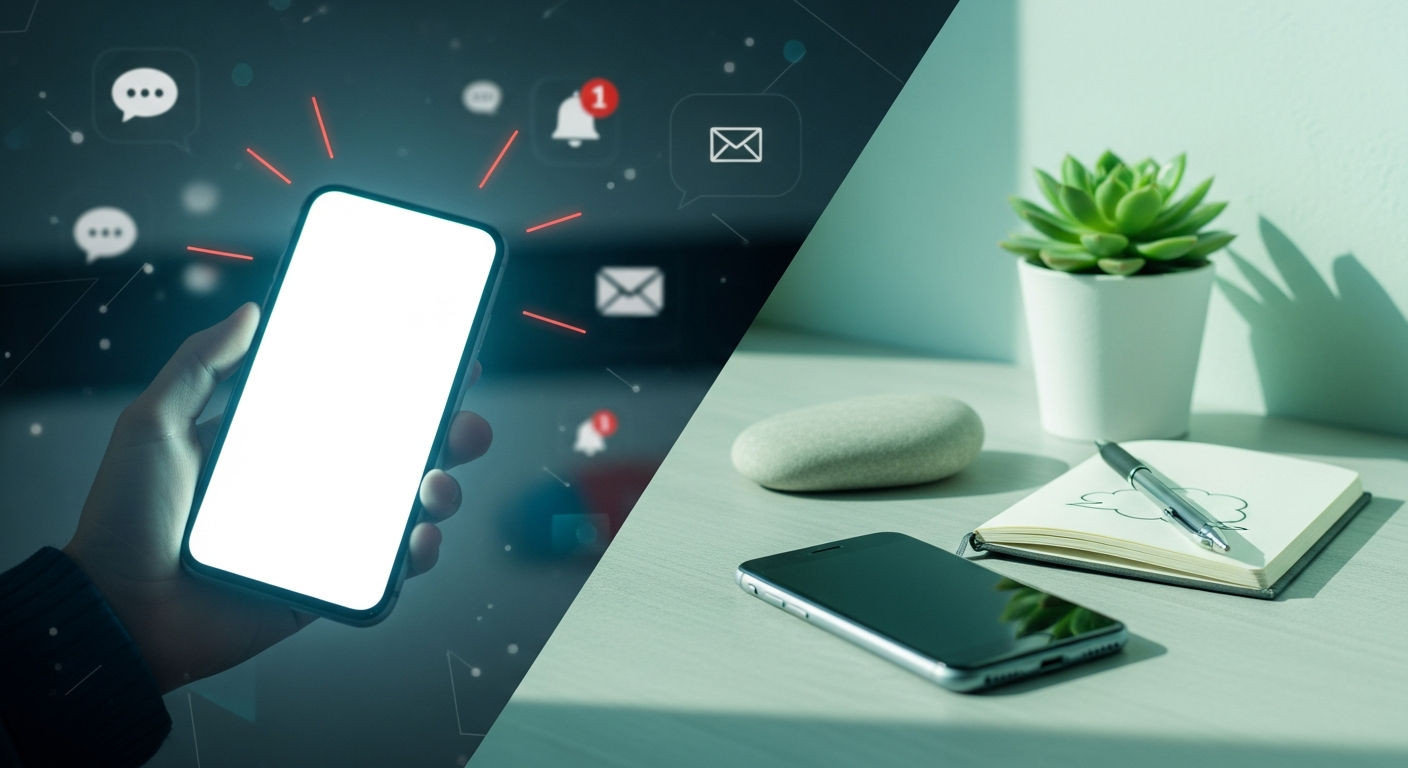
Phone Addiction vs. Healthy Tech Use: How to Find Your Digital Balance in 2026
In an era where our smartphones are essentially extensions of our hands, the line between “productive tool” and “compulsive habit” has become increasingly blurred. We use our devices for everything: navigating city streets, managing bank accounts, staying connected with long-distance family, and even tracking our sleep. However, as we look toward the landscape of 2026, a critical question emerges for anyone concerned with their mental well-being: where does healthy tech use end and phone addiction begin?
The difference isn’t always about the number of hours spent staring at a screen. Instead, the distinction lies in the *quality* of that time and the *intent* behind the interaction. For those seeking to reclaim their focus and improve their digital wellness, understanding this nuance is the first step toward a healthier life. This guide will explore the psychological triggers of addiction, the hallmarks of intentional use, and actionable strategies to ensure your phone remains a tool that serves you, rather than a master that controls you.
Defining the Line: When Use Becomes Addiction
To understand the difference between healthy use and addiction, we must first look at the psychological mechanics of our devices. Smartphones are designed using “persuasive design”—the same principles used in slot machines to keep players engaged. Every notification, “like,” and infinite scroll is a hit of dopamine, the brain’s reward chemical.
**Healthy Tech Use** is defined by utility and intentionality. You pick up your phone because you have a specific task to accomplish. Once the task is finished, the phone is put away. In this scenario, the technology facilitates your goals.
**Phone Addiction** (often referred to by clinicians as Problematic Smartphone Use or PSU) is characterized by a loss of control. It is a compulsive behavior where the individual feels a psychological “need” to check the device, even when there is no objective reason to do so. Addiction is present when the use of the device begins to interfere with daily responsibilities, relationships, and physical health. It is the transition from “using technology” to “being used by technology.”
Signs and Symptoms of Phone Addiction
Recognizing the signs of addiction requires a high degree of self-awareness. Unlike chemical substances, we cannot simply quit technology entirely, which makes identifying the “tipping point” more difficult. If you find yourself experiencing the following, you may be leaning toward addiction:
1. **Nomophobia:** Feeling intense anxiety or panic when your phone is not within reach or the battery is low.
2. **The Ghost Buzz:** Experiencing “phantom vibrations”—feeling your phone vibrate in your pocket when it actually hasn’t.
3. **Digital Displacement:** Neglecting face-to-face social interactions to scroll through feeds (a behavior known as “phubbing”).
4. **Tolerance and Withdrawal:** Needing more screen time to achieve the same “hit” of satisfaction, and feeling irritable, depressed, or restless when you try to cut back.
5. **Escapism:** Using the phone as the primary way to avoid difficult emotions, stressful situations, or boredom.
6. **Physical Toll:** Suffering from “text neck,” eye strain, or significant sleep disruption because you are scrolling late into the night.
In contrast, a healthy user might feel a brief moment of annoyance if they forget their phone at home, but they are quickly able to pivot and continue their day without a sense of existential dread.
The Characteristics of Healthy Tech Use
What does a healthy relationship with a smartphone look like in 2026? It isn’t about moving to a cabin in the woods and throwing your device in a lake. It’s about **Digital Minimalism**. Healthy tech use is characterized by three core pillars:
#
1. Intentionality
A healthy user has a “why” behind every “tap.” They don’t find themselves “waking up” thirty minutes into a TikTok rabbit hole with no memory of how they got there. They use their phone for active participation (sending a thoughtful message, learning a skill) rather than passive consumption.
#
2. Boundaries
Healthy users have “sacred spaces” and “sacred times.” This might mean no phones at the dinner table, no screens in the bedroom, or a “digital Sabbath” where the phone stays off for 24 hours over the weekend. They have mastered the “Do Not Disturb” feature and have curated their notifications so that only humans—not apps—can interrupt their flow.
#
3. Awareness of Impact
A person with healthy tech habits checks in with their body and mind. They notice when a certain app makes them feel inadequate or anxious and they have the agency to delete that app or limit its use. They prioritize the “analog” world—the feel of the sun, the taste of food, and the nuances of a live conversation—over the digital representation of those things.
The Impact of Excessive Screen Time on Mental Health
The cost of phone addiction is rarely just “wasted time.” The neurological and emotional price is much higher. Constant connectivity keeps the brain in a state of high alert, or “continuous partial attention.” This prevents the brain from entering a “Deep Work” state, where creativity and complex problem-solving occur.
Furthermore, the “Comparison Trap” on social media is a primary driver of anxiety and depression. When we spend hours consuming the curated highlights of others’ lives, our “behind-the-scenes” reality feels insufficient. This leads to FOMO (Fear Of Missing Out), which reinforces the addictive loop: we check our phones more frequently to ensure we aren’t being left behind, which only increases our anxiety.
Sleep is another major casualty. The blue light emitted by screens suppresses melatonin production, but more importantly, the psychological stimulation of “one last scroll” keeps the brain wired when it should be winding down. In 2026, sleep hygiene is recognized as a cornerstone of digital wellness, yet it remains the first thing sacrificed at the altar of the algorithm.
Strategies for Cultivating Digital Wellness
If you’ve identified that your tech use has become more compulsive than constructive, there are practical steps you can take to reclaim your autonomy. You don’t need a total “detox”; you need a restructuring of your digital environment.
* **The Grayscale Challenge:** Most apps use bright, vibrant colors to trigger dopamine. By turning your phone’s display to grayscale (available in accessibility settings), you strip away the visual “candy” that makes the device so appealing. Instagram and YouTube become significantly less addictive when they are in black and white.
* **The “Out of Sight” Rule:** The mere presence of a smartphone, even if it is turned off and face down on a table, reduces cognitive capacity. When you need to focus or connect with a loved one, put the phone in a different room. Physical distance creates mental clarity.
* **Audit Your Notifications:** If an app doesn’t provide immediate, life-improving value, it shouldn’t have the right to buzz in your pocket. Turn off all non-human notifications. You don’t need to know that someone liked a photo or that a sale is happening in real-time.
* **Establish a “Digital Sunset”:** Set a hard deadline for when the phone goes away—ideally 60 to 90 minutes before bed. Use this time for reading a physical book, journaling, or stretching.
* **Utilize 2026 Wellness Tools:** Modern operating systems now have robust “Focus Modes” and “App Limits.” Use them. Set your phone to automatically block distracting apps during work hours and after 9 PM.
Reclaiming Your Time: Building a Sustainable Tech Relationship
The goal of distinguishing between phone addiction and healthy use isn’t to demonize technology. Technology is a miracle of the modern age. The goal is to ensure that you are the pilot, not the passenger.
Building a sustainable relationship with your phone is a marathon, not a sprint. It involves a shift in identity. Instead of seeing yourself as someone who is “always available” or “always informed,” start seeing yourself as someone who values deep focus and presence.
As we move through 2026, the most successful individuals won’t be those who have the latest apps or the highest social media engagement. They will be the people who have the discipline to put the phone down and engage fully with the world around them. Digital wellness is the ultimate competitive advantage in a distracted world. By choosing intentionality over compulsion, you aren’t just saving time—you are reclaiming your life.
***
FAQ: Understanding Digital Wellness
#
1. How many hours of screen time is considered “addicted”?
There is no magic number of hours that signifies addiction. A software developer might spend 10 hours a day on a device productively, while someone else might spend 2 hours a day in a way that causes deep depression and social isolation. Look at *impairment* rather than *minutes*. If your screen time is causing you to fail at work, ignore your health, or damage your relationships, it is a problem, regardless of the total hour count.
#
2. What is the difference between social media addiction and phone addiction?
Phone addiction is a broad term for the compulsive use of the device itself (games, checking weather, scrolling news, etc.). Social media addiction is a subset of this, specifically driven by the need for social validation, likes, and the fear of missing out on peer activities. Both use the same dopamine pathways, but social media addiction is often more tied to self-esteem and social standing.
#
3. Can “Digital Detox” programs actually cure phone addiction?
A “detox” (a period of 3-30 days without tech) can be a great way to “reset” your brain’s dopamine baseline. However, much like a crash diet, if you return to your old habits immediately after the detox ends, the addiction will return. The key is using the detox as a starting point to build a new, sustainable “digital diet.”
#
4. What is “phubbing,” and why is it a sign of addiction?
“Phubbing” is a portmanteau of “phone” and “snubbing.” It refers to the act of ignoring someone in a social setting by looking at your phone instead. It is a key sign of addiction because it shows that the digital reward (the phone) has become more compelling to the brain than the biological reward (human connection and eye contact).
#
5. Does using a phone for work count as addiction?
Using a phone for work is “instrumental use.” However, it can become a gateway to addiction if you find yourself opening work emails as a way to avoid anxiety, or if “checking one work message” consistently leads to 40 minutes of non-work browsing. Healthy work use requires clear boundaries between “on-the-clock” and “off-the-clock” hours.
***
Conclusion: Choosing Presence Over Pixels
The journey from phone addiction to healthy tech use is not about deprivation; it is about liberation. When we break the chains of compulsive scrolling, we rediscover the vastness of our own attention. We find that we have more time than we thought, more focus than we remembered, and a greater capacity for joy in the small, analog moments of life.
As you navigate the digital landscape of 2026, remember that every time you choose to put your phone down and look someone in the eye, or engage in a hobby without documenting it, you are winning a small battle for your mental health. Technology is a wonderful servant but a terrible master. By defining your boundaries and choosing intentionality, you ensure that your smartphone remains exactly what it was meant to be: a tool to help you live a better life, not a replacement for life itself. Keep your head up—the world is much more beautiful in high definition than it is through a five-inch screen.