Reclaim Your Life: The Profound Benefits of a Social Media Break
1. Boost Your Mental Clarity and Reduce Anxiety
The digital landscape, while offering unparalleled access to information and connection, can also be a significant source of mental clutter and distress. One of the most immediate and profound benefits of taking a social media break is the significant improvement in mental clarity and a notable reduction in anxiety. Think of your mind as a computer with too many tabs open – constantly processing notifications, comparing your life to others’ highlight reels, and fearing you might miss something important (FOMO). This relentless cognitive load can lead to mental fatigue, difficulty focusing, and a pervasive sense of unease.
Studies consistently show a correlation between heavy social media use and increased levels of anxiety, depression, and loneliness. The carefully curated, often idealized content we encounter can fuel feelings of inadequacy and self-doubt. When you step away, you immediately remove yourself from this comparison trap. The pressure to present a perfect life, to respond instantly, or to constantly check for updates simply dissipates. This creates a mental void, which initially might feel strange or even a little uncomfortable, but soon transforms into a peaceful space for your thoughts to settle.
Without the constant stream of external input, your mind has the opportunity to declutter. You might find your thoughts becoming clearer, your ability to concentrate on a single task improving, and your decision-making becoming less clouded by external influences. This mental spaciousness allows for greater self-awareness and a reduction in the persistent background anxiety that often accompanies digital overload. Techniques like mindful scrolling (limiting your time and purpose when you do engage) and setting strict app limits before you even start a full break can serve as excellent preparatory steps, training your brain to appreciate periods of digital quiet. Embrace the quiet; it’s where clarity resides.
2. Reconnect with Yourself and Your Inner World
In the relentless pursuit of online engagement, it’s easy to lose touch with the most important relationship of all: the one you have with yourself. Social media platforms are expertly designed to draw your attention outward, constantly presenting you with external stimuli, opinions, and trends. This outward focus often comes at the cost of introspection, self-reflection, and genuine self-discovery. A social media break provides a vital opportunity to turn your gaze inward and rediscover the depths of your own inner world.
This journey of self-reconnection can manifest in various powerful ways. You might find yourself drawn to journaling, a practice that encourages deep reflection and helps process emotions without the pressure of an audience. Meditation or simply spending quiet time in nature, without your phone as a constant companion, can become profoundly restorative. Many people report discovering new creative outlets, rediscovering their love for reading, or simply enjoying the peace of their own company during a social media hiatus. For example, some individuals who take a break find themselves picking up a paintbrush again, dusting off a musical instrument, or dedicating time to learning a new skill they’ve always wanted to explore. This isn’t just about filling time; it’s about reclaiming your personal narrative and remembering who you are beyond your online persona.
3. Cultivate Deeper, More Meaningful Real-Life Relationships
At Stop Phubbing, our very name highlights a core issue in modern relationships: the act of “phubbing,” or snubbing someone in a social setting by looking at your phone instead of paying attention. Social media, designed to connect us, paradoxically often creates barriers to genuine, in-person connection. When your attention is constantly divided between the person in front of you and the digital world, you diminish the quality and depth of your real-life interactions. A social media break directly addresses this, clearing the path for truly meaningful relationships.
Being present is the cornerstone of authentic human connection. When you’re not checking notifications, snapping photos for an immediate post, or mentally crafting a witty caption, you are fully available to the people around you. This full presence allows for deeper listening, more empathetic responses, and a stronger sense of shared experience. Your loved ones will notice the difference – the sustained eye contact, the engaged conversation, the feeling of being truly heard and valued. Research consistently demonstrates that phubbing can lead to decreased relationship satisfaction, feelings of neglect, and increased conflict. By stepping away from social media, you actively choose to prioritize the people physically present in your life.
Practically, this means intentionally creating phone-free zones and times. Institute “no-phone zones” at the dinner table, during family outings, or when spending quality time with your partner or friends. Suggest dedicated “connection time” where everyone agrees to put their devices away and engage fully. You might find yourself having longer, more profound conversations, noticing subtle cues in body language, and simply enjoying the shared silence or laughter without interruption. One real-world example is families who implement a “digital sunset” in the evenings, leading to board game nights, shared reading, or simply talking, strengthening their bonds significantly. Reinvesting your attention into real-life interactions isn’t just beneficial for your relationships; it’s a powerful antidote to loneliness and a pathway to greater belonging and shared joy.
4. Enhance Your Sleep Quality and Energy Levels

In our 24/7 digital culture, the boundaries between day and night, work and rest, have become increasingly blurred. For many, the last thing they see before closing their eyes is a glowing screen, and the first thing they reach for upon waking is their smartphone. This pervasive habit has detrimental effects on one of the most critical pillars of our well-being: sleep. Taking a social media break, especially in the hours leading up to bedtime, can dramatically enhance your sleep quality and, consequently, boost your energy levels throughout the day.
The primary culprit here is blue light emitted from screens. Blue light suppresses melatonin production, the hormone essential for regulating your sleep-wake cycle. Exposing your eyes to this light late into the evening signals to your brain that it’s still daytime, making it harder to fall asleep and achieve deep, restorative sleep. Beyond the blue light, the content itself — the stimulating news, the endless scroll, the emotional responses triggered by posts — keeps your mind active and alert precisely when it needs to be winding down.
A social media break allows you to re-establish healthy sleep hygiene. By creating a “digital sunset,” perhaps two hours before bed, you give your brain the chance to power down naturally. Replace late-night scrolling with calming activities like reading a physical book, listening to soothing music, journaling, or engaging in gentle stretching. Many people report falling asleep faster, experiencing deeper sleep, and waking up feeling more refreshed and energized after adopting this practice. The cumulative effect of better sleep isn’t just about feeling less tired; it improves cognitive function, mood regulation, immune system strength, and overall vitality. Think of it as giving your body and mind the essential repair time they need to perform optimally.
5. Reignite Creativity and Productivity
In an age of constant stimulation and information overload, it might seem counterintuitive, but relentless digital engagement can actually stifle creativity and hinder productivity. Our brains need downtime, moments of “unfocus,” and even periods of productive boredom to connect disparate ideas, generate novel solutions, and engage in deep work. Social media, by constantly filling every available mental space, often robs us of these crucial opportunities. A social media break can be a powerful catalyst for reigniting your creative spark and significantly boosting your productivity.
When your mind is continually fed an endless stream of curated content, it has less opportunity to wander, to make its own connections, or to generate original thoughts. Creativity often thrives in moments of quiet contemplation, when the mind is free to play, experiment, and integrate new information in unique ways. By stepping away from the digital feed, you create mental space for genuine curiosity and imaginative exploration. You might find yourself more inclined to brainstorm, problem-solve, or simply daydream – all fertile ground for creative breakthroughs.
6. Develop Greater Intentionality and Digital Resilience
One of the most insidious aspects of social media is how it subtly erodes our autonomy and intentionality. Algorithms are designed to keep us engaged, often by feeding us content that triggers emotional responses, confirms biases, or simply makes us feel like we need to be there. Over time, this can lead to a state where our digital habits feel less like conscious choices and more like automatic reactions. Taking a social media break is a powerful act of defiance against this algorithmic control; it’s about reclaiming your agency and developing robust digital resilience.
A break forces you to confront your default behaviors and observe the subtle urges to check your phone. This self-awareness is the first step toward greater intentionality. You begin to understand why you reach for your device, whether it’s out of genuine interest, boredom, anxiety, or simply habit. This newfound insight empowers you to make conscious decisions about how and when you engage with technology, rather than being passively pulled along by its current.
When you return to social media (if you choose to), you do so from a position of strength and clarity, not compulsion. This allows you to redesign your digital landscape deliberately. You can curate your feeds more thoughtfully, unfollowing accounts that trigger negative emotions or provide no value, and following those that genuinely inspire or inform. You can implement strict time limits, turn off non-essential notifications, and create designated “digital-free” zones or times in your day. This isn’t about quitting social media forever (unless that’s your choice); it’s about mastering it, making it serve you, rather than the other way around. Developing digital resilience means having the strength to disengage when necessary, to prioritize real-world experiences, and to use technology as a tool to enhance your life, not to detract from it. It’s about being the driver of your digital destiny, not a passenger.
Embrace the Power of Disconnection for Deeper Connection
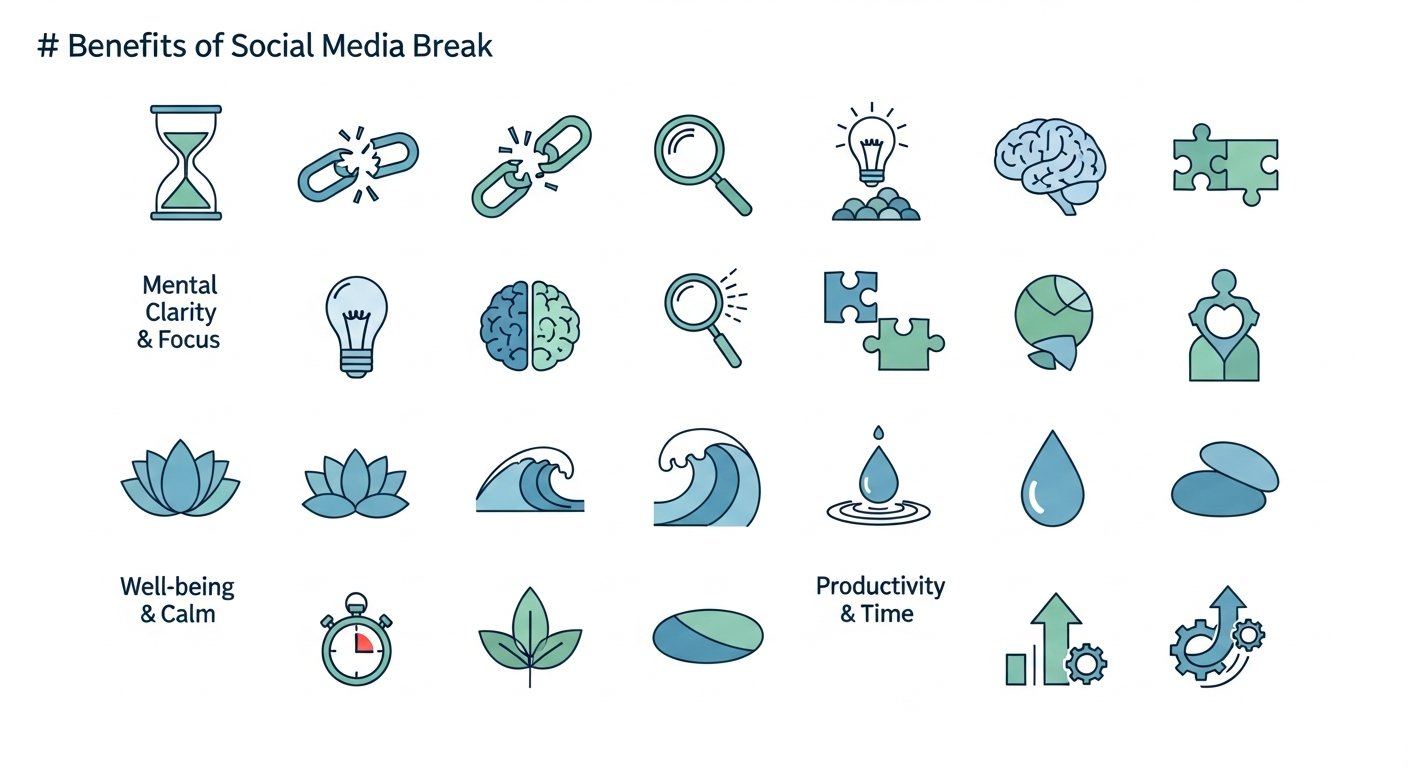
The choice to take a social media break is a powerful declaration: a commitment to your own well-being, to authentic relationships, and to a life lived with greater intention. It’s an opportunity to step off the hamster wheel of endless consumption and comparison, and to rediscover the richness and beauty of the present moment. From boosting your mental clarity and reducing anxiety, to fostering deeper real-life connections, enhancing your sleep, reigniting your creativity, and developing robust digital resilience – the benefits are profound and far-reaching.
At Stop Phubbing, we understand that this journey isn’t always easy. The pull of our devices is strong, and the fear of missing out can be a powerful deterrent. But remember, true connection isn’t found in a scroll, a like, or a retweet. It’s found in the sustained gaze of a loved one, the shared laughter with a friend, the quiet moments of introspection, and the vibrant tapestry of the world unfolding around you. So, take that leap. Give yourself the gift of disconnection. You might be surprised at what you find waiting for you on the other side of the screen – a more present, purposeful, and genuinely connected you. Your life, your relationships, and your inner peace are worth it.