

Understanding the Impact of Excessive Screen Time on Adult Well-being
The ubiquity of smartphones, tablets, computers, and smart TVs means that adults today spend a significant portion of their waking hours interacting with screens. While some of this interaction is necessary for work or essential communication, a substantial amount falls into the category of leisure or mindless scrolling. The cumulative effect of this constant digital engagement extends far beyond mere distraction, profoundly influencing our physical, mental, and social health.
Physically, prolonged screen time is linked to a host of issues. Eye strain, often manifesting as dry eyes, blurred vision, and headaches, is a common complaint. Poor posture adopted while hunched over devices can lead to chronic neck and back pain. Perhaps most critically, excessive screen use, especially in the hours before bed, disrupts our natural circadian rhythms. The blue light emitted by screens suppresses melatonin production, making it harder to fall asleep and reducing the quality of sleep we do get. This sleep deprivation then cascades into other problems, including reduced cognitive function, increased irritability, and a weakened immune system.
Mentally and emotionally, the landscape is equally complex. The constant influx of information and notifications can contribute to heightened anxiety and stress levels, creating a perpetual state of “alertness.” Social media, in particular, often presents curated, idealized versions of others’ lives, leading to feelings of inadequacy, envy, or loneliness. The phenomenon of “doomscrolling,” where individuals compulsively consume negative news, further exacerbates feelings of helplessness and distress. Furthermore, the ability to focus and concentrate on a single task for extended periods diminishes as our brains become accustomed to rapid-fire, bite-sized digital content, impacting productivity and deep work capacities.
Socially, the impact is perhaps most insidious, directly affecting the mission of Stop Phubbing. Phubbing – the act of snubbing someone in a social setting by looking at your phone instead of paying attention – has become rampant. This seemingly small act signals disinterest, disrespect, and devalues the in-person interaction, eroding the quality of our relationships. Family meals become quiet affairs punctuated by the glow of individual screens. Conversations with partners are interrupted by notifications. Children learn that a parent’s device holds more sway than their direct appeal. These subtle shifts accumulate, creating distance and misunderstanding where connection and empathy should be.
For adults, the challenge is compounded by the interwoven nature of work and personal life on digital platforms. Work emails arrive on personal phones, social connections are maintained through apps, and entertainment is streamed. Disentangling essential digital use from excessive, unhelpful scrolling requires deliberate effort and a deep understanding of why setting screen time limits isn’t just a suggestion, but a crucial component of modern wellness.
Why Adults Need Screen Time Limits: Beyond the Obvious
The idea of setting screen time limits often conjures images of parental controls for children. However, the need for adults to establish their own digital boundaries is increasingly paramount. It goes beyond merely avoiding the negative impacts; it’s about actively cultivating a life of greater presence, productivity, and genuine connection. Understanding the deeper “why” can be a powerful motivator in making sustainable changes.
One primary reason is the reclamation of time and attention. Our attention is a finite resource, constantly under siege in the digital age. By setting limits, adults can consciously redirect this precious resource towards activities that truly enrich their lives. Imagine the books that could be read, the new skills that could be learned, the hobbies that could be pursued, or the quality time that could be spent with loved ones, all currently lost to endless scrolling. These limits aren’t about deprivation; they’re about choosing how to invest your most valuable assets: your time and your focus.
Secondly, imposing screen time limits fosters improved mental clarity and emotional regulation. The digital world is designed to be addictive, triggering dopamine hits with every like, share, or notification. Breaking free from this cycle allows the brain to rest, process thoughts more deeply, and reduce the constant low-level hum of digital stimulation. This can lead to decreased anxiety, enhanced creativity, and a greater capacity for self-reflection and problem-solving, rather than constantly seeking external validation or distraction.
Furthermore, setting boundaries empowers adults to strengthen real-world relationships. When screens are put away, genuine human connection can flourish. This is where topics like How To Communicate Better Relationships become profoundly relevant. Effective communication isn’t just about the words exchanged; it’s about active listening, observing non-verbal cues, and demonstrating full presence. Phubbing directly undermines these elements, creating barriers to intimacy and understanding. By reducing screen time during shared moments, adults signal respect and investment in their relationships, paving the way for deeper, more meaningful interactions and truly present conversations with partners, family, and friends.
Finally, embracing screen time limits is a form of self-respect and proactive wellness. In a culture that often celebrates constant connectivity and busyness, choosing to disconnect is an act of rebellion and self-care. It’s about prioritizing your own well-being over the demands of the digital world. It’s an investment in better sleep, improved physical health, enhanced mental resilience, and richer personal relationships. In 2026, and every year thereafter, the ability to manage one’s digital life will be a hallmark of a truly balanced and fulfilling existence.
Setting Realistic Screen Time Limits: A Personalized Approach
The first step in setting realistic limits is to gain an honest understanding of your current usage. Many smartphones and operating systems now include built-in “screen time” or “digital well-being” features that track app usage, pick-ups, and notification counts. Commit to tracking your screen time for a week without judgment. This data will provide a crucial baseline, often revealing surprising patterns and identifying apps or activities that consume the most time.
Next, reflect on your “why.” What specific benefits are you hoping to gain? Do you want more time for hobbies, better sleep, improved focus at work, or more present interactions with your family? Clearly defining these goals will help you tailor your limits. For example, if better sleep is a priority, a strict “no screens in the bedroom” rule might be more impactful than a general daily time limit.
Consider the different categories of screen use. Not all screen time is created equal. Work-related screen time (e.g., coding, writing, virtual meetings) often cannot be drastically reduced. Educational screen time (e.g., online courses, documentaries) or creative screen time (e.g., digital art, music production) might be considered “high-quality” use. The primary targets for reduction are typically passive consumption, endless scrolling on social media, or habitual, mindless browsing. Differentiate between “necessary” and “discretionary” screen time.
When setting actual limits, start small and build gradually. Drastically cutting down from eight hours to two hours a day overnight is often unsustainable. Perhaps begin by identifying one hour each day that will be completely screen-free, such as the first hour after waking or the last hour before bed. Once that feels manageable, expand it. Consider specific app limits rather than just total screen time. For instance, allowing yourself 30 minutes total for social media apps per day might be more effective than a vague overall goal.
Be flexible and forgiving. Life happens, and there will be days when your screen time exceeds your self-imposed limits due to unforeseen circumstances or unique demands. The goal isn’t perfection, but progress. View setbacks as learning opportunities, not failures, and simply reset the next day. The iterative process of tracking, assessing, adjusting, and committing will lead to the most sustainable and beneficial outcomes for your personalized digital wellness journey.
Practical Tips & Strategies for Implementing Screen Time Boundaries
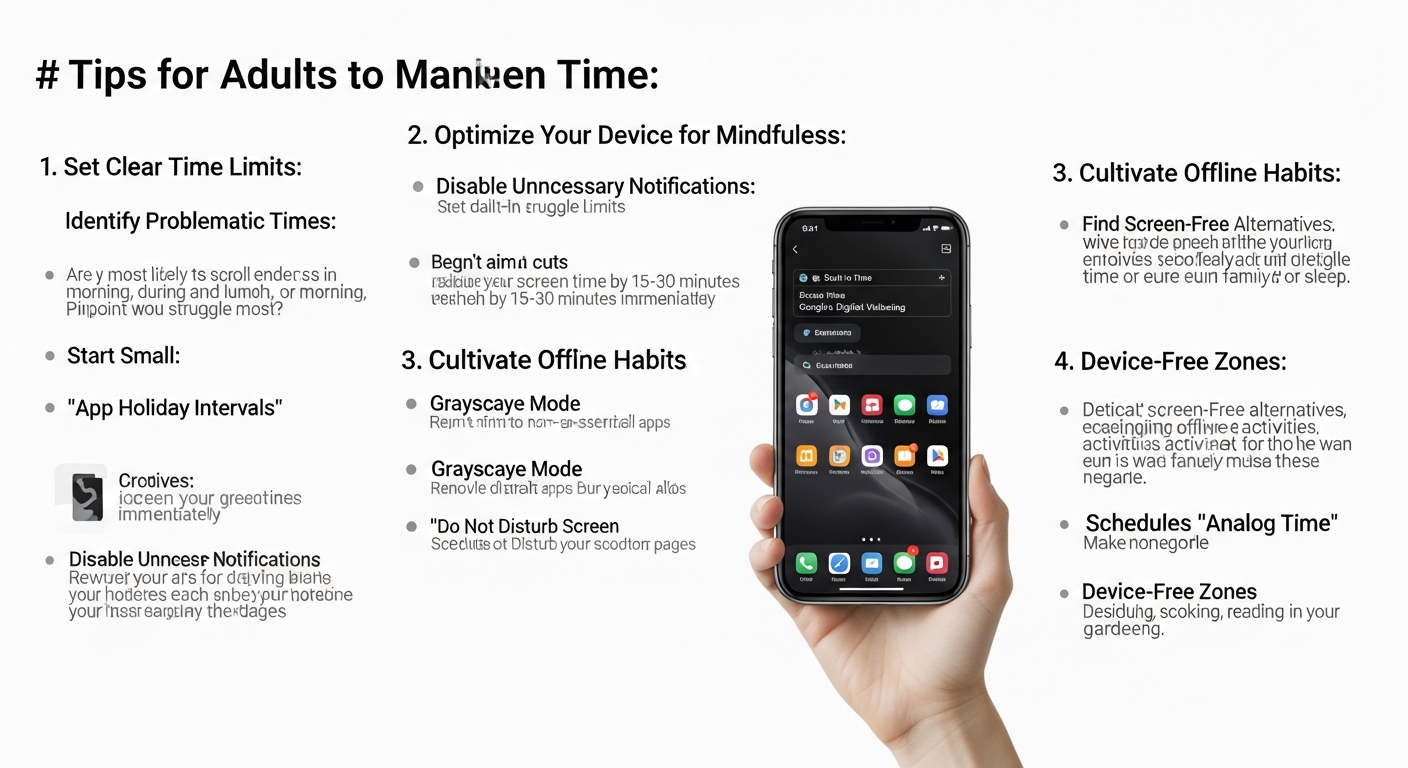
Translating the desire for less screen time into actionable change requires practical strategies and a bit of discipline. Here are some effective screen time limits for adults tips to help you implement and maintain healthier digital boundaries:
- Designate Screen-Free Zones and Times: Establish specific areas or periods where screens are simply not allowed.
- The Bedroom: Make your bedroom a sanctuary for sleep and intimacy. Charge your phone outside the room. Use an alarm clock instead of your phone for waking up.
- Meal Times: Whether dining alone or with others, make meals screen-free. This encourages mindful eating and present conversation.
- Family Time: During designated family activities, playtime with children, or date nights, put devices away. This is crucial for strengthening relational bonds and avoiding phubbing.
- Leverage Technology to Control Technology: Ironically, apps and device settings can be your allies.
- Screen Time/Digital Well-being Features: Use built-in device features to set daily limits for specific apps or categories, schedule downtime, and track usage.
- App Blockers: Install third-party apps (e.g., Freedom, Cold Turkey) that block distracting websites and apps during designated work or focus periods.
- Grayscale Mode: Experiment with turning your phone screen to grayscale. The lack of vibrant colors can make your device less appealing and addictive.
- Curate Your Digital Environment: Reduce the constant pull of notifications and endless content.
- Turn Off Non-Essential Notifications: Disable notifications for social media, news apps, and games. Only allow essential communication alerts (calls, texts from key contacts).
- Unfollow/Unsubscribe: Declutter your social media feeds by unfollowing accounts that don’t add value or trigger negative emotions. Unsubscribe from newsletters you never read.
- Delete Habitual Apps: Remove apps that you mindlessly open out of habit, especially social media platforms or games that you find particularly addictive. Access them via a browser if absolutely necessary, adding an extra step that reduces impulsivity.
- Create Physical Barriers: Make it harder to pick up your device instinctively.
- Charge Devices Away From Reach: Don’t keep your phone next to you on the couch or bed. Charge it in another room or a designated “docking station.”
- Use a “Phone Jail”: Consider a physical box or container to store phones during screen-free periods, especially during family gatherings or focused work sessions.
- Schedule Digital “Sunsets” and “Sunrises”:
- Digital Sunset: Set a specific time each evening after which all non-essential screens are put away. This helps wind down for better sleep.
- Digital Sunrise: Avoid checking your phone immediately upon waking. Give yourself 30-60 minutes to engage in non-digital activities like meditating, reading, or preparing breakfast.
- Find Analog Replacements and New Hobbies: Consciously fill the void left by reduced screen time.
- Rediscover Books: Pick up a physical book.
- Engage in Hobbies: Pursue painting, gardening, cooking, playing an instrument, or anything that brings joy and requires your full attention.
- Outdoor Activities: Spend time in nature – go for a walk, hike, or simply sit outside.
- Connect In-Person: Plan face-to-face meetups with friends or family instead of just relying on digital communication.
- Batch Digital Tasks: Instead of constantly checking emails or messages, designate specific times of the day for these tasks. This reduces context-switching and improves focus during other activities.
Implementing these tips requires consistency and self-awareness. Start with one or two strategies that resonate most and gradually integrate more. The goal is to build sustainable habits that support your digital wellness goals into 2026 and beyond.
Cultivating Mindful Digital Habits & Strengthening Real-World Connections
Reducing screen time isn’t just about cutting down; it’s about shifting our relationship with technology from reactive to mindful. Cultivating mindful digital habits means engaging with our devices intentionally, rather than impulsively. This conscious approach not only helps in setting sustainable screen time limits but also profoundly enhances our real-world connections.
A core practice in mindful digital use is the “pause and ask” technique. Before picking up your phone or opening an app, pause for a moment and ask yourself: “Why am I doing this right now? What is my intention? Is this truly necessary or beneficial?” This small moment of reflection can disrupt automatic habits and help you make a conscious choice. Often, you’ll find the impulse is driven by boredom, anxiety, or mere habit, rather than a genuine need. This practice is a cornerstone of Tips For Healthy Technology Use, emphasizing intentionality over reactivity.
Another crucial aspect is practicing presence. When you are with others, make a deliberate effort to be fully present. Put your phone away, silence notifications, and give your undivided attention to the people in front of you. This is where the issue of phubbing directly impacts relationships. When you maintain eye contact, listen actively, and respond thoughtfully, you communicate respect and value. This deepens bonds and fosters genuine understanding, laying the groundwork for stronger, more resilient relationships. It’s about remembering that the most important “connection” is often the one happening right in front of you.
Actively seek out opportunities for non-digital engagement. Schedule regular face-to-face interactions with friends, family, or colleagues. Engage in hobbies that require your full attention and don’t involve a screen, whether it’s cooking, gardening, playing a musical instrument, or pursuing creative arts. Spending time in nature, practicing meditation, or engaging in physical activity are excellent ways to reset your mind and body, providing a much-needed break from digital stimulation.
Consider implementing regular digital “fasts” or “detoxes.” This could be as simple as an hour without screens, a full screen-free evening, a “digital Sabbath” on weekends, or even a longer vacation where you intentionally limit or completely abstain from digital devices. These periods of disconnection allow for mental decompression, foster creativity, and remind you of the richness of life beyond the screen. They also help recalibrate your relationship with technology, making you less dependent on it for constant stimulation.
Finally, modeling mindful digital behavior is essential, especially for parents or those in leadership positions. Children learn by example, and demonstrating a healthy relationship with technology teaches them invaluable lessons about balance and presence. By intentionally cultivating mindful digital habits, we not only improve our own well-being but also inspire those around us to forge stronger, more authentic connections in an increasingly digital world.
Navigating Social & Relational Dynamics Around Screen Time
Implementing screen time limits isn’t just a personal journey; it often involves navigating complex social and relational dynamics. Our digital habits are intertwined with those of our partners, family members, friends, and even colleagues. Addressing these interdependencies openly and constructively is vital for success and for fostering healthier relationships.
One of the most critical areas is within romantic partnerships. Phubbing can be a silent relationship killer, leading to feelings of neglect, resentment, and a lack of intimacy. To counter this, open and honest communication is paramount. Just as honest communication is vital for sensitive topics like How To Talk About Money With Partner, it’s equally crucial when discussing digital habits to ensure mutual respect and understanding. Instead of accusatory statements (“You’re always on your phone!”), try expressing your feelings using “I” statements (“I feel disconnected when we’re together and our phones are out”).
Consider establishing shared screen-time agreements or “digital ground rules” with your partner or family. This could include:
- No phones at the dinner table.
- Designating certain evenings as “screen-free” for shared activities.
- Putting phones away during important conversations or intimate moments.
- Agreeing on a “digital curfew” for all devices in the home.
These agreements should be collaborative, with everyone contributing to their creation, increasing buy-in and adherence. It’s also important to discuss why these rules are being put in place – to foster better connection, improve sleep, or reduce stress – rather than framing them as punitive.
Within family units, especially with children, modeling healthy technology use is incredibly powerful. Children observe and mimic adult behavior. If parents are constantly glued to their devices, it sends a mixed message to children about the importance of their own screen time limits. Engaging in family activities that don’t involve screens – board games, outdoor play, reading together – reinforces the value of real-world interaction. Discussing the concept of mindful technology use with older children can also empower them to make healthier choices for themselves.
Friends and social circles can also present challenges. It might feel awkward to be the only one not checking your phone during a social gathering. However, by putting your phone away, you subtly encourage others to do the same and create an environment conducive to genuine interaction. If a friend consistently phubbs you, consider having a gentle, direct conversation about how it makes you feel, encouraging them to be more present.
In the workplace, while screens are often essential, you can still set boundaries. Clearly communicate your availability, especially outside of working hours. Avoid checking work emails after hours or during family time unless absolutely critical. This protects your personal time and models healthy work-life integration. By proactively managing these social and relational dynamics, adults can not only achieve their personal screen time goals but also contribute to a culture of greater presence and authentic connection in all areas of their lives, making 2026 a year of enhanced interpersonal harmony.
Sustaining Your Screen Time Goals into 2026 and Beyond
Setting screen time limits is a significant first step, but sustaining these healthy habits over the long term, into 2026 and well beyond, requires ongoing commitment, adaptation, and self-compassion. The digital landscape is constantly evolving, and so too must our strategies for managing our relationship with it.
Regular Review and Adjustment: Your ideal screen time limits may change over time due to life circumstances (e.g., a new job, parenthood, retirement). Schedule periodic check-ins, perhaps monthly or quarterly, to review your screen time usage and assess how your limits are working. Are they still serving your well-being goals? Do you need to tighten or loosen them in certain areas? Flexibility is key to sustainability. Use your device’s built-in tracking features to monitor your progress and identify areas for refinement.
Acknowledge and Learn from Setbacks: There will be days, or even weeks, when your screen time spirals out of control. Don’t view these as failures, but as opportunities for learning. What triggered the increased usage? Was it stress, boredom, a particularly demanding work period, or social pressure? Understanding the triggers allows you to develop coping mechanisms for the future. Self-compassion is crucial; simply acknowledge the slip, adjust, and recommit to your goals without self-reproach.
Focus on the Positive Replacements: Instead of focusing solely on what you’re “giving up,” emphasize what you’re gaining. Remind yourself of the benefits: better sleep, more energy, deeper conversations, revived hobbies, and reduced anxiety. Actively plan non-screen activities that bring you joy and fulfillment. The more you fill your life with meaningful, real-world experiences, the less you’ll feel the pull of digital distraction.
Build a Support System: Share your goals with a trusted friend, partner, or family member. Having an accountability partner can provide encouragement and motivation. They can also gently remind you when you might be slipping back into old habits. Engage in conversations about Tips For Healthy Technology Use with your social circle, fostering a shared understanding and mutual support for digital wellness.
Educate Yourself Continuously: Stay informed about the latest research on technology’s impact on well-being and new strategies for digital management. Digital wellness is an evolving field. Blogs like Stop Phubbing continually offer fresh perspectives and tools. Understanding the “why” behind healthy technology choices reinforces your commitment.
Celebrate Small Wins: Acknowledge and celebrate your successes, no matter how small. Did you manage a screen-free dinner? Did you go an entire hour without checking your phone? These small victories build momentum and reinforce positive behavior, making the journey more rewarding.
By integrating these strategies, adults can move beyond temporary fixes to establish a deeply ingrained, healthy relationship with technology. The goal for 2026 and beyond is not to eliminate screens, but to use them as intentional tools that serve our lives, rather than allowing them to dictate our attention, well-being, and connections.
Frequently Asked Questions
Recommended Resources
Related reading: Benefits Of Listening To Music While Working (Heartbeat Reggae).
Explore Music And Memory Alzheimer Patients for additional insights.